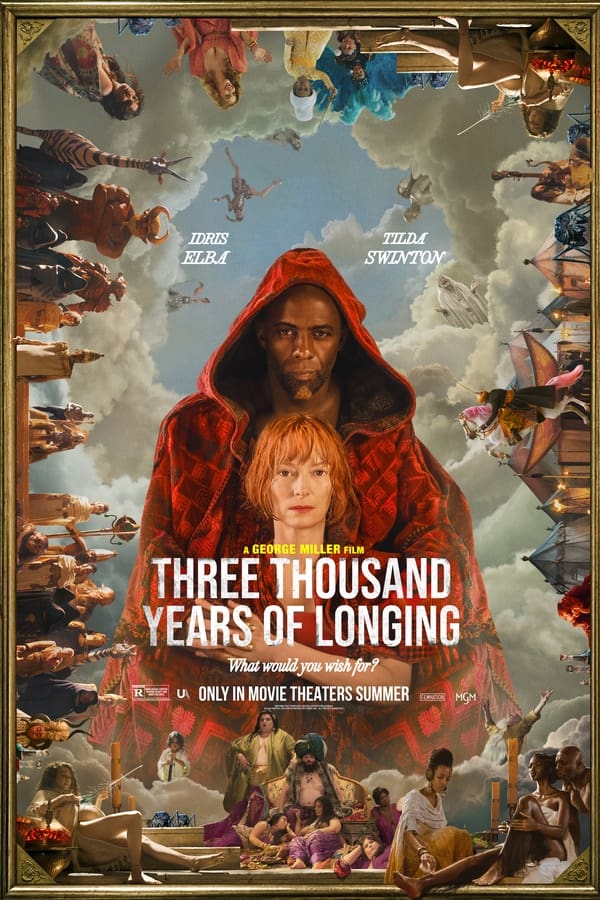
Unveiling the Timeless Tale: A Deep Dive into Three Thousand Years of Longing
Three Thousand Years of Longing, directed by George Miller, is a thought-provoking film that delves into the complexities of human desire, love, and the power of storytelling. Based on the short story "The Djinn in the Nightingale's Eye" by A.S. Byatt, this cinematic masterpiece weaves a narrative that spans centuries, exploring the intricacies of the human condition. In this article, we will embark on a journey to unravel the layers of this film, examining its themes, characters, and the historical context that shapes its narrative.
At its core, Three Thousand Years of Longing is a story about the intersection of past and present, as a young scholar, Alithea Binnie, played by Tilda Swinton, unleashes a djinn, portrayed by Idris Elba, from a bottle. This encounter sets in motion a series of events that blurs the lines between reality and fantasy, prompting an exploration of the human experience across different eras and cultures. Through Alithea's interactions with the djinn, the film navigates the realms of love, loss, and longing, inviting viewers to reflect on their own desires and the stories that define us.
The Power of Storytelling
One of the central themes of Three Thousand Years of Longing is the transformative power of storytelling. The film illustrates how stories have the ability to transcend time and space, connecting individuals across different epochs and geographical locations. The djinn's tales, which span millennia, serve as a testament to the enduring impact of narratives on human lives. By sharing his stories, the djinn not only recounts historical events but also conveys the emotional depth and complexity of human experiences, highlighting the significance of empathy and understanding in bridging the gaps between people.
The film's use of storytelling as a narrative device also underscores the idea that our personal stories are intertwined with those of others, forming a rich tapestry of human experience. This perspective encourages viewers to consider the stories that have shaped their own lives and the lives of those around them, fostering a deeper appreciation for the diversity and depth of human emotions.
Characters and Their Journeys
The characters in Three Thousand Years of Longing are multidimensional and complex, with each embodying a unique set of desires, fears, and aspirations. Alithea, the protagonist, is a scholar who has dedicated her life to the study of stories, yet she finds herself disconnected from her own narrative. Her encounter with the djinn prompts a journey of self-discovery, as she begins to confront her own desires and the stories that have defined her life.
The djinn, on the other hand, is a being of immense power and wisdom, who has witnessed the rise and fall of civilizations. Despite his extraordinary abilities, he is bound by his own sets of rules and limitations, which adds a layer of humanity to his character. Through his stories and interactions with Alithea, the djinn reveals the depth of his own longing and the complexities of his existence, challenging the notion of a simplistic or one-dimensional portrayal of supernatural beings.
Historical Context and Cultural Significance
Three Thousand Years of Longing is set against the backdrop of a rich historical landscape, with the narrative spanning centuries and incorporating elements from various cultures. The film's depiction of different eras and societies serves as a reminder of the shared human experiences that transcend time and geographical boundaries. By exploring the stories and legends of ancient civilizations, the film highlights the importance of cultural heritage and the role it plays in shaping our identities and understanding of the world.
The film's use of historical and cultural references also underscores the significance of preserving and appreciating the stories of the past. In an era where technology and globalization are redefining the way we interact with each other and our surroundings, Three Thousand Years of Longing serves as a powerful reminder of the enduring value of traditional storytelling and the importance of honoring our cultural legacies.
Conclusion and Reflection
Three Thousand Years of Longing is a film that invites viewers to embark on a journey of discovery, exploring the complexities of human desire, the power of storytelling, and the interconnectedness of human experiences. Through its thought-provoking narrative and rich historical context, the film encourages us to reflect on our own stories and the stories that have shaped our lives. As we navigate the challenges and opportunities of the modern world, Three Thousand Years of Longing reminds us of the importance of empathy, understanding, and the preservation of our cultural heritage.
In the end, the film's title, Three Thousand Years of Longing, serves as a poignant reminder of the timeless and universal nature of human desire. It is a testament to the enduring power of stories to connect us, to inspire us, and to help us make sense of our place in the world. As we continue to navigate the complexities of our own lives, the lessons and themes of this film will undoubtedly linger, prompting us to reflect on the stories that define us and the longings that unite us.