What Is a Political Institution And Why It Matters
We hear the term "political institutions" thrown around in news reports and academic debates. It sounds dry, bureaucratic, even a bit intimidating. But strip away the jargon, and you realize these structures are the invisible scaffolding holding society together. Without them, governance wouldn’t just be difficult; it would be impossible. So, what exactly are they, and why do they define our daily lives more than we might think?
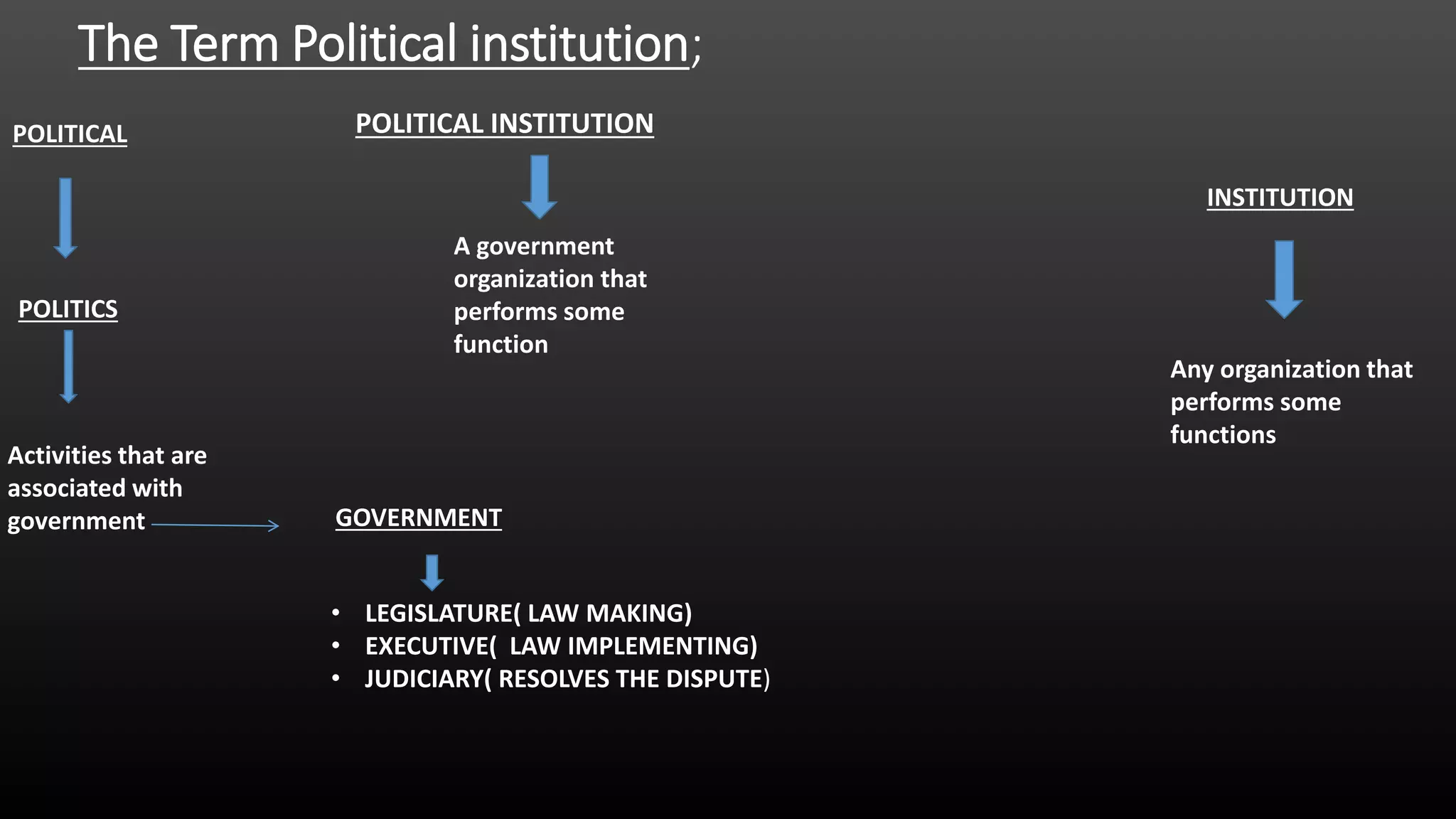
At its core, a political institution is any established human structure designed to govern, manage conflict, and distribute power. It’s not just the big government buildings. It’s the rules, norms, and organizations that guide how decisions are made and enforced.
More Than Just Buildings: Defining the Concept
When most people imagine political institutions, they picture the legislature, the court of justice, or the presidential office. These are formal institutions. They are codified into laws and constitutions. You can touch their doors. You can visit their websites. They have budgets and employees.
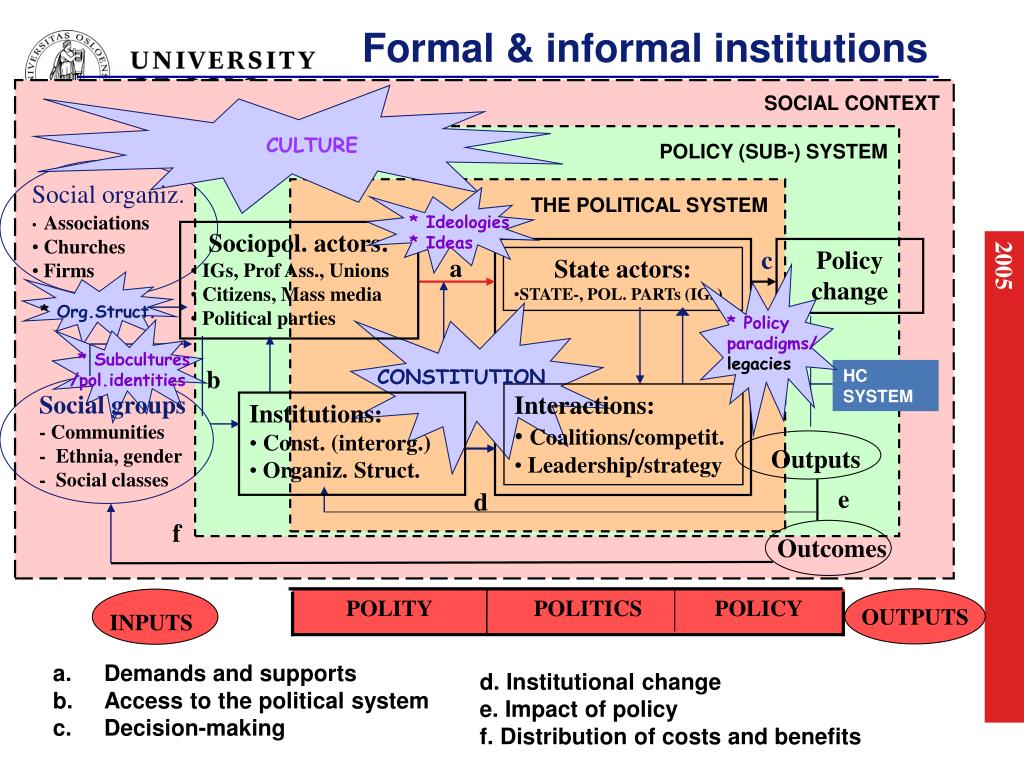
But the definition runs deeper. Informal institutions matter just as much. These are the unwritten rules, traditions, and social norms that shape political behavior. Think about how a specific cultural expectation might pressure a politician to act a certain way, even if no law requires it. That’s institutional force at work.
The sociologist Max Weber had a lot to say about this. He argued that modern states rely on rational-legal authority. Meaning, people obey not because they fear the ruler, but because they accept the logic of the system itself. Institutions provide that logic. They create predictability. In a world of chaos, they offer a script.
The Pillars of Power: Key Roles Explained
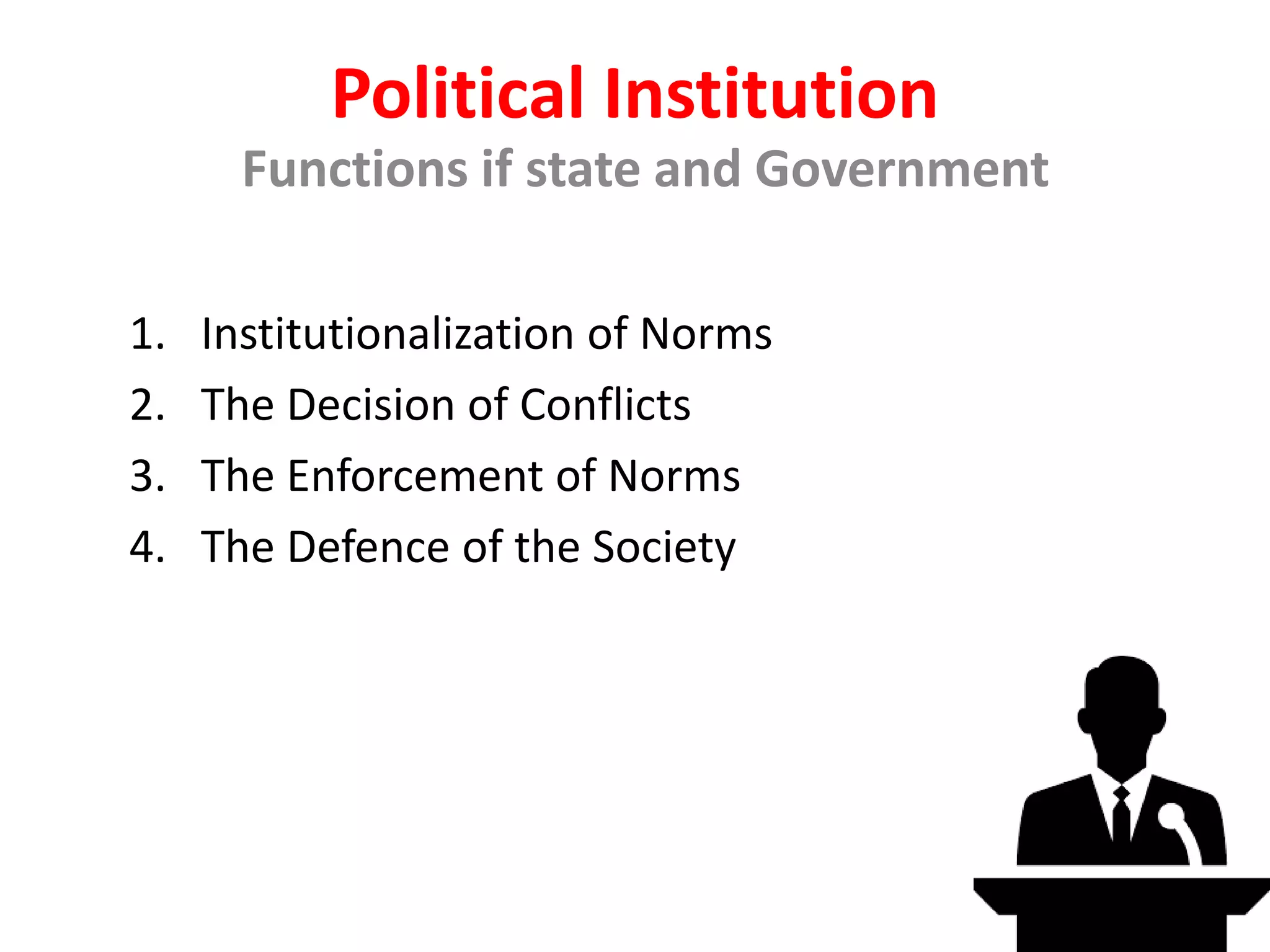
Political institutions don’t just exist to look important. They perform critical functions that keep the social contract alive. If a society is a machine, these institutions are the gears turning it forward. Let’s break down the heavy lifting they do every day.
Creating and Enforcing Laws
This is the most obvious role. Legislatures draft laws. Executives implement them. Courts interpret them. But it’s not just about passing statutes. It’s about legitimacy. A law passed by a duly elected institution carries weight. A decree from an arbitrary dictator does not. Institutions provide the procedural fairness that makes laws acceptable to the governed.
Resolving Conflict
Humans disagree. Always. The question isn’t whether conflict will arise, but how it’s settled. In a healthy system, political institutions provide peaceful mechanisms for resolution. Courts settle disputes. Parliaments debate compromises. Elections allow for the removal of unpopular leaders without violence.
When institutions are weak, conflict spills into the streets. We’ve seen this throughout history. Strong institutions act as shock absorbers. They take the raw energy of public anger and channel it into debate, voting, and legal appeal. It’s boring, yes. But it’s also incredibly effective at preventing bloodshed.
Allocating Resources
Who gets what, when, and how? That’s politics. Institutions decide tax policies. They determine funding for schools, hospitals, and infrastructure. They manage the national budget. This allocation isn’t neutral. It reflects priorities. A strong welfare state implies different institutional values than a laissez-faire economy.
The efficiency of these institutions matters immensely. If a bureaucracy is corrupt or incompetent, resources vanish. They reach the wrong pockets. The public loses trust. Trust, once lost, is hard to rebuild. That’s why institutional integrity is so vital.
Ensuring Accountability
Power corrupts. Absolute power corrupts absolutely. Institutions exist to check that power. Independent司法机关, free press oversight bodies, and electoral commissions keep leaders in line. They say, "You can lead, but you must answer." Without accountability mechanisms, decision-makers drift toward self-interest rather than public service.
This role is often underestimated. We focus on what leaders do. But we should focus more on what constrains them. The best political systems aren’t those with perfect leaders. They are those with robust checks and balances.
Why Weak Institutions Fail
It’s not enough to just have institutions on paper. You can write a beautiful constitution. But if the culture doesn’t support it, it’s useless. This is the difference between formal and informal rules. If the official rule is "no bribes" but the informal norm is "you must pay for service," the institution is hollow.
Weak institutions lead to instability. They fail to mediate conflict effectively. Resources are squandered. Crime rises. People lose faith in the system. Radical alternatives become attractive. The vacuum created by institutional failure is often filled by populism or authoritarianism, promising quick fixes that rarely work.
Building strong institutions takes time. It’s not a quick fix. It requires educated citizens, independent media, and a commitment to rule of law. It’s a slow grind. But it’s the only sustainable path to a stable, prosperous society.
The Evolution of Governance
Institutions aren’t static. They evolve. Digital technology is changing the landscape. E-voting, open data initiatives, and online petitioning are creating new forms of political engagement. These digital tools can enhance transparency. Or they can be used for surveillance and misinformation. The outcome depends on how traditional institutions adapt.
The challenge for modern societies is balancing tradition with innovation. Too rigid, and institutions become obsolete. Too fluid, and they lose their authority. The sweet spot is adaptive stability. Institutions that can change without breaking.
Understanding political institutions isn’t just for political scientists. It’s crucial for every citizen. By knowing how the system works, you can better hold it accountable. You can see through the rhetoric. You can demand better governance. After all, the health of our democracy depends on the strength of its institutions. And that strength comes from us.