What “OC” Means on Your Air Conditioner: Common Causes Explained
When you glance at the digital read‑out of your split‑system or window AC and see the letters “OC,” it can feel like the machine is speaking a secret code. The good news is that the message isn’t as cryptic as it looks. In most modern units “OC” is an error flag, and it points to a specific range of problems—from a simple airflow blockage to a more serious over‑current condition. Understanding the context helps you decide whether a quick clean‑up will do the trick or if it’s time to call a technician.
Typical Scenarios Where “OC” Pops Up
- Overcurrent protection triggered – The compressor draws more amps than the unit is rated for, and the built‑in safety trips.
- Outdoor unit communication error – The indoor controller can’t “talk” to the outdoor condenser, usually because of a wiring fault.
- Ozone concentration warning – Some newer, eco‑friendly models use ozone sensors and will flag “OC” if levels become abnormal.
Not every brand uses exactly the same shorthand, but these three scenarios cover the lion’s share of “OC” alerts you’ll encounter in the field.
Overcurrent Protection: When the Compressor Works Too Hard
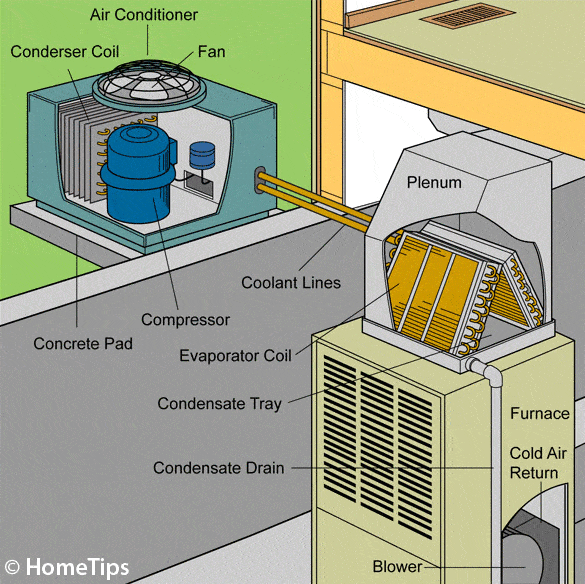
The compressor is the heart of any air conditioner, and like any heart it has a maximum beating rate. If the unit tries to pump more refrigerant than designed—perhaps because the refrigerant charge is low or the condenser coil is clogged—the compressor can draw excess current. The internal overload relay senses this spike and shuts the system down, displaying “OC” to let you know something is amiss.
Typical signs that accompany an overcurrent fault include:
- Humming or a brief start‑up noise followed by silence.
- A warm or hot condenser when you check it after a few minutes of operation.
- Repeated cycling on and off as the unit attempts to restart.
If you suspect an overcurrent issue, the first step is to check for obvious airflow restrictions: clean the outdoor coil, clear debris, and verify that the fan spins freely. A dirty filter on the indoor side can also force the system to work harder, so replace that, too. Should the problem persist, the amperage draw needs measuring with a clamp meter—something best left to a qualified HVAC tech.
Outdoor‑Unit Communication Errors: The Lost Connection
Most split systems rely on a low‑voltage data line that shuttles signals between the indoor thermostat and the outdoor condenser. A loose connector, corroded terminal, or even a shorted wire can interrupt this dialogue, prompting the indoor display to flash “OC.”
Because the symptom is purely electrical, the unit itself may still be mechanically sound. Here’s a quick checklist before you call in help:
- Turn off power at the breaker and open the service panel on the indoor unit.
- Inspect the connector pins for corrosion or bent contacts.
- Confirm that the communication cable is seated firmly in both the indoor and outdoor terminals.
- Look for any signs of rodent damage—chewed insulation is a common culprit.
If everything looks tidy but the error remains, the smart move is to replace the communication board. That component can be pricey, so a technician will typically run a diagnostic test to confirm it’s the point of failure.
Ozone Concentration Alerts: A Newer Kind of “OC”
A handful of cutting‑edge residential units incorporate an ozone sensor to monitor indoor air quality. When the sensor detects ozone levels outside the safe range—often due to a malfunctioning ionizer—it flashes “OC” as a warning.
To address this newer variety of “OC”:
- Turn off the ionizer function on the remote or control panel.
- Vent the room briefly by opening a window; this dilutes any lingering ozone.
- Consult the user manual for a sensor‑reset procedure; many models require a short power‑cycle.
If the warning returns after a reset, the sensor itself may need replacement—something most manufacturers will handle under warranty.
When to DIY and When to Call a Pro
Sorting “OC” errors can feel like a low‑stakes mystery, but the line between a simple fix and a dangerous electrical issue is thin. Here’s a rule of thumb:
- DIY‑friendly: Dirty filters, clogged outdoor coils, loose communication plugs, and ionizer toggles.
- Professional‑required: Persistent overcurrent trips, unusual compressor noises, repeated communication failures after reseating wires, or sensor errors that won’t reset.
Remember, working on the high‑voltage side of an AC unit is hazardous. If you ever doubt your comfort level, it’s safer—and often cheaper in the long run—to let a licensed technician take over.
Preventive Tips to Keep “OC” at Bay
Regular maintenance is the most reliable way to avoid surprise error codes. Schedule a professional tune‑up at least twice a year—once before the cooling season kicks in and once as it winds down. During that visit, ask the tech to:
- Check the overload relay and replace if it shows signs of wear.
- Test the communication line continuity.
- Inspect the ozone sensor (if equipped) for proper calibration.
At home, keep the area around the outdoor condenser clear of leaves, shrubs, and debris. Swap out or clean the indoor filter every month during heavy use. These small actions keep the airflow humming smoothly and reduce the electrical strain that most “OC” alerts stem from.
Bottom line
Seeing “OC” on your AC doesn’t automatically mean the whole system is on its last legs. In many cases it’s simply the unit’s way of saying, “Hey, I’m working harder than I should.” By diagnosing whether the culprit is an overcurrent condition, a broken communication link, or an ozone‑sensor warning, you can decide if a quick clean‑up will suffice or if professional service is warranted. A little preventive TLC goes a long way, turning those mysterious letters into a non‑event and keeping your home comfortably cool all summer long.