What Superintendents Actually Do: Roles And Responsibilities
When people think of the person running a school district, they often picture someone in a nice office signing checks and leaving by 3 PM. The reality is drastically different. The role of a school superintendent is less like being the "head teacher" and more like being the CEO of a complex, multi-faceted organization with a social mission.
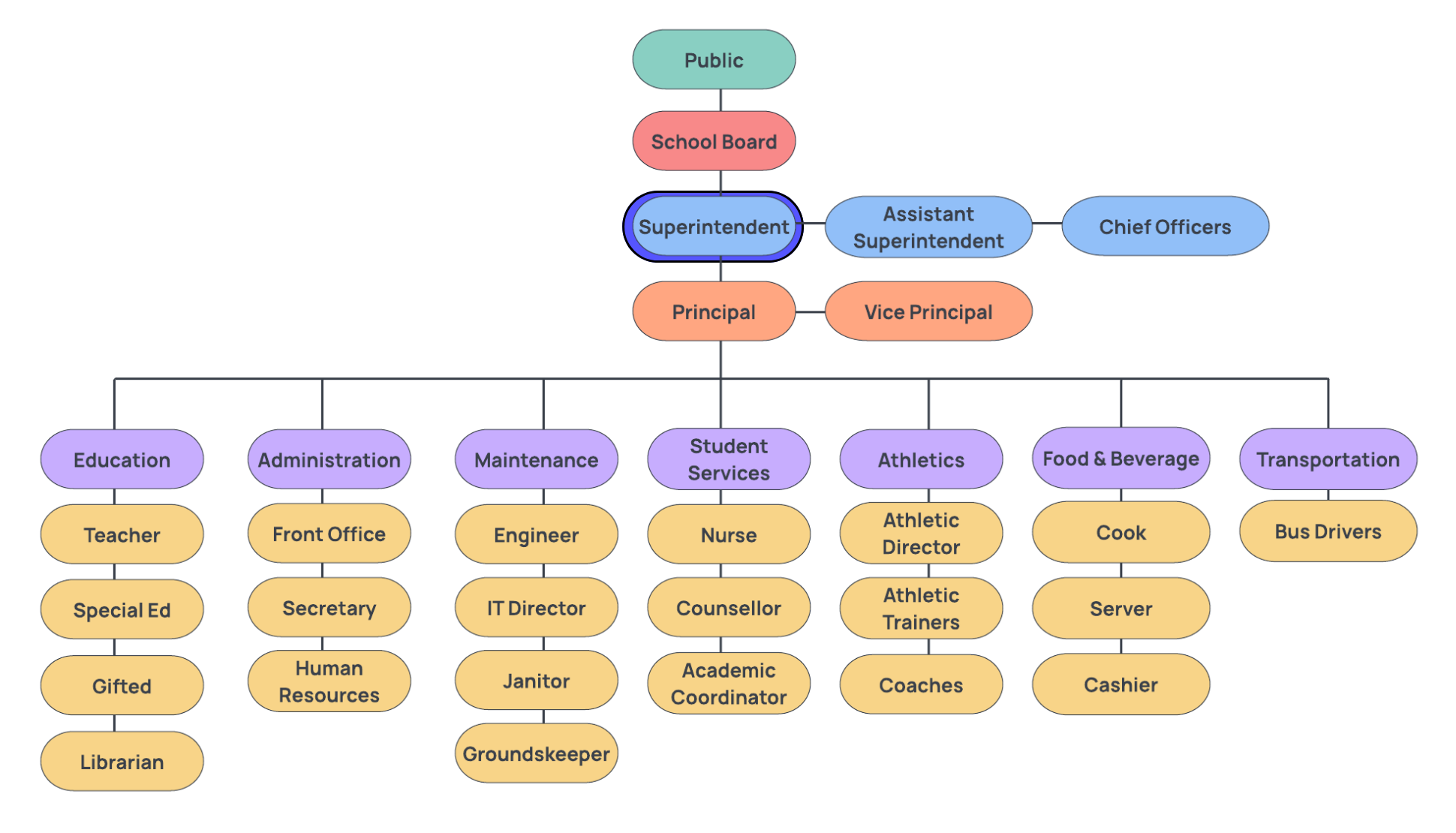
Superintendents stand at the intersection of politics, education, finance, and human resources. They are the chief executive officers of public education within their jurisdiction, accountable to the elected school board and the community they serve. It is a high-stakes job where decisions made in a boardroom directly impact the daily lives of thousands of students, parents, and staff.
The Strategic Leader, Not Just An Administrator
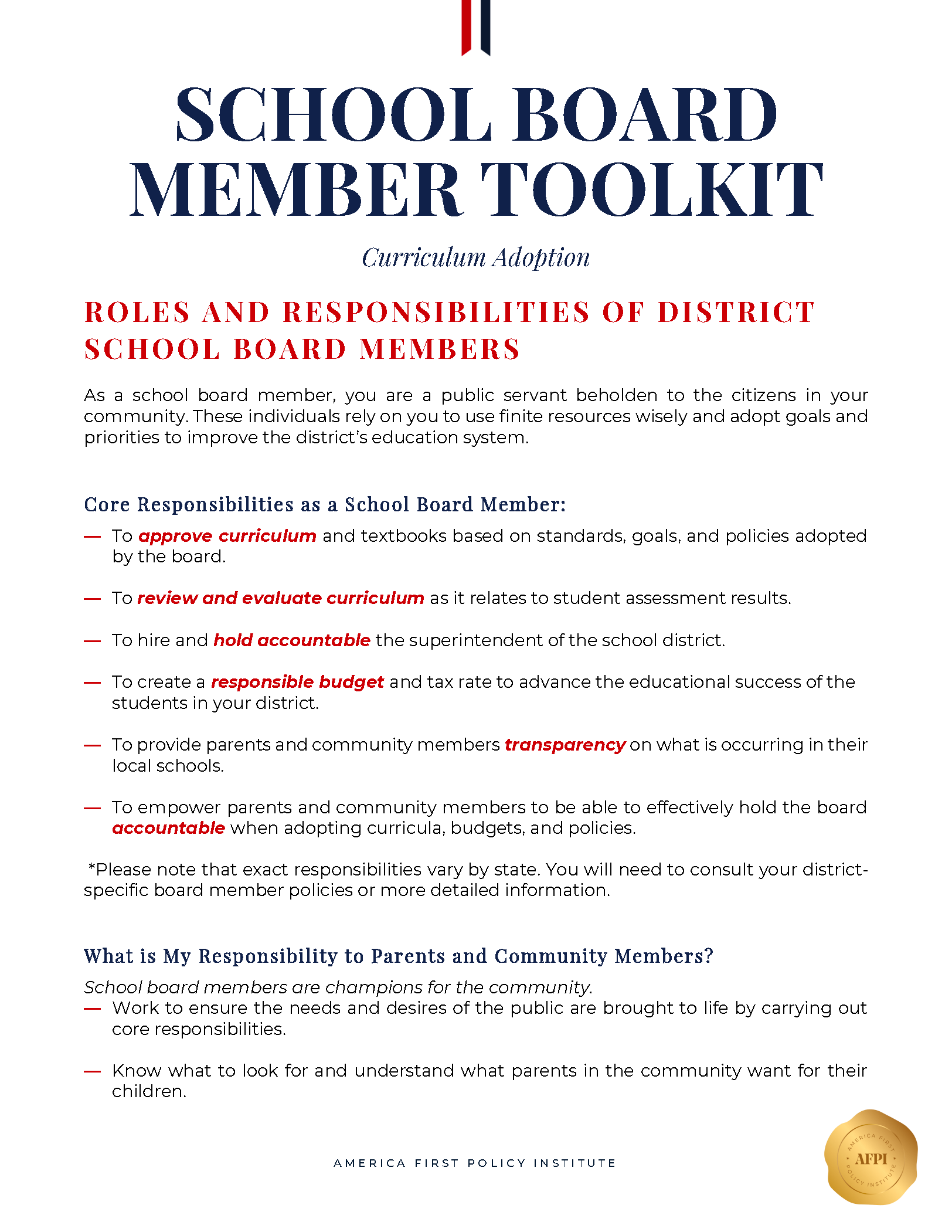
The primary role of a superintendent is strategic leadership. They work closely with the school board to define the vision, mission, and long-term goals of the district. While the board sets the policy and direction, the superintendent is responsible for executing that vision across every building in the district.
This involves a significant amount of foresight. Leaders must anticipate trends in education, such as shifts in curriculum standards, changes in state funding formulas, or emerging technologies. They translate broad policy into actionable plans for principals and teachers. If the board decides to improve literacy rates, it is the superintendent’s job to figure out how to allocate resources, hire the right experts, and implement effective programs to make that happen.
Crucially, the superintendent acts as the bridge between the board and the rest of the district. They ensure that board policies are understood at the school level and that on-the-ground realities are communicated up to the decision-makers. This balance requires immense emotional intelligence and clear communication skills.
Financial Stewardship And Budgeting
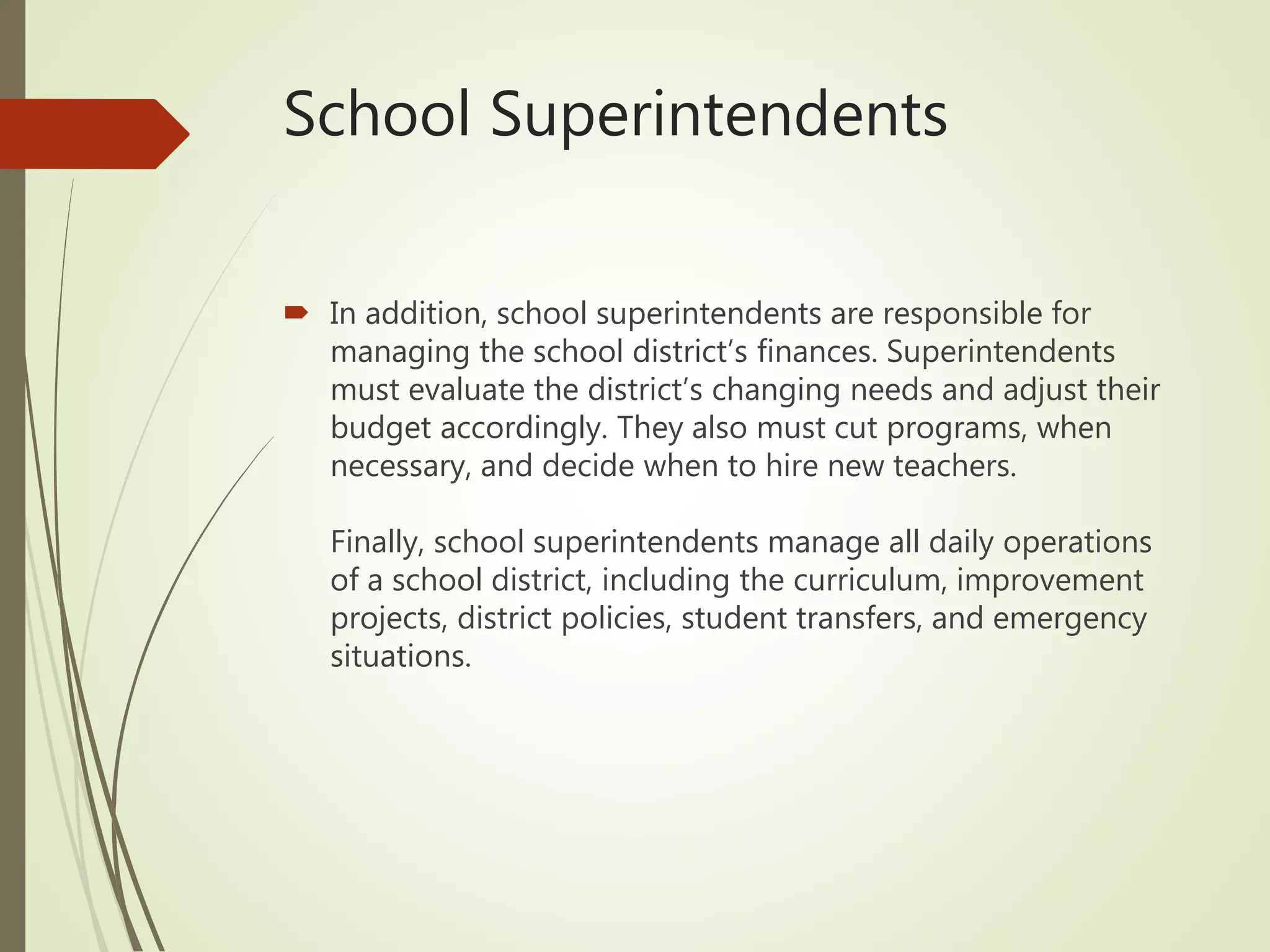
Perhaps the most misunderstood aspect of the job is the financial responsibility. Superintendents manage budgets that can run into the hundreds of millions of dollars. Unlike a typical corporation, revenue is not generated by sales but by taxes, state aid, and federal grants.
This makes budgeting a restrictive and often contentious process. Every dollar has two votes: one for the purchase and one for the salary of the person using it. Since personnel costs typically make up the largest portion of a school budget, hiring and retention strategies are directly tied to financial health.
Responsibilities include:
- Developing and presenting the annual budget to the school board for approval.
- Ensuring compliance with state and federal financial regulations.
- Managing unanticipated expenses, such as facility repairs or emergency needs.
- Advocating for adequate funding at the local, state, and national levels.
A Superintendent must be able to explain why there isn't enough money for everything. This often involves making tough choices about program cuts, staff reductions, or facility closures. These decisions are rarely popular, but they are necessary to maintain fiscal solvency.
Human Resources And Talent Management
Education is a people-based industry. The quality of education is directly linked to the quality of the staff. Therefore, a major responsibility of the superintendent is recruiting, retaining, and developing high-quality personnel. This goes far beyond traditional HR functions.
Superintendents are responsible for hiring principal leaders, which is one of the most impactful hiring decisions in a district. A strong principal can turn around a struggling school, while a weak one can sabotage a successful one. Consequently, superintendents spend considerable time building a leadership pipeline.
They also handle complex labor relations. Most school districts have strong unions representing teachers and support staff. Superintendents negotiate contracts, handle grievances, and work to maintain positive labor relations. In an era of teacher shortages, attracting and keeping talent is a constant, high-priority challenge that requires competitive compensation packages and a supportive culture.
Community Relations And Crisis Management
A school district does not operate in a vacuum. It is deeply embedded in its community. Superintendents serve as the public face of the schools. They attend community events, speak to local media, and engage with parents. Trust is their most valuable currency.
Maintaining that trust requires transparency and consistent communication. When things go well, it is easy to build goodwill. But the role also involves crisis management. Whether it is a health emergency, a disciplinary issue, or a natural disaster, the superintendent must step up and provide clear, calm, and accurate information.
In today’s social media landscape, news travels fast. A small incident can spiral into a major public relations challenge overnight. Superintendents must navigate these situations with care, ensuring that student safety, legal compliance, and community sentiment are all considered. This often involves coordinating with law enforcement, media relations teams, and mental health professionals.
Advocacy And Policy Compliance
Beyond the district walls, superintendents are advocates for public education. They engage with legislators to influence education policy and funding. They argue for the needs of their students, pushing back against legislation that might harm educational outcomes or financial stability.
Furthermore, they are responsible for ensuring the district complies with a vast array of laws. This includes federal mandates like the Individuals with Disabilities Education Act (IDEA) and the Every Student Succeeds Act (ESSA). Failure to comply can result in loss of funding or legal action. Navigating this legal landscape requires constant vigilance and often the guidance of legal counsel.
FAQ
Is the superintendent the highest authority in a school district?
No, typically the elected school board holds the ultimate authority and sets the policy. The superintendent is the chief executive officer hired to implement that policy. The board sets the direction, and the superintendent drives the bus.
What is the biggest challenge superintendents face today?
Currently, many superintendents cite retention of staff and students, coupled with budget constraints and the mental health crisis among students, as top challenges. Political polarization and lack of public trust in schools are also significant issues.
Do all school districts have superintendents?
Large districts have a full-time superintendent. Some very small districts may have an interim executive or a district manager, while some regions might share a superintendent across multiple small districts to reduce costs.