Who Was the Brilliant Mind Behind the Antikythera Mechanism?
Unraveling a Mystery from the Deep
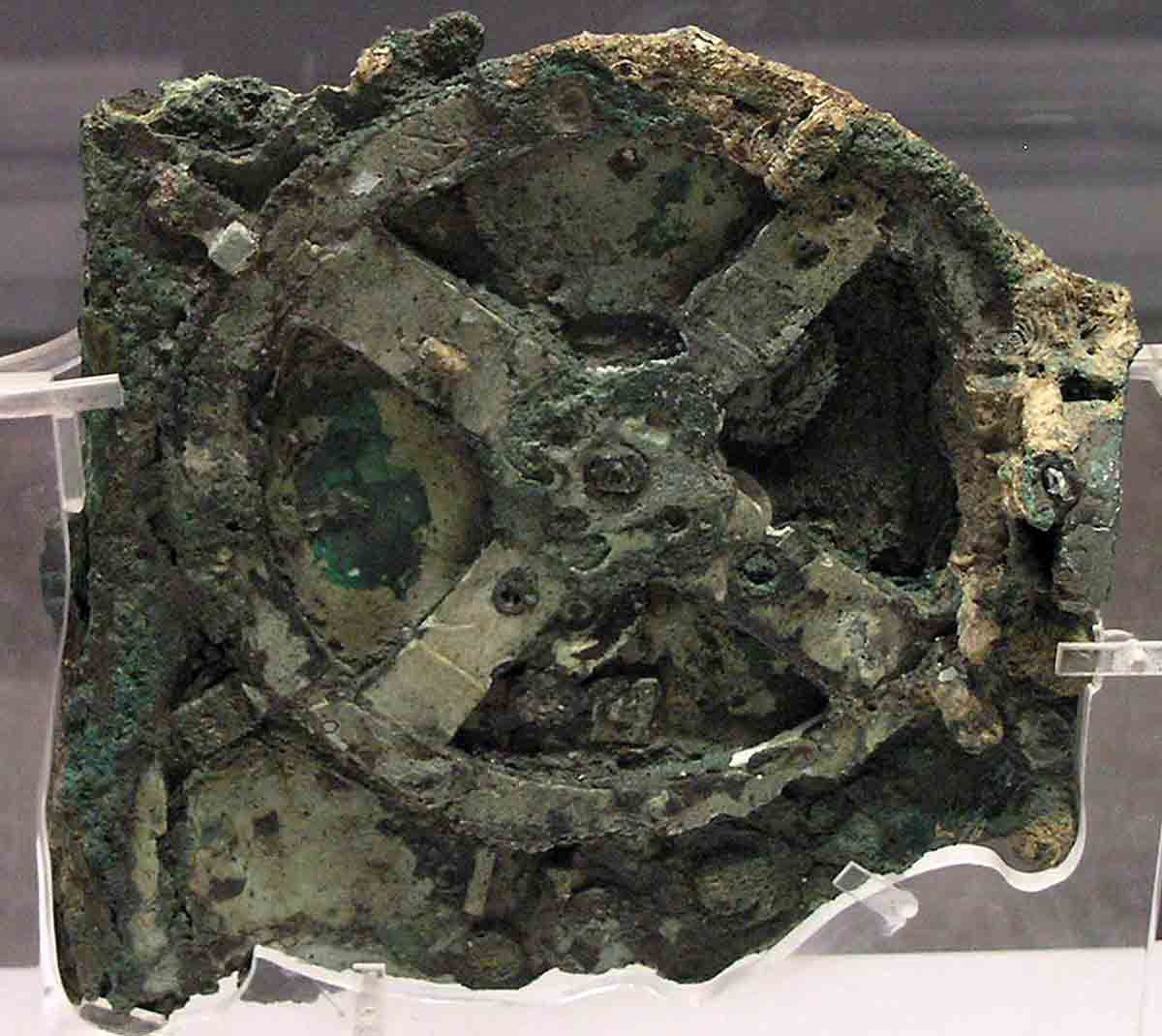
The Antikythera Mechanism, recovered from a shipwreck off the Greek island of Antikythera in 1901, has long been hailed as the world’s first analog computer. Its bronze gears could predict eclipses, track the Olympic cycle, and even model the irregular motion of the moon. Yet, despite the device’s sophistication, the name of its creator remains elusive.
What Do We Actually Know?
Historical clues are scattered, like shards of the mechanism itself. Inscriptions on the bronze work are fragmentary, written in Koine Greek, and they reference the “Archimedes of Syracuse” – a hint, perhaps, but not a definitive signature.
Scholars have pieced together a plausible context:
- Crafted in the Hellenistic world, likely between 150 and 100 BC.
- Originated in a cultural hub where astronomy, mathematics, and engineering intersected.
- Possibly linked to the workshop of a known inventor or a royal patronage.
Archimedes: The Usual Suspect
When the name Archimedes appears, it’s tempting to attribute the device to him. After all, he pioneered gear-driven mechanisms such as the planetarium and water organ. However, there are reasons to hesitate:
- Archimedes died in 212 BC, well before the estimated construction date.
- The mechanism’s astronomical tables are more advanced than anything recorded in his surviving works.
Thus, while Archimedes may have inspired the design, he was likely not the hands‑on builder.
Other Contenders in the Hellenistic Workshop
Several lesser‑known figures emerge from the shadows of ancient science:
Hipparchus of Nicaea
A celebrated astronomer of the 2nd century BC, Hipparchus compiled star catalogs and refined the length of the tropical year. Some researchers argue that the mechanism’s eclipse prediction algorithm mirrors Hipparchus’ methods, suggesting his involvement—or at least his data.
Posidonius of Apamea
Philosopher, geographer, and astronomer, Posidonius wrote extensively on cycles and planetary motion. A fragment of his lost treatise hints at a “geared device” used for teaching, which could align with the Antikythera’s educational purpose.
Patrons of the Library of Alexandria
The famed library was a magnet for engineers and mathematicians. It is plausible that a collaborative team, funded by the Ptolemaic court, produced the mechanism as a gift for a dignitary—perhaps even the ship’s owner.
Why the Author Remains Anonymous
Ancient inventions were rarely signed the way modern patents work. Craftsmen often labored under the patron’s name, and many technical documents have not survived the ravages of time. Moreover, the very function of the Mechanism—to encode astronomical knowledge—was considered a communal intellectual property, not a personal claim.
Modern Techniques Shed Light on Old Questions
Recent advances in imaging—X‑ray computed tomography, 3D laser scanning, and machine‑learning reconstructions—have revealed hidden gear arrangements and inscription fragments. Each new discovery nudges the scholarly consensus a bit closer to a plausible authorship, but also uncovers fresh ambiguities.
What the Evidence Suggests
- It was likely the product of a team of Hellenistic engineers, not a lone genius.
- The design reflects a synthesis of Archimedean mechanics, Hipparchan astronomy, and perhaps Posidonian philosophy.
- The patronage of a wealthy collector or a royal court probably financed the work.
Bottom Line
Pinpointing a single “genius” behind the Antikythera Mechanism is as challenging as aligning its intricate gear trains without a manual. The device stands as a testament to collective ingenuity—a marvel forged at the crossroads of science, art, and craft in ancient Greece. While we may never know the exact name etched on the original blueprint, the mystery itself continues to inspire modern engineers and historians alike.