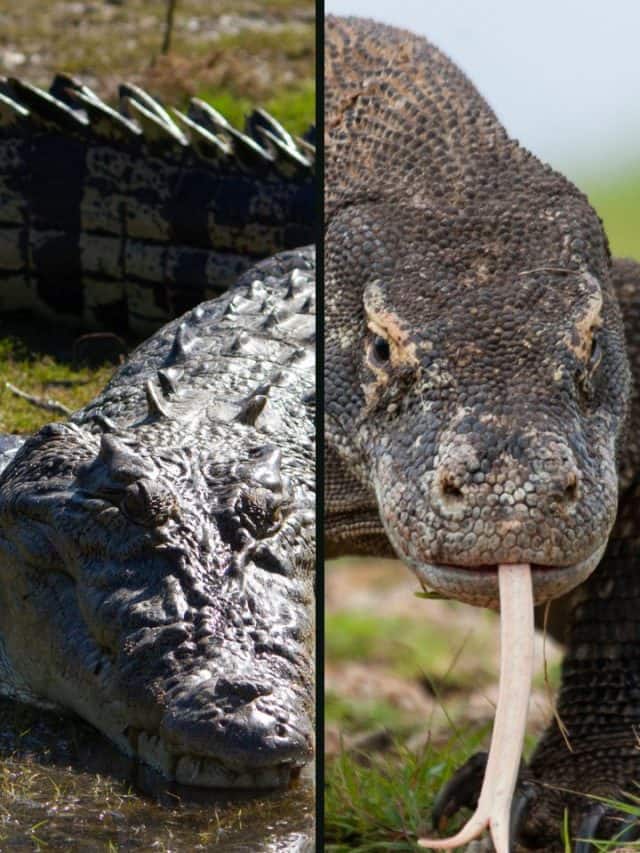
Who Would Win in a Fight: Komodo Dragon vs. Crocodile?
Setting the Stage
When two of nature’s most formidable predators cross paths, it’s hard not to imagine a showdown worthy of a movie script. The Komodo dragon, a massive monitor lizard prowling the Indonesian islands, and the crocodile, an ancient reptile with a bite that can crush bone, each bring a very different set of weapons to the table. Understanding who might come out on top requires looking beyond sheer size and examining anatomy, hunting tactics, and the environments each beast calls home.
Size and Strength: The Basics
At first glance, size seems like the deciding factor. Adult Komodo dragons typically weigh between 150 and 200 kg (330‑440 lb) and stretch up to 2.5 m (8 ft) in length. In contrast, many crocodile species—especially the Nile and the saltwater varieties—regularly top 500 kg (1,100 lb) and can exceed 5 m (16 ft). Their muscular tails add another layer of power, allowing them to lunge forward with a force that far surpasses a monitor’s tail swipe.
- Komodo dragon: Robust, but built for endurance walking rather than explosive bursts.
- Crocodile: Built for sudden, jaw‑crushing attacks; tail muscles are among the strongest in the reptile world.
Weapons of Choice
Bite Force and Teeth
Crocodiles boast one of the strongest bites in the animal kingdom—often measured above 5,000 psi. Their conical, interlocking teeth act like a vice, designed to grip and hold struggling prey. The Komodo dragon’s bite is less about raw force and more about delivering a cocktail of bacteria-laden saliva. Recent studies suggest the presence of mild anticoagulants, but the bite itself registers a modest 150‑200 psi.
Speed and Agility
On land, a Komodo can sprint up to 20 km/h (12 mph) for short distances, an impressive burst for a creature of its mass. Crocodiles, when on solid ground, are notoriously lumbering—perhaps 1–2 km/h—but in water they can launch themselves forward at 30–40 km/h using their tails. So the arena matters.
Defensive Armor
Both reptiles sport thick, armored skin. The Komodo’s scales are reinforced with osteoderms—tiny bony plates—while crocodile hide is notoriously tough, often compared to a leather jacket with a built‑in shield. A crocodile’s dorsal line of bony scutes can deflect strikes that might otherwise wound a monitor.
Habitat Influence on the Outcome
If the encounter takes place on an Indonesian island’s dry forest floor, the Komodo dragon gains a home‑field advantage. Its excellent camouflage and familiarity with the terrain could allow it to ambush a less agile crocodile. Conversely, in a riverine or swamp setting—a crocodile’s element—the predator’s stealthy glide and sudden lunges would tilt the odds heavily in its favor.
Typical Hunting Strategies
Komodos are opportunistic hunters; they stalk, bite, and then wait for the prey to weaken. Their strategy relies on endurance rather than immediate kill. Crocodiles prefer a “snap‑and‑hold” method—an explosive burst to seize a target, then drown or pull it under water.
When pitted against each other, these tactics clash. A Komodo might try to bite and retreat, hoping its toxins take effect. A crocodile, however, would likely aim for a decisive grip, using its jaws to immobilize before the lizard’s venom can work.
Real‑World Encounters
Documented interactions are scarce, but a few field notes hint at the likely winner. In the Indonesian archipelago, crocodiles (mostly smaller estuarine species) have been observed fleeing when a Komodo dragon approaches, suggesting the lizard’s intimidating presence can discourage a fight. In Africa, large Nile crocodiles have been seen overpowering monitor lizards that dared to enter their waters.
Who Has the Upper Hand?
There’s no absolute answer—much depends on context. In a dry, open clearing, a healthy adult Komodo could land a damaging bite and potentially outlast a smaller crocodile, gradually wearing it down. In water, or against a sizable saltwater or Nile crocodile, the reptile’s sheer bite force, speed, and tail power would likely end the encounter swiftly.
Key Takeaways
- Size and bite force heavily favor crocodiles, especially larger species.
- Komodo dragons rely on venomous saliva and stamina; their attack is less immediately lethal.
- Environment is a game‑changer—land favors the dragon, water favors the crocodile.
- Real observations suggest crocodiles dominate in aquatic settings, while Komodos may avoid direct confrontation on land.
So, if you ever wonder who would win in a hypothetical duel, picture the battlefield first. The victor isn’t fixed; it’s a nuanced dance of adaptations, tactics, and terrain.