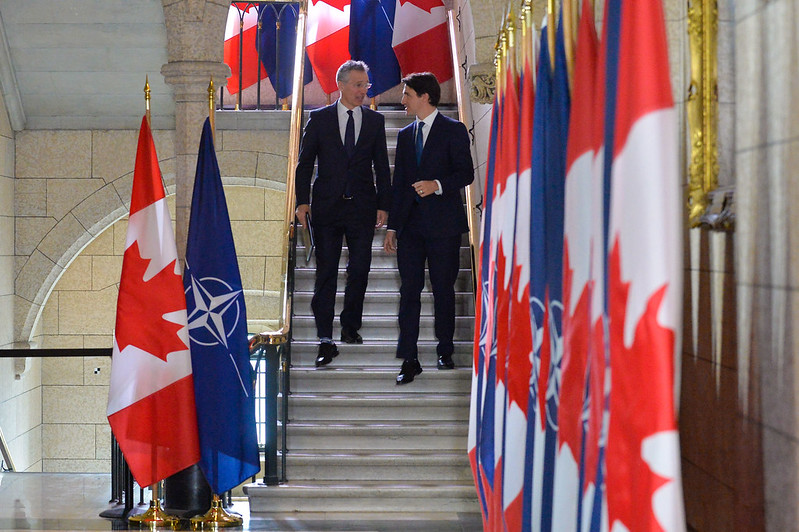
Why Canada Lagged Behind NATO Targets, According to a 2019 Global News Report
When the 2019 Global News Report released its analysis of NATO member contributions, Canada’s NATO delinquency stood out. The term “delinquency” here isn’t a moral judgment—it simply denotes the gap between a country’s pledged defense spending and the alliance’s 2 percent of GDP benchmark. Canada’s shortfall sparked a lively debate about national priorities, fiscal constraints, and the future of the alliance.
Canada’s NATO Delinquency – A Snapshot from 2019
The 2019 Global News Report showed Canada spending roughly 1.3 percent of its gross domestic product on defense, well below the 2 percent goal set at the 2014 Wales summit. While the figure represented a modest rise from previous years, it still left Canada among the lowest contributors in the alliance, trailing powerhouses like the United States and the United Kingdom.
The Context: NATO’s Defense Spending Guideline
NATO’s 2 percent guideline isn’t a legal requirement; it’s a political commitment meant to ensure that all members share the burden of collective security. The guideline was first introduced in 2006 and reaffirmed in 2014 after Russia’s annexation of Crimea. While most European members have nudged toward the target, a handful—including Canada—have struggled to keep pace.
What the 2019 Global News Report Revealed
The report broke down the shortfall into three main components: absolute spending levels, procurement delays, and personnel costs. It noted that Canada’s defense budget, though growing in nominal terms, was outpaced by inflation and the rapid rise of emerging threats. Consequently, the country’s ability to fund new platforms—such as fifth‑generation fighter jets or Arctic surveillance ships—remained limited.
Key Findings
- Spending Gap: Canada’s defense outlay fell about 0.7 percentage points short of the 2 percent target.
- Procurement Backlog: Major programs like the acquisition of new maritime patrol aircraft experienced cost overruns and schedule slips.
- Personnel Pressures: Recruitment and retention challenges in the Canadian Armed Forces added to the budget strain.
Why Canada Struggled to Meet the 2 Percent Goal
Several intertwined factors explain the delinquency. Politically, defense has historically occupied a peripheral spot on the national agenda, eclipsed by healthcare and social programs. Economically, Canada’s modest GDP growth in the late 2010s limited the fiscal room for sizable defense hikes without raising taxes or borrowing more.
Geographically, Canada’s vast, sparsely populated north demands a unique security posture. Maintaining a credible presence across Arctic waters and remote territories is expensive, yet the cost is often spread thinly across a relatively small force.
Finally, procurement culture has faced criticism for its complexity. Multi‑year contracts and shifting requirements have occasionally led to cost inflation, making it harder to allocate funds efficiently.
Implications for the Alliance and Canadian Security
From NATO’s perspective, any member falling short of the 2 percent benchmark can be perceived as a weak link, potentially eroding collective resolve. For Canada, the shortfall raised questions about the nation’s influence in alliance decision‑making and its ability to contribute meaningfully to joint operations.
Domestically, the delinquency sparked debates over whether Canada should prioritize modernizing its forces or focus on other national priorities. Critics argued that a lower defense budget could compromise readiness, especially as the Arctic becomes a contested arena for resource extraction and navigation routes.
Steps Canada Has Taken Since 2019
In response to growing pressure, the Liberal government announced a series of measures aimed at narrowing the gap. In 2020, Canada pledged to increase defense spending to 1.7 percent of GDP by 2024‑25, with a longer‑term vision of reaching the 2 percent mark.
Key initiatives include:
- Accelerating the procurement of F‑35 fighter jets to replace aging CF‑18s.
- Launching a dedicated Arctic sovereignty program that funds new icebreakers and surveillance assets.
- Introducing a “Canadian Forces Recruitment and Retention Strategy” to address manpower shortfalls.
While these steps signal intent, the actual budget allocations have faced delays, and the pandemic further complicated spending timelines.
Looking Ahead: Can Canada Close the Gap?
Achieving the 2 percent target will likely require a combination of steady budget increases, smarter procurement, and perhaps a shift in public perception of defense’s role. Some analysts suggest that focusing on high‑impact, cost‑effective capabilities—like cyber defence and unmanned systems—could provide outsized benefits without demanding massive capital outlays.
Moreover, the evolving security environment, especially in the Arctic, may compel policymakers to view defense spending as an investment in national sovereignty rather than a discretionary expense. If Canada can align its strategic priorities with fiscal realities, the lingering NATO delinquency could become a thing of the past.
Frequently Asked Questions
Q: How does Canada’s defense spending compare to other NATO members?
A: As of the 2019 Global News Report, Canada ranked near the bottom, spending about 1.3 percent of GDP, whereas the alliance average hovered around 1.8 percent. Only a few nations, such as the United States and the United Kingdom, consistently meet or exceed the 2 percent goal.
Q: What are the main reasons behind Canada’s lower defense budget?
A: The shortfall stems from a mix of political prioritization, modest economic growth, high costs of operating in a vast northern territory, and historical procurement challenges that have driven up program expenses.
Q: Has Canada committed to reaching the 2 percent NATO target?
A: The government has pledged to lift spending to 1.7 percent by 2024‑25 and aims for the 2 percent benchmark in the longer term, though specific timelines remain flexible and contingent on fiscal conditions.
Q: Will increasing defense spending affect other public services?
A: Any significant budget shift could require trade‑offs or additional revenue sources. The debate continues over how to balance defense needs with Canada’s strong social‑service orientation.
%3BResize%3D620)