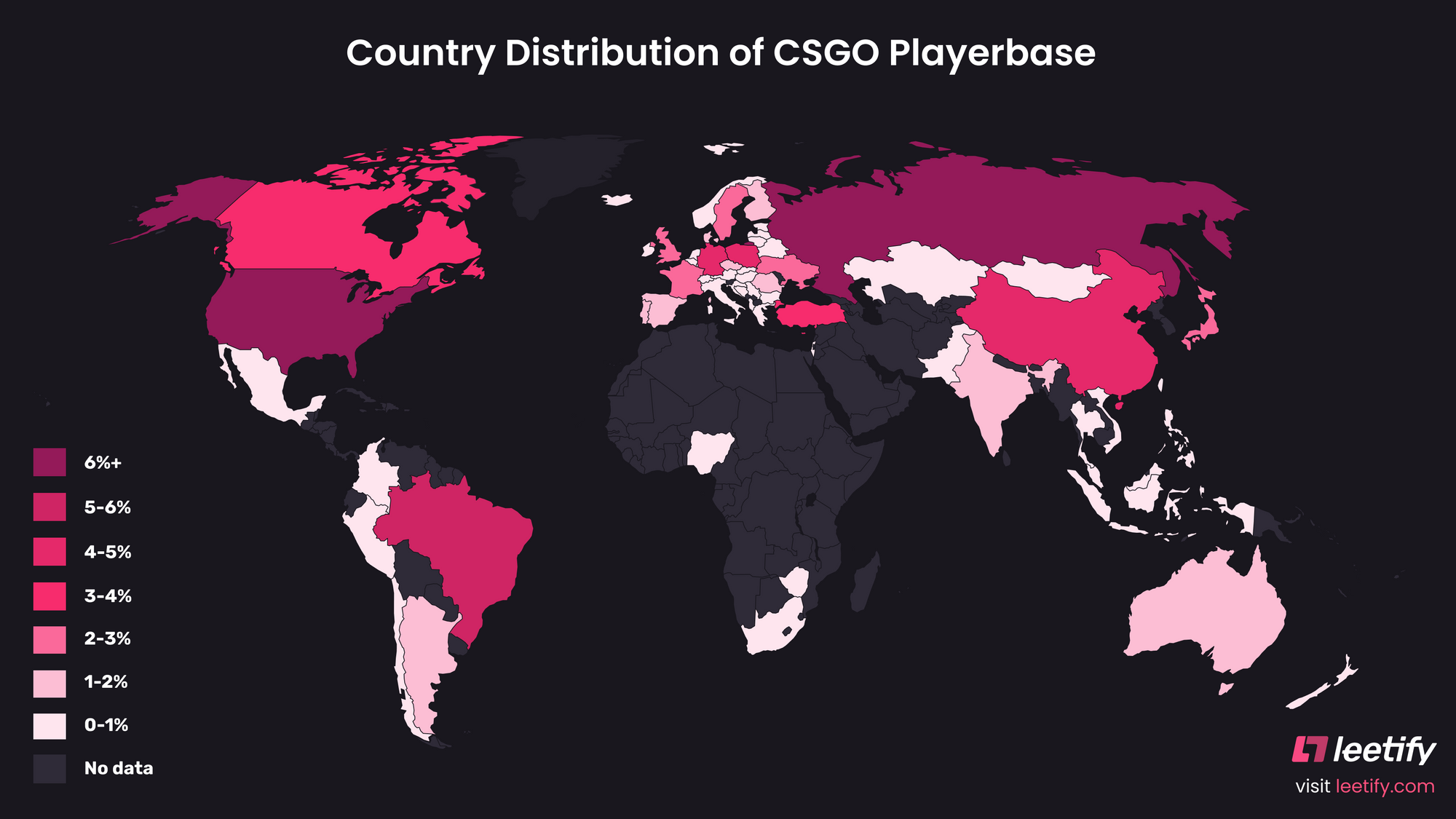
Why Russian Players Dominate CSGO: Regional Trends Explained
When you scroll through the leaderboards of Counter‑Strike: Global Offensive, a familiar pattern emerges: a striking number of top‑ranked names hail from Russia. It’s not a fluke or a one‑off hype wave; it’s a regional trend backed by a mix of history, culture, and practical advantages. Let’s unpack what fuels this dominance, and why the Russian esports scene feels so naturally at home with the game.
The Legacy of First‑Person Shooters in Russia
CS:GO didn’t appear out of thin air. Russia has a long‑standing love affair with tactical shooters, dating back to the early days of Counter‑Strike 1.6 and even the Quake era. Back then, internet cafés sprouted in every major city, turning “gaming nights” into something of a social ritual.
This early exposure created a generation of players who grew up treating FPS titles as a communal pastime rather than a solitary hobby. Those who later migrated to CS:GO carried with them a deep‑seated understanding of map control, economy management, and the sort of mind‑game that only comes from hours of practice.
Infrastructure and Access: The Practical Edge
While many countries wrestle with unreliable broadband, Russia boasts a surprisingly robust network in its urban centers. Cities like Moscow, St. Petersburg, and Kazan enjoy fiber‑optic connections that can comfortably handle the 64‑tick servers CS:GO thrives on. A stable ping translates directly into better performance, and for a game where milliseconds matter, that’s a massive head‑start.
- High‑speed internet: Consistent 100+ Mbps in major hubs.
- Affordable hardware: The local market offers competitive prices for gaming rigs, making quality setups accessible.
- Dedicated LAN venues: Professional‑grade LAN houses remain popular for scrims and tournaments.
Outside the metropolises, the picture shades a bit, but a strong online community often fills the gap—players share servers, organize matches, and keep the competitive spirit alive even in smaller towns.
Cultural Factors: Competition as a Way of Life
There’s an understated competitiveness woven into Russian culture. Whether it’s chess clubs in schools or ice‑hockey arenas in the suburbs, the drive to excel is nurtured from a young age. CS:GO becomes another arena where that mindset finds expression.
At the same time, the game’s strategic depth aligns well with the analytical bent that many Russian players display. The constant need to read opponents, manage resources, and execute coordinated pushes resonates with a mindset that values meticulous planning over reckless aggression.
Team Dynamics and Communication
Language plays a subtle role, too. Russian teams often communicate in their native tongue, which eliminates the “lost in translation” friction many international squads face. That linguistic cohesion lets them coordinate more fluidly, especially in high‑pressure scenarios where split‑second decisions determine win or loss.
Economic Incentives and Professional Pathways
Esports salaries in Russia have risen alongside the global market, yet the cost of living remains relatively moderate. A professional CS:GO player can comfortably sustain a good lifestyle without the staggering expenses seen in Western Europe or North America.
Moreover, Russian organizations such as Gambit, Virtus.pro, and Adrenaline have built solid pathways from amateur leagues to the big stage. They scout talent from regional qualifiers, offering contracts, coaching, and travel support. The promise of a clear career ladder attracts many ambitious gamers.
- Prize pools in domestic tournaments reach six‑figure sums.
- Sponsored equipment deals are common for top‑ranked individuals.
- Media exposure via Russian streaming platforms boosts personal branding.
The Role of Streaming and Community Content
Platforms like Twitch and YouTube host a vibrant Russian CS:GO community. Streamers often provide in‑depth analysis, highlighting map strategies, utility usage, and even psychological tips. Watching these sessions, upcoming players absorb high‑level concepts without needing formal coaching.
Community‑run Discord servers act as informal academies. A newcomer can join a voice channel, receive direct feedback on a split‑second decision, and even get invited to scrims with semi‑pro teams. This hyper‑connected ecosystem accelerates skill development far beyond what a solo grind could achieve.
Government and Private Support
In recent years, the Russian government has expressed interest in promoting esports as a legitimate sport. Grants for tournament organization, tax incentives for esports companies, and even university scholarships for dedicated players have started to appear on the scene.
Private sponsors, ranging from tech firms to energy drinks, see the growing audience and jump on board. Their investments fund better training facilities, bring in international coaches, and provide the logistical backbone needed for teams to travel to events like the ESL One or BLAST Premier series.
Challenges That Keep the Scene Grounded
It’s not all smooth sailing. Geopolitical tensions sometimes affect tournament visas, and occasional server bans disrupt online practice. Yet these obstacles often breed resilience. Teams learn to adapt—whether by training on alternative servers or focusing on in‑house scrims—turning potential setbacks into strategic advantages.
Putting It All Together
The Russian dominance in CS:GO isn’t a single‑dimensional story. It’s the convergence of early exposure, reliable internet, cultural competitiveness, economic viability, robust community support, and emerging institutional backing. Each factor reinforces the others, creating a self‑sustaining ecosystem where talent can flourish.
So the next time you see a Russian squad clutch a round or a solo player climb the ranks, remember: behind that reflex lies a network of cafés, servers, mentors, and a deep‑rooted love for strategic play. It’s a reminder that regional trends in esports are rarely accidental—they’re the product of many moving parts working in harmony.