Why You Can't Actually Unlock Bitcoin Private Keys in 2022
It is a common misconception that you can simply "unlock" a Bitcoin private key using a modern software tool. If you are searching for a "Bitcoin Private Key Finder" or a "decryptor" from 2022, it is crucial to understand the technical reality: such tools do not exist in the way marketing sites claim. The concept of generating a private key from a wallet address is mathematically infeasible with current technology. However, if you are looking to unlock a Bitcoin private key that you already possess or partially know, there are legitimate methods involving passphrase recovery and legacy wallet support. Let’s separate the technical truth from the online noise.
The Myth of the "Private Key Generator"
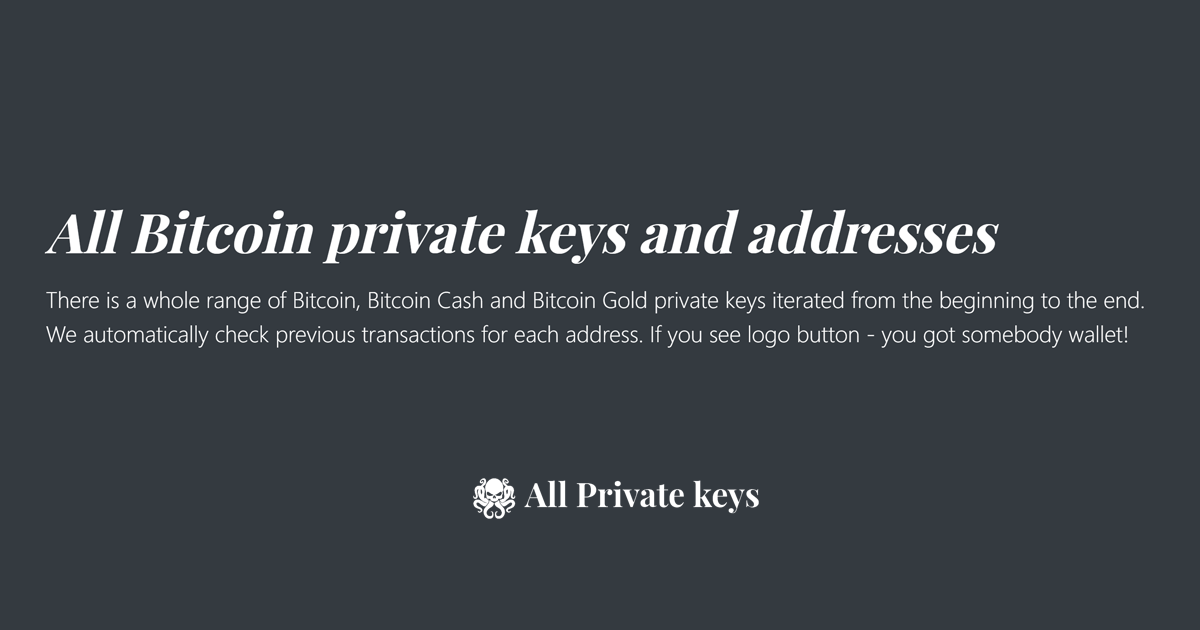
Many websites promise to find a private key for a public Bitcoin address. These claims are technically impossible. Bitcoin’s security relies on elliptic-curve cryptography (specifically the secp256k1 standard). This cryptographic pair ensures that while a public key can be derived easily from a private key, the reverse process requires solving a discrete logarithm problem. With modern computing power, this would take billions of years, even with quantum-resistant assumptions aside.
Why do these "finders" exist?
- They often redirect to download malware disguised as recovery tools.
- They may be SEO farms trying to monetize the anxiety of lost wallets.
- They sometimes offer "partial key" searching, which is a brute-force method with negligible success rates.
If someone offers to decrypt your wallet for a fee, it is almost certainly a scam. No legitimate software can guess a 256-bit key from a public address.
Unlocking Known Keys: The Legitimate Process
The real-world scenario isn't about "finding" a key that doesn't exist, but about unlocking a key you already have, often one that is encrypted or part of an old wallet format. For instance, many users have private keys stored in legacy formats like the Bitcoin Improvement Proposal (BIP) 32 or older Wallet Import Format (WIF) files. These files may be locked behind a password or passphrase.
To unlock these, you need the exact software version that created the wallet. For early Bitcoin versions (pre-2012), tools like Electrum or even the original Bitcoin Core client can sometimes load these keys if you provide the correct decryption password. If you have a WIF key starting with '5' or 'K' or 'L', you can often import it directly into a modern non-custodial wallet. The "unlocking" here is simply moving the key into a software that can broadcast a transaction.
Recovering Lost Passphrases
If you have the private key string but it is encrypted with a password you’ve forgotten, the solution changes to "password recovery" rather than "key finding." In 2022, the most viable approach was using GPU-accelerated password recovery tools. Tools like Hashcat or John the Ripper can crack weak passwords protecting a wallet file.
Here is how that process generally works:
- Extract the Hash: You need to convert the encrypted wallet file into a hash format that the cracking tool understands.
- Dictionary Attack: Run a list of common passwords against the hash. This is your best chance if your password was ever reused from another site.
- Brute Force with Rules: If your password is alphanumeric and simple (e.g., "bitcoin123"), a brute-force attack might succeed within hours on a mid-range GPU.
However, if your passphrase is a long, random string of characters, even these tools will fail. The entropy of a strong Bitcoin passphrase is designed to be unbreakable.
Legacy Wallet Compatibility
Another aspect of "unlocking" involves compatibility. You might have a valid private key but cannot import it because modern wallets don't support ancient formats. In 2022, many users struggled with MultiBit or early Electrum versions. To unlock these funds, one might need to run older operating systems (like Windows 7 or XP) to execute the original wallet software. This is a system-level unlock, not a cryptographic one.
It is also worth noting that some "private keys" found in old dumps are already spent. Public block explorers can tell you if an address has moved its funds in the last decade. Spending hundreds of hours trying to unlock a key for an empty address is a waste of resources.
Safety First: Avoiding Phishing Traps
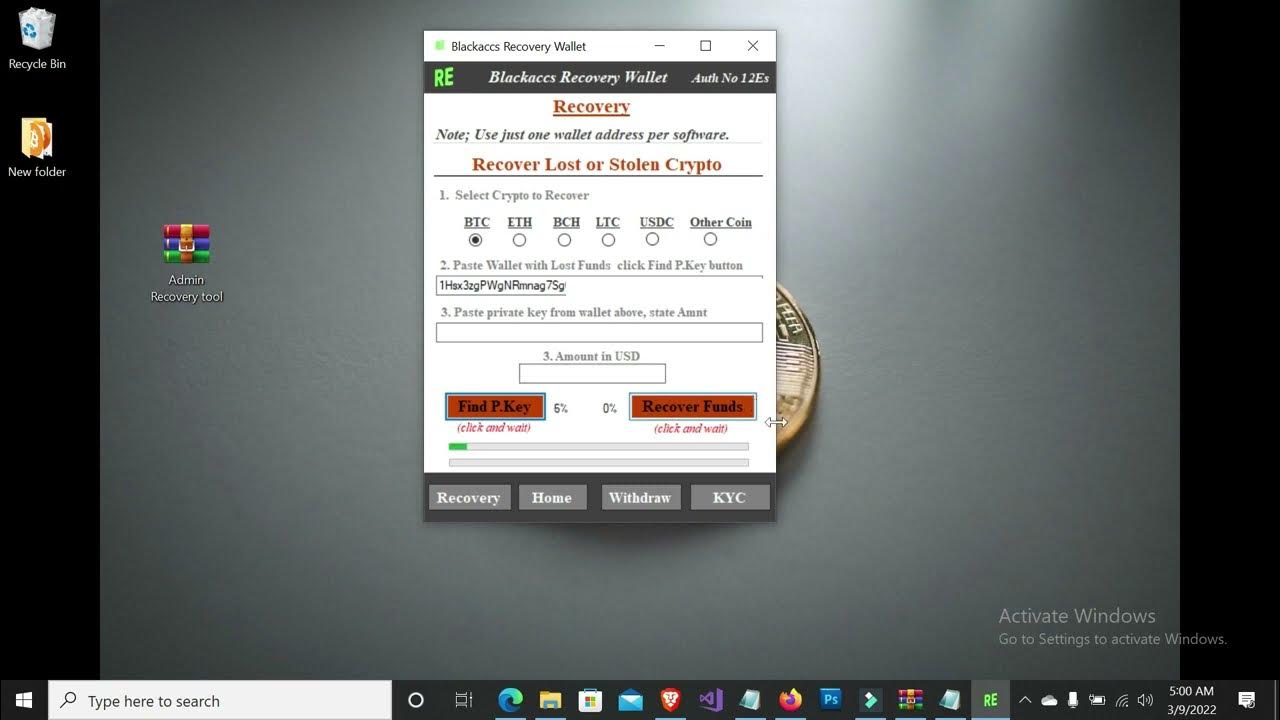
The search term "unlock bitcoin private key finder" is heavily exploited by phishing sites. These sites often mimic the look of legitimate recovery software. They ask you to upload your wallet file or paste your private key, promising to "decrypt" it for a small Bitcoin fee. In reality, they are collecting active keys to drain funds immediately.
Red flags to watch out for:
- Sites asking for your seed phrase or private key.
- Software requiring installation from non-official sources.
- Claims of "quantum computing" unlocking capabilities (currently non-existent for Bitcoin).
- Requests for an upfront fee to "release" your funds.
Legitimate recovery services, such as those offering ledger or hardware wallet support, will never ask for your private keys. They guide you through restoring from a seed phrase, which you must do yourself on a trusted device.
The Role of Offline Security
If you are trying to recover access to funds, it is vital to perform any troubleshooting on an offline, air-gapped machine. This prevents any potential malware on your main computer from intercepting your keys during the recovery attempt. Once you unlock the key and confirm the balance, it is highly recommended to sweep the funds into a new, secure wallet with a fresh seed phrase. This ensures that you are not leaving your assets in a potentially vulnerable legacy format.
Conclusion on Recovery
In summary, you cannot generate a private key from a public address. There is no "finder." However, you can unlock existing private keys by using the correct wallet software, recovering a forgotten password via hash cracking, or bridging compatibility gaps with legacy systems. Always prioritize security. If a tool seems too good to be true, it is undoubtedly a trap designed to steal your assets. Focus on legitimate recovery methods involving known data, not magical decryption.
Frequently Asked Questions
Can I recover a Bitcoin private key from a public address?
No. It is mathematically impossible with current technology to derive a private key from a public address due to the security of elliptic-curve cryptography.
What should I do if I lost my wallet password?
If you have the wallet file but lost the password, you may attempt to crack it using tools like Hashcat or John the Ripper, provided the password was not overly complex. If the password is strong, recovery may be impossible.
Are "Bitcoin Private Key Finder" tools real?
No. Tools claiming to find or generate private keys for public addresses are scams. They often contain malware or are phishing attempts to steal existing keys.
Is it safe to import old private keys into modern wallets?
Yes, as long as you import them into reputable, audited wallet software. Always use the "sweep" function to move funds to a new address rather than importing the key long-term, especially if the key has been exposed.