Finding Purpose After Suffering: Lessons From Man’s Search For Meaning
It is easy to look at the modern world and feel like we are swimming upstream. We scroll through curated lives, chase career metrics, and try to build identities on shifting sands. But when the ground beneath us cracks—through loss, failure, or sudden crisis—we are left with a hollow question: What is this all for?
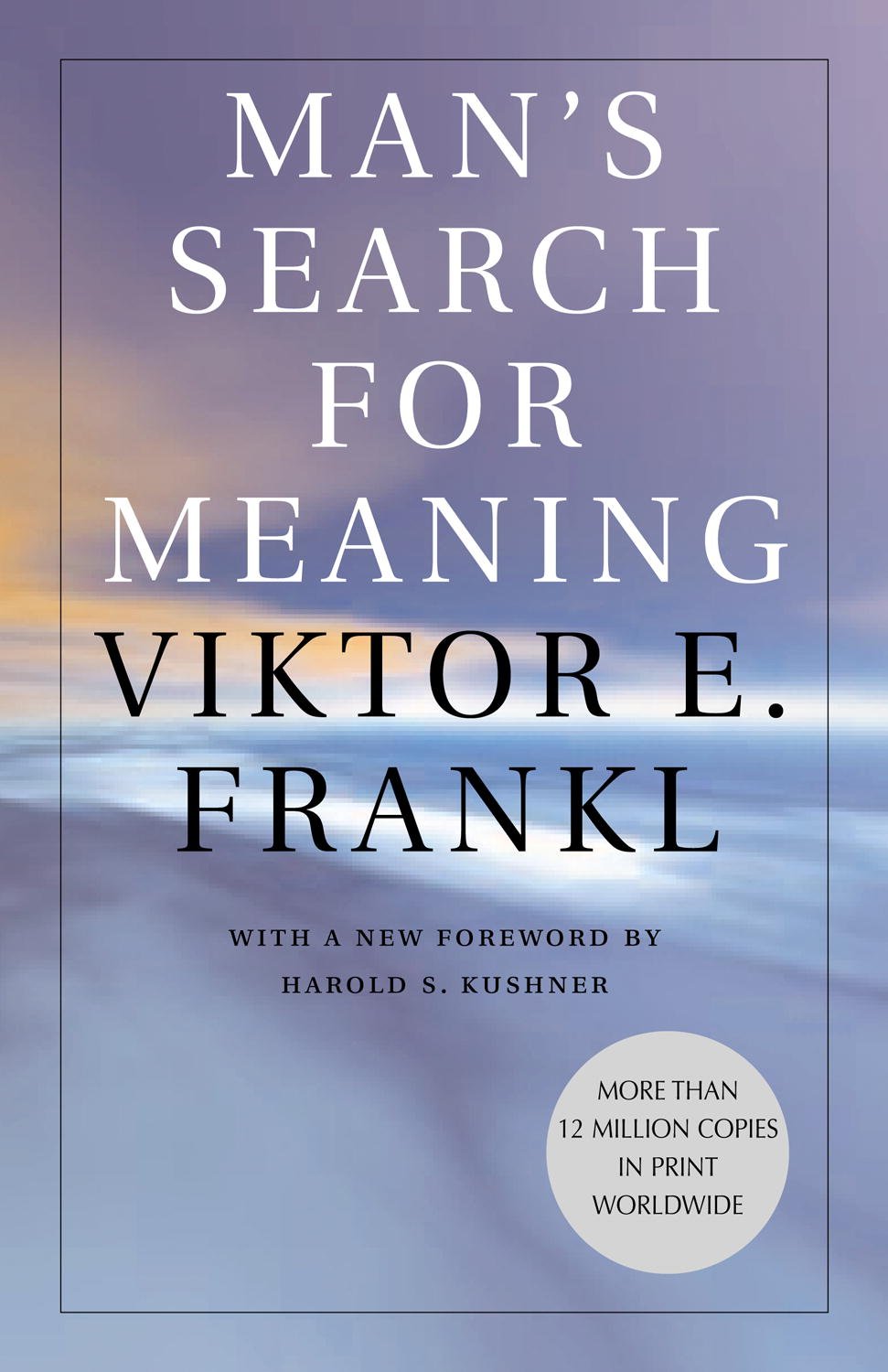
Viktor Frankl knew this question better than most. In his seminal work, Man’s Search For Meaning, Frankl does not offer a self-help checklist for happiness. Instead, he offers a stark, survivors testimony from the Holocaust. It is a book that strips away the comfort of philosophy and leaves you with the raw bone of existence. The central thesis is not about finding pleasure or power, but about finding meaning, even—and especially—in suffering.
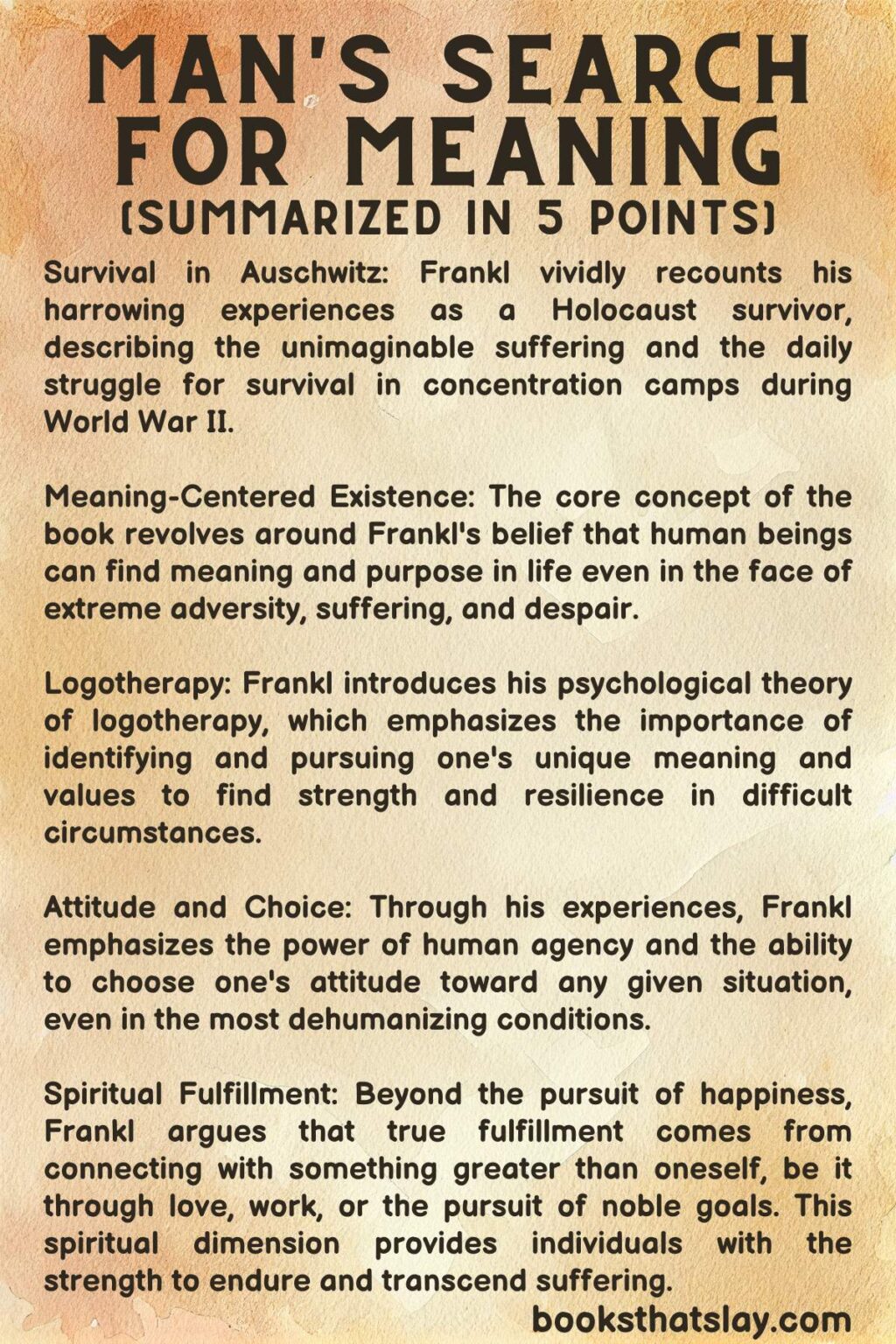
Frankl’s experience as a prisoner in Auschwitz and other concentration camps became the laboratory for his psychological theory, which he called logotherapy. He observed that those who survived the camps were rarely the strongest physically. They were often the ones who had a reason to live. A book to write. A spouse to reunite with. A promise to keep. This observation leads us to a uncomfortable truth: we may not be able to control what happens to us, but we can always choose our response.
The Last Human Freedom
There is a famous quote from the book that often gets misinterpreted. Frankl wrote that everything can be taken from a man but one thing: the last of the human freedoms—to choose one’s attitude in any given set of circumstances. This is not a call to toxic positivity. It is not about smiling while being beaten. It is about retaining the inner citadel of the soul.
In the camp, Frankl saw men break. Some argued with God. Some gave in to despair. But others found moments of dignity. A man sharing his last crust of bread. Another humming a tune to comfort a child. These acts were tiny, almost invisible to the guards, but to the participants, they were monumental. They were assertions that I am more than what you are doing to me.
This concept of "the last human freedom" is crucial for modern life. We rarely face the extreme horrors of a labor camp, but we face our own versions of suffering. Chronic illness. Grief. Professional stagnation. The temptation is to ask, "Why me?" Frankl suggests we stop asking that. The question is not why, but how. How will you carry this burden? What can you make of it?
Three Paths to Meaning
Frankl identified three primary ways humans find meaning. Understanding these can help navigate the fog of purposelessness.
- Creating a work or doing a deed. This is the most common route. It involves contribution. It could be writing a novel, raising a child, or simply doing your job with integrity. It is about leaving the world slightly better than you found it.
- Experiencing something or encountering someone. This is the path of love and beauty. It is appreciating a sunset, listening to music, or connecting deeply with a partner. Frankl argues that love is the highest goal man can aspire to because it reveals the essence of the other person.
- Attitude toward unavoidable suffering. This is the hardest path. When a situation cannot be changed, when suffering is unavoidable, we are challenged to rise above ourselves. We find meaning in the dignity with which we suffer.
Notice that no path requires external validation. Meaning is not something you find like a lost set of keys. It is something you uncover, create, or choose, often in the dark.
The Existential Vacuum
Frankl also diagnosed a modern phenomenon: the existential vacuum. In the absence of a clear "why," people fill the void with boredom, aggression, or conformity. He called this phenomenon "Sunday Neurosis"—the depression that hits when the workweek is done and the silence of the soul becomes deafening.
We see this today in the cult of busyness. We fill our calendars to avoid facing ourselves. We seek entertainment to numb the ache of emptiness. But distraction is not a strategy. It postpones the question; it does not answer it. The vacuum remains. It waits.
Filling it requires Will to Meaning. This is not about achieving massive success. It is about paying attention. It is about noticing what life asks of you in each moment. Life asks questions of us, Frankl says, and we can reply only by being responsible for our own lives. The responsibility is individualized. You cannot copy anyone's meaning. You must discover yours.
Practical Steps for Daily Living
So, how do we apply logotherapy outside of extreme circumstances? It starts with small shifts in perspective.
First, listen to life. Instead of demanding that life be fair or easy, ask what it wants from you right now. Is it patience? Is it courage? Is it simply presence? Treat every moment as a question.
Second, embrace responsibility. When we take responsibility for our attitude, we take away the power of our circumstances to define us. This does not mean we accept abuse or injustice, but it means we control our internal narrative.
Third, look for joy in the small. Frankl found meaning in watching the sunset from his prison cell. You can find it in a hot cup of coffee, a kind word, or the completion of a task. These are not trivialities; they are anchors.
Finally, accept that suffering is inevitable. Trying to live a painless life is a recipe for misery. Instead, look for the potential meaning within the pain. What can you learn? Who can you help because of your experience? Suffering ceases to be meaningless when it becomes a sacrifice for a loved one or a lesson for the world.
Finding Purpose in the Ordinary
Man’s Search For Meaning is not a book about the extraordinary. It is a book about the ordinary humans who did extraordinary things with their inner lives. It reminds us that purpose is not a distant mountain peak. It is the ground beneath your feet.
You do not need a grand mission statement to find meaning. You need to show up. You need to love. You need to endure. And you need to remember that even in the darkest times, you have the freedom to choose your attitude. That choice is your meaning. That choice is your life.
FAQ
What is the main message of Man’s Search For Meaning?
The core message is that humans are driven by a "will to meaning" rather than just pleasure or power. Frankl argues that even in the most horrific suffering, individuals can find meaning by choosing their attitude and focusing on what is still possible, such as love, work, or dignity.
How is logotherapy different from other forms of therapy?
Unlike psychoanalysis, which often looks backward at childhood trauma, logotherapy is future-oriented. It focuses on what gives the patient a reason to live. It helps individuals identify values and purposes that can guide their actions and provide resilience against current crises.
Can I find meaning if I am going through a very difficult time?
Yes. Frankl specifically addresses this, noting that meaning can be found even in "unavoidable suffering." By changing your attitude toward your pain—viewing it as a challenge to be met with dignity or as an opportunity to help others—you can transform meaningless suffering into meaningful sacrifice.
Is meaning the same as happiness?
No. Frankl distinguishes them clearly. Happiness is a side effect of pursuing meaning, not the goal itself. Chasing happiness directly often leads to disappointment. Pursuing a purpose or value, however, often brings a sense of fulfillment and occasional happiness as a byproduct.