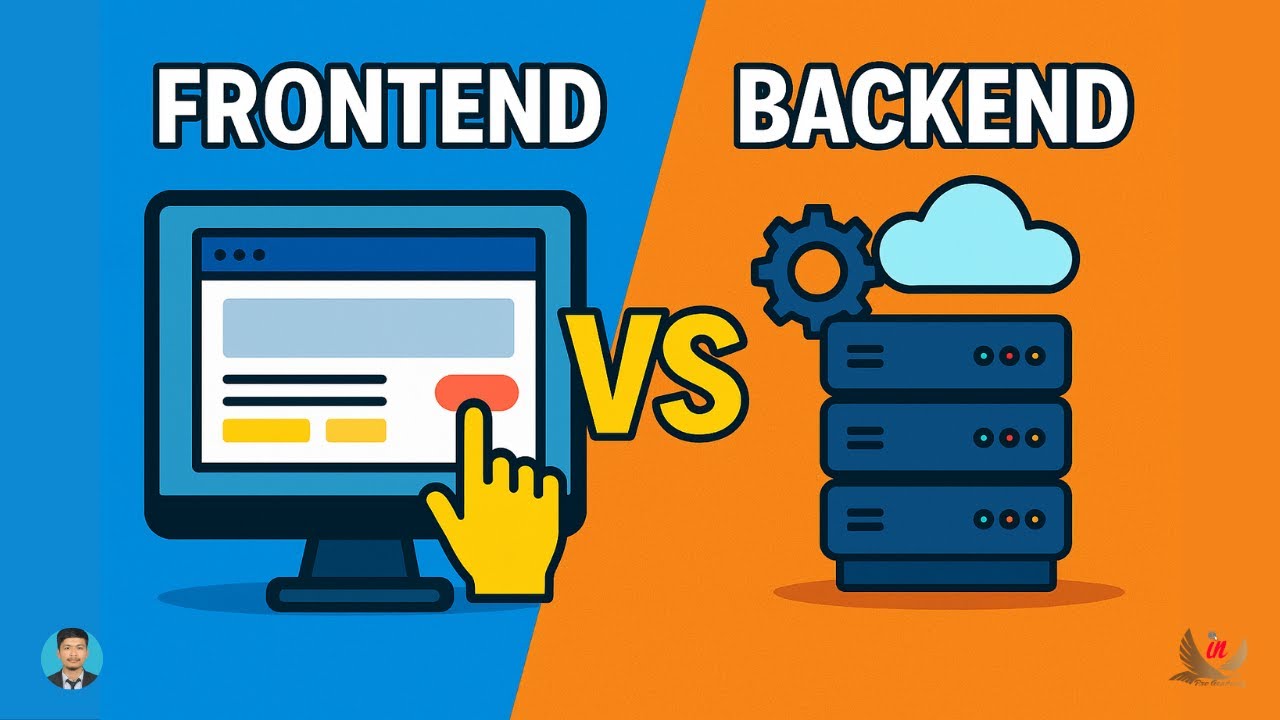
Frontend vs. Backend: The Visual Guide to Web Architecture
Imagine walking into your favorite restaurant. The process that unfolds is a perfect metaphor for how websites work. You look at the menu, choose a dish, and place your order. The waiter writes it down and disappears into the kitchen. Minutes later, your food arrives. You interact with the menu and the waiter, but you never see the chefs chopping vegetables or the managers checking inventory. That separation of duties is exactly how the modern web is built.
To understand frontend vs. backend development, you have to look at this front-of-house versus back-of-house dynamic. One side is all about what you see, touch, and experience. The other is the complex machinery running in the shadows. While they serve different masters, they must work in perfect harmony to deliver a seamless user experience.
The Frontend is What You Touch
The frontend is the visual interface. It is everything that happens on the user’s screen within the browser. When you click a button, scroll through a gallery, or watch a video load, you are interacting with the frontend. It is responsible for the "look and feel" of a website.
This layer relies on three core technologies:
- HTML (HyperText Markup Language): This is the skeleton. It defines the structure of the page, telling the browser where headings, paragraphs, images, and buttons belong.
- CSS (Cascading Style Sheets): This is the skin and clothing. It handles colors, fonts, spacing, and layout. Without CSS, every website would look like a plain Notepad document.
- JavaScript: This is the muscle and nerve system. It makes the page interactive. It handles animations, responds to clicks, updates content without reloading the page, and connects the frontend to the backend.
Frontend developers are essentially digital designers who code. They care deeply about user experience (UX) and user interface (UI). Their goal is to ensure the site loads fast on mobile devices, looks beautiful, and guides the user intuitively toward their goal, whether that’s buying a product or reading an article.
The Backend is Where the Magic Happens
If the frontend is the face of the business, the backend is the brain. It operates on the server, completely hidden from the user. When you submit a login form, the frontend sends that data to the backend. The server then checks if the username and password match records stored in a database. If they do, it grants access. If not, it sends an error message back.
The backend handles all the heavy lifting that doesn’t happen on the screen:
- Server Management: Configuring the server to deliver web pages efficiently and securely.
- Database Architecture: Storing, sorting, and retrieving massive amounts of data. Every post on social media, every item in an online cart, and every user profile lives here.
- Application Logic: The rules and calculations that power the site. For example, calculating the total price of your shopping cart, applying tax, and processing the payment transaction.
Backend developers write code in languages like Python, PHP, Ruby, Java, or Node.js. They don’t care about buttons or fonts; they care about security, speed, and scalability. Can the system handle 10,000 users logging in at once? How do we prevent hackers from stealing credit card numbers? These are the questions keeping backend engineers up at night.
How They Talk to Each Other
The most critical concept to grasp is how these two distinct worlds communicate. They don’t just magically know what the other is doing. They rely on an Application Programming Interface (API). Think of an API as the waiter in our restaurant analogy. It takes your order (data) from the table (frontend), delivers it to the kitchen (backend), and brings the food back to you.
When you click "Post" on a social media feed, here is the sequence:
- The frontend JavaScript captures your text and image.
- It sends this data via a secure API request to the server.
- The backend receives the data, saves it to the database, and processes any necessary logic.
- The backend sends a confirmation signal back to the frontend.
- The frontend updates the screen to show your new post.
This exchange happens in milliseconds, making the web feel instantaneous and fluid. Without this API layer, your frontend would be a static brochure, and your backend would be an empty warehouse.
Frontend vs. Backend: Which Should You Learn?
Many aspiring developers wonder where to start. The choice often depends on your personality and interests.
If you enjoy immediate visual feedback, love design principles, and get satisfaction from seeing pixels move exactly as you commanded, frontend development is likely your calling. It is fast-paced and highly visible. Your work is judged by how it looks and feels.
If you prefer logic, problem-solving, and architecture, the backend might suit you better. You will enjoy building structures, optimizing databases, and ensuring security. The satisfaction comes from knowing the system is robust, efficient, and secure, even if no one sees the code.
There is also a third path: Full Stack Development. This involves mastering both sides. Full stack developers have a holistic view of the entire application, understanding how a change in the database query might affect the load time of the user interface. It is a demanding skill set, but it makes for incredibly versatile engineers.
The Blurring Lines of Modern Web Tech
In recent years, the line between frontend and backend has become slightly fuzzier. Technologies like Node.js allow developers to use JavaScript on the backend, meaning one language can power the entire stack. Headless CMS platforms separate content management from presentation, allowing the same backend data to feed a website, a mobile app, and a smart fridge simultaneously.
Despite these advancements, the fundamental division remains. You still need a layer that presents information to humans and a layer that processes data for machines. Understanding this distinction is the first step to mastering web development. Whether you are building a simple portfolio site or a complex e-commerce platform, respecting both the frontend and backend ensures your project stands on solid ground.
FAQ
Is frontend easier than backend
Neither is inherently easier; they require different skill sets. Frontend demands creativity, attention to detail, and knowledge of design trends. Backend requires strong logical thinking, understanding of algorithms, and security protocols. Many beginners find frontend more welcoming initially because the results are visual and immediate.
Do I need to know both frontend and backend?
You don’t need to be an expert in both to start a career, but understanding the basics of both is highly valuable. A frontend developer who understands how APIs work will debug issues faster. Similarly, a backend developer who understands how their data is consumed can design more elegant APIs.
What is an API exactly?
An API (Application Programming Interface) is a set of definitions and protocols for building and integrating application software. In simple terms, it is a messenger that allows the frontend to request data from the backend and receive a response, much like a waiter taking an order to the kitchen and bringing the meal back.
Can I build a website with only frontend code?
Yes, you can build static websites using only HTML, CSS, and JavaScript. These are great for portfolios or informational pages. However, if you need user logins, dynamic content, databases, or e-commerce functionality, you absolutely need a backend to handle data storage and processing.