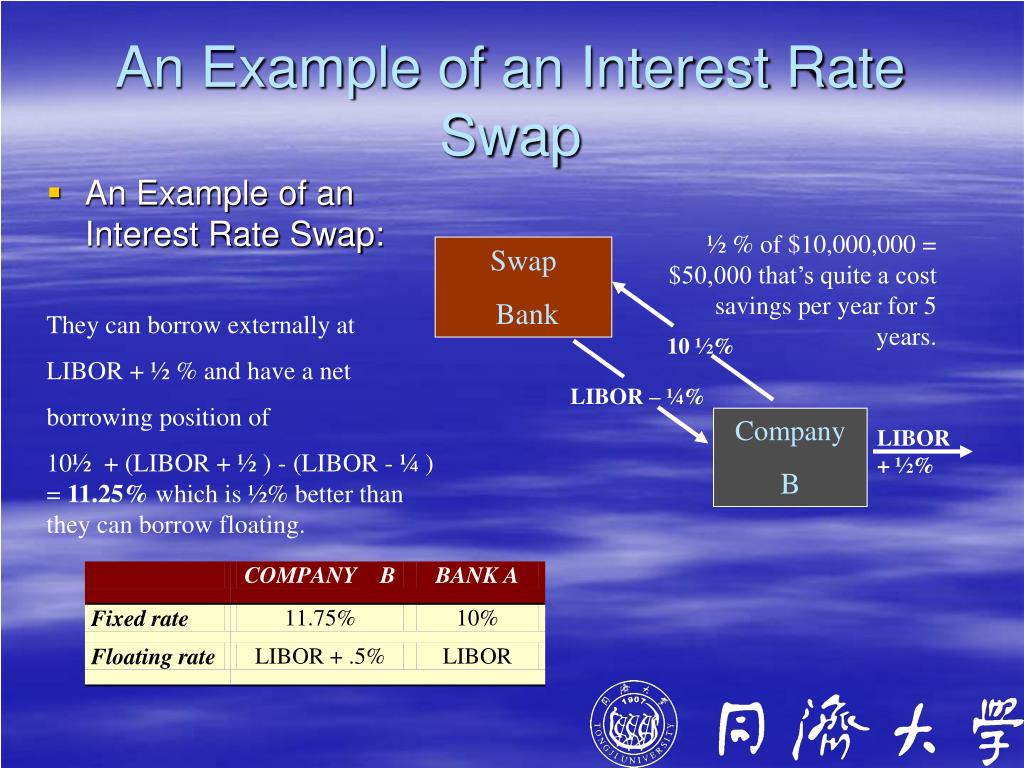
How a Simple Interest Rate Swap Works: A Step‑by‑Step Example
Ever wonder why a corporation might trade one stream of interest payments for another? It sounds like financial wizardry, but the mechanics are surprisingly straightforward. Below we walk through a real‑world‑style example, breaking down each move so you can see why swaps are a go‑to tool for managing cash‑flow risk.
What Is an Interest Rate Swap?
At its core, an interest rate swap is a contract between two parties to exchange future interest payments on a notional amount of principal. No principal actually changes hands—only the cash flows that would be generated by that notional.
- Fixed‑for‑floating: The most common structure, where one side pays a set rate and receives a variable rate tied to an index such as LIBOR or SOFR.
- Floating‑for‑floating: Less common, used to switch from one benchmark to another.
- Notional amount: A reference figure that determines the size of the payments; it stays on the books but isn’t exchanged.
Why Companies Use Swaps
Think of a company that borrowed money at a variable rate because the market offered an attractive low price. If rates climb, its debt service could balloon. By swapping to a fixed rate, the firm locks in predictable payments. Conversely, a firm with fixed‑rate debt might seek a floating rate if it expects rates to fall, hoping to reduce interest costs.
Setting the Stage: The Example
Imagine two fictional firms:
- Alpha Corp. – Holds a $10 million loan at a floating 3‑month LIBOR + 0.75%.
- Beta Industries – Issued a $10 million bond paying a fixed 5% annually.
Alpha worries that LIBOR could spike, while Beta thinks rates might drift lower. Both are open to swapping.
The Swap Agreement
After negotiating with a bank acting as intermediary, Alpha and Beta agree on the following terms:
- Notional principal: $10 million.
- Swap tenor: 3 years.
- Fixed rate paid by Alpha to Beta: 5.25% (slightly above Beta’s bond coupon to compensate the bank).
- Floating rate paid by Beta to Alpha: 3‑month LIBOR + 0.75% (mirroring Alpha’s loan).
- Payment frequency: Quarterly.
The extra 0.25% on the fixed side covers the bank’s fee and any credit spread differences.
How the Cash Flows Play Out
Let’s walk through the first quarter, assuming LIBOR is 2.80% for that period.
- Alpha’s original loan payment: 2.80% + 0.75% = 3.55% annualized. Quarterly payment = (3.55% / 4) × $10 M ≈ $88,750.
- Beta’s original bond payment: Fixed 5% annualized. Quarterly payment = (5% / 4) × $10 M = $125,000.
- Swap payments:
- Alpha pays Beta the fixed 5.25% → (5.25% / 4) × $10 M = $131,250.
- Beta pays Alpha the floating LIBOR + 0.75% → (3.55% / 4) × $10 M = $88,750.
- Net effect:
- Alpha receives $88,750 from Beta but must also pay $131,250 to Beta. Net outflow = $42,500.
- Beta receives $131,250 and pays $88,750. Net inflow = $42,500.
Now compare those net amounts to the original obligations. Alpha’s effective quarterly cost becomes $88,750 (original loan) + $42,500 (net swap outflow) = $131,250, which is exactly the fixed‑rate payment it agreed to. In other words, Alpha has swapped its floating exposure for a predictable 5.25% cost.
Beta, on the other hand, replaces its fixed‑rate bond interest with a net receipt of $42,500 each quarter, effectively turning its 5% cost into a floating rate of LIBOR + 0.75% + 0.25% spread.
What Happens If Rates Change?
Fast forward to year two, and suppose LIBOR climbs to 4.20%.
- Floating leg (LIBOR + 0.75%) = 4.95% annualized → quarterly payment ≈ $123,750.
- Alpha still pays the fixed 5.25% → $131,250 each quarter.
- Net outflow for Alpha = $7,500, versus the original floating loan cost of $123,750 – $88,750 = $35,000 extra if it had stayed with the loan.
Beta now receives $131,250 and pays $123,750, netting $7,500. Its overall cost has risen, but only slightly above the original fixed 5% because the swap absorbed most of the rate hike.
Key Takeaways
- Swaps let parties exchange the risk profile of their interest obligations without moving the underlying principal.
- The notional amount is a reference point; only the interest differentials actually change hands.
- Even a modest spread (0.25% in the example) covers intermediary fees and ensures the swap is attractive to both sides.
- When rates move, each party’s net cash flow reflects the new market reality, but the swap cushions the impact according to the agreed‑upon terms.
When Might a Swap Not Be Worth It?
Swaps involve credit exposure, legal documentation, and often a margin requirement. If a firm’s balance sheet is already thin or the expected rate movement is minimal, the added complexity and cost may outweigh the hedge benefit. Always weigh the administrative burden against the risk reduction.
Bottom Line
By swapping a floating loan for a fixed payment—or vice‑versa—companies can shape their interest expense to match cash‑flow forecasts, investment plans, or market views. The example above strips away jargon, showing how a few quarterly calculations translate into a strategic financial tool.