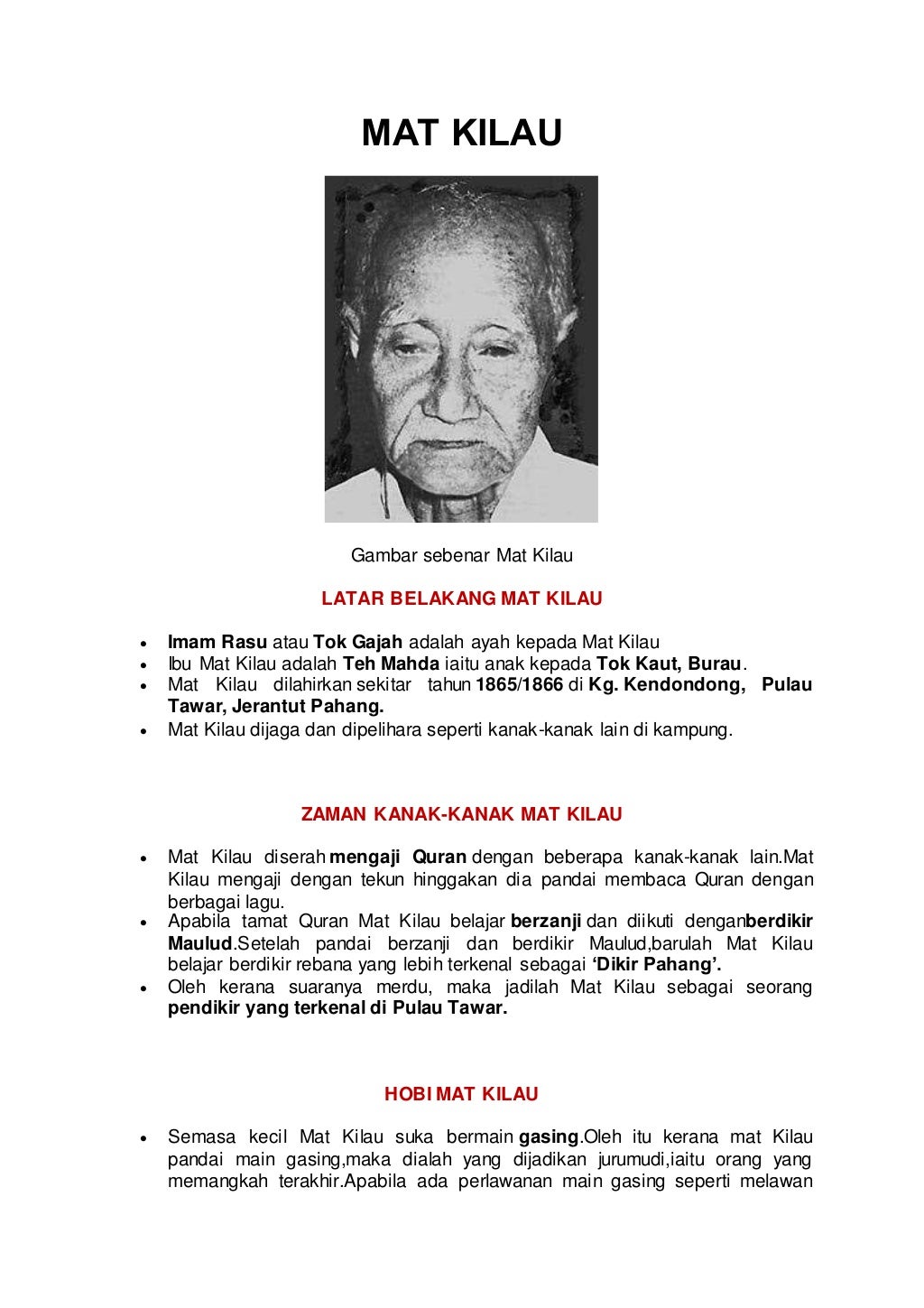
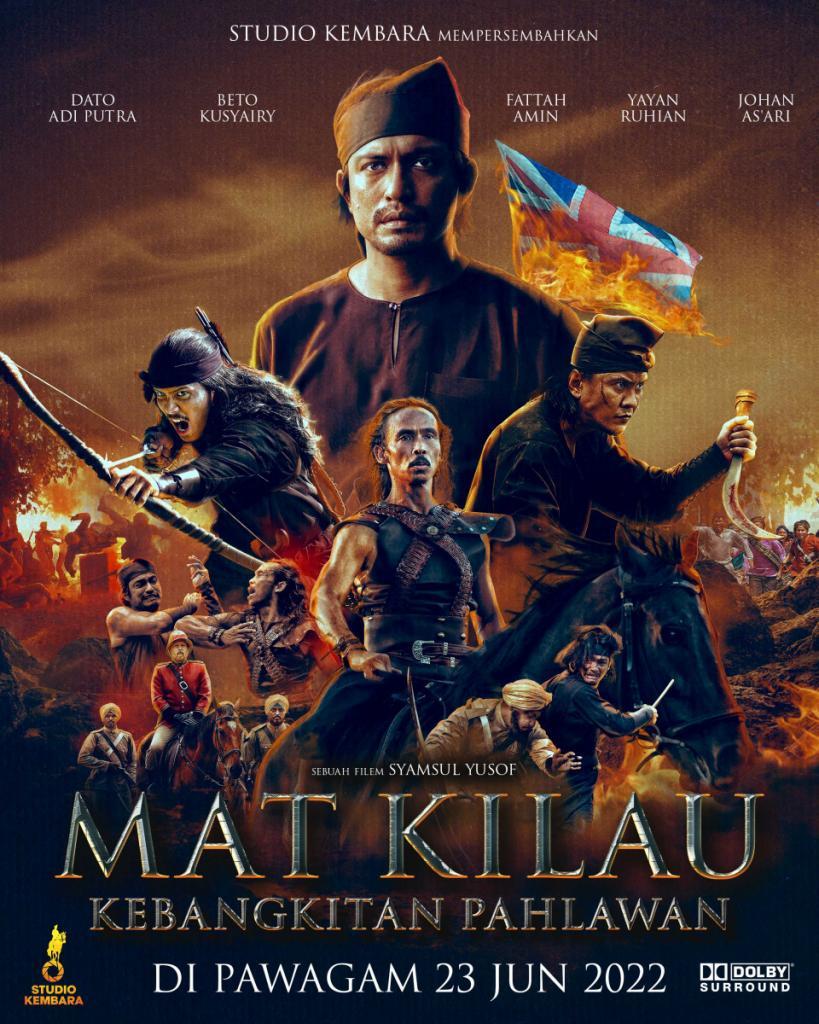
How Mat Kilau Became Malaya’s Legendary Tiger of Resistance
When the name Mat Kilau surfaces in talks about Southeast Asian anti‑colonial heroes, a vivid image often follows: a tiger prowling the jungles of Malaya, eyes blazing with defiance. That metaphor isn’t a random flourish; it grew from a real tapestry of daring raids, clever diplomacy, and a relentless refusal to bow to foreign rule. Let’s peel back the layers of myth and history to see how the man behind the moniker earned his fearsome reputation.
The Early Years: Roots in a Turbulent Landscape
Born in 1865 in Kampung Peta, Pahang, Mat Kilau was the son of Tok Gajah, a respected chief who had already tangled with British forces during the early phases of the Pahang Uprising. Growing up, Kilau absorbed not just his father’s martial training but also the oral histories that painted the British as intruders disrupting a centuries‑old way of life. Those stories—part legend, part lived experience—instilled a fierce sense of belonging to the land.
- Learned silat and marksmanship from his father’s retinue.
- Witnessed the first waves of British economic encroachment.
- Absorbed the regional network of anti‑colonial leaders.
By the time he reached his twenties, Mat Kilau was already a skilled fighter and a charismatic speaker—two qualities that would become the twin engines of his resistance.
Igniting the Flame: The 1891 Pahang Rebellion
The spark that set the rebellion ablaze arrived in 1891 when the British imposed a new tax on pepper, the lifeblood of the local economy. For the farmers and traders of Pahang, the levy felt like a fist around their throats. Mat Kilau, then in his mid‑twenties, answered the call.
He rallied a loose coalition of peasants, former soldiers, and Malay nobles. Their strategy was less about large‑scale battles and more about hit‑and‑run tactics—ambushes in the dense rainforest, sabotage of supply lines, and swift raids on tax collectors. Each success was amplified by the story that Kilou moved through the jungle like a tiger, disappearing before the British could mount a proper response.
Key Moments of the Campaign
- Ambush at Sungai Pulai – A surprise attack that freed dozens of detained farmers.
- Destruction of the Tax Office in Kuala Lipis – Demonstrated the rebels’ ability to strike at the heart of colonial administration.
- Covert Alliances – Kilau forged secret pacts with neighboring tribal leaders, expanding his reach beyond Pahang.
These actions forced the British to divert troops, stretching their resources thin across the peninsula. In the eyes of the locals, the British were suddenly vulnerable, and Mat Kilau’s reputation swelled.
Why the “Tiger” Metaphor Stuck
The tiger, a creature woven into Malay folklore, symbolizes strength, stealth, and an unyielding spirit. Kilau’s guerilla tactics mirrored these traits: he struck from the shadows, vanished into the foliage, and returned with the ferocity of a predator protecting its domain.
Oral storytellers of the time began to describe him as “Harimau Perang” (the War Tiger). The nickname served a dual purpose: it inspired his followers, who saw themselves under the protection of a mighty beast, and it unsettled the British, who now faced an enemy that seemed both real and mythic.
The British Counter‑Offensive and Kilau’s Disappearance
By 1895, the British had regrouped, deploying a better‑armed force and employing local informants to infiltrate the rebel network. A decisive battle near the town of Bentong saw many of Kilau’s comrades captured. Yet, the legendary tiger slipped away.
Accounts differ on his fate after that point. Some say he fled to the interior, living out his days in seclusion. Others claim he reinvented himself as a trader, blending back into civilian life while maintaining clandestine ties to the resistance. The lack of concrete evidence only adds to his mystique; the British never managed to capture or formally execute him, cementing his status as an elusive figure.
Legacy: From Folk Hero to National Symbol
Mat Kilau’s story survived the colonial era through songs, poems, and later, school textbooks. In the decades following Malaya’s independence, his image was invoked to embody the spirit of self‑determination. Statues erected in his honor now stand in several towns, each bearing a plaque that references his “tiger‑like resolve.”
Modern Malaysian filmmakers and novelists frequently revisit his saga, often portraying him as a complex character—brave yet flawed, strategic yet impulsive. This nuanced treatment helps keep his legend relevant, reminding new generations that resistance is rarely a straightforward narrative.
How the Tiger Inspires Today
- Youth programs adopt the “Harimau” motif to encourage civic participation.
- Scholars analyze his tactics as early examples of asymmetric warfare.
- Local festivals reenact his famous jungle raids, blending education with celebration.
Whether you view Mat Kilau as a historical figure, a mythic hero, or a blend of both, his story underscores a timeless lesson: the power of local identity and collective resolve can challenge even the most formidable adversaries.