How Navies Blend Tactics and Tech for Antisubmarine Warfare
When a silent hunter slips beneath the waves, the battle that follows is less about brute force and more about clever coordination. Modern antisubmarine warfare (ASW) is a chess match played out in three dimensions, where sonar pings, computer algorithms, and even airborne drones become the pieces that can tip the balance.
Core Elements of Contemporary ASW Strategy
At its heart, an effective ASW posture rests on three pillars: detection, classification, and engagement. Each pillar draws on a mix of age‑old doctrine and cutting‑edge technology.
- Persistent Surveillance – Ships, submarines, and aircraft maintain overlapping sonar coverage, ensuring that gaps are minimized.
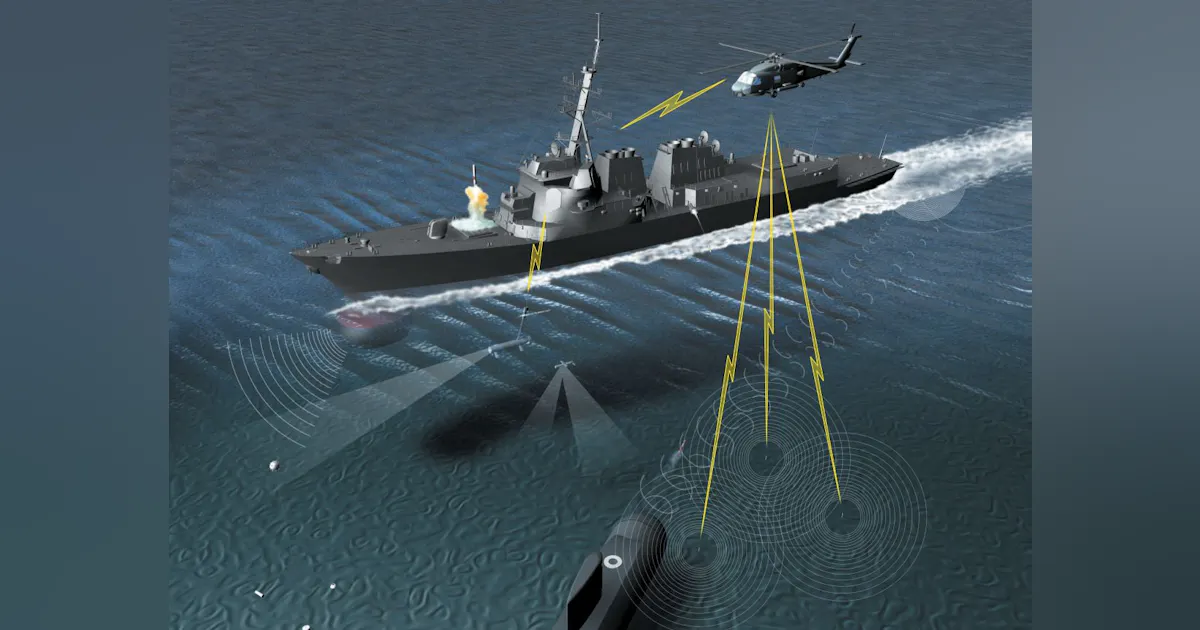
- Data Fusion – Raw acoustic returns are fed into real‑time processing hubs that cross‑reference with intelligence databases, satellite feeds, and even oceanographic models.
- Rapid Decision Loops – Once a contact is identified, the system must suggest the best counter‑measure within seconds, whether that’s launching a torpedo, deploying a decoy, or ordering a surface ship to close in.
These concepts sound straightforward on paper, but the ocean is a notoriously noisy environment. Temperature layers, sea‑state, and marine life can all mask a submarine’s signature.
Key Technologies Powering Modern Detection
Advanced Sonar Arrays
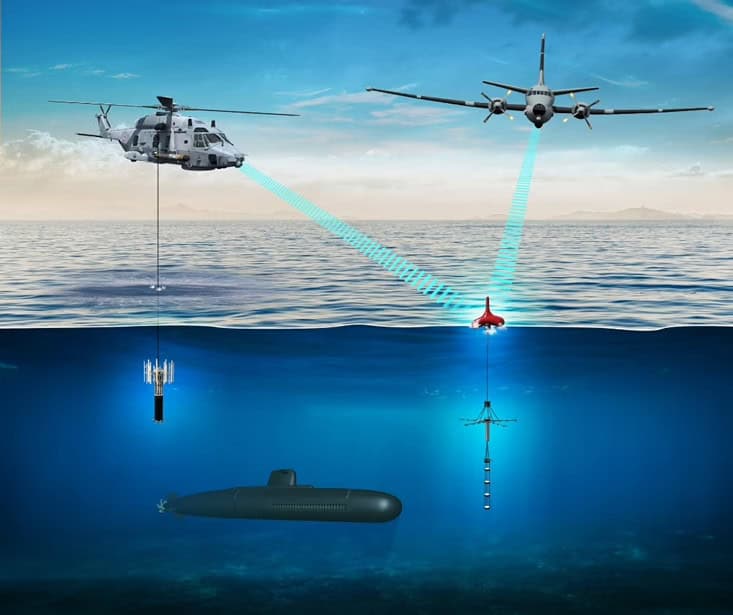
Traditional hull‑mounted sonar has evolved into high‑resolution, modular arrays that can be re‑configured on the fly. Towed‑array systems, for instance, trail long cables far behind a ship, positioning hydrophones in the deep, quieter water where low‑frequency sounds travel further.
Meanwhile, variable‑depth sonar (VDS) allows operators to lower and raise the transducer to the optimal depth, mitigating the effects of thermoclines that often bend sound waves away from a ship’s sensors.
Air‑Based Sensors
Maritime patrol aircraft and unmanned aerial systems (UAS) now carry lightweight, broadband sonobuoys that can be dropped in patterns covering dozens of square miles. These sonobuoys relay acoustic data back to the aircraft, which uses machine‑learning classifiers to differentiate a submarine’s propeller noise from a passing whale.
Supplementing sound, some platforms employ magnetic anomaly detectors (MAD) to pick up subtle disturbances in Earth’s magnetic field caused by a steel hull.
Underwater Drones (UUVs)
Autonomous underwater vehicles are the newest workhorses in the ASW toolbox. They can loiter for days, mapping the acoustic environment and hunting for anomalies. Because they’re small and quiet, UUVs often get closer to a suspect sub than a manned vessel could safely approach.
From Detection to Engagement: Weapons and Counter‑Measures
Spotting a submarine is only half the battle; neutralizing it demands precise weapons and clever tactics.
- Lightweight Torpedoes – Modern torpedoes feature active‑passive homing, adaptive propulsion, and wake‑homing seekers that can track a sub’s slipstream.
- ASW Rockets – Ship‑launched rockets equipped with depth charges provide a rapid response, covering a wide area around a detected contact.
- Decoys and Acoustic Jammers – When a friendly sub is at risk of being misidentified, it can release false targets that mimic its acoustic signature, confusing enemy sensors.
Coordinated attacks often involve multiple platforms. A surface ship may launch a torpedo while an aircraft drops a depth charge, creating a layered threat that forces the enemy sub to maneuver dramatically—often exposing it to further detection.
Integrating Intelligence and Oceanography
ASW is not just about hardware; knowledge of the operating environment is equally vital. Navies invest heavily in oceanographic surveys, collecting data on salinity, temperature, and currents. This information feeds predictive models that estimate how sound will propagate on any given day.
Intelligence—whether from signals interception, satellite imaging, or human sources—helps narrow down where hostile submarines might be operating. When fused with sonar data, the resulting picture can be surprisingly clear, even in the notoriously murky littoral zones.
Emerging Trends Shaping Future ASW
Looking ahead, several developments promise to reshape the undersea battlefield.
- Artificial Intelligence – AI algorithms are already assisting analysts in spotting patterns that human ears might miss, and future systems could autonomously cue weapons.
- Quantum Sensors – Though still experimental, quantum gravimetric sensors could detect minute changes in the water column caused by a submarine’s mass, offering a new detection modality.
- Swarm UUVs – Deploying dozens of cheap, cooperating drones could blanket large areas, overwhelming a sub’s ability to remain hidden.
These innovations, however, will also trigger counter‑innovations. Submarines may adopt even quieter propulsion, use advanced hull coatings to absorb sonar, or operate at greater depths where current sensors lose effectiveness.
Balancing Cost, Capability, and Risk
Maintaining a robust ASW capability is an expensive undertaking. High‑tech sonar suites, sophisticated aircraft, and a fleet of UUVs demand significant budgets. Navies therefore must weigh the strategic value of each asset against the likelihood of encountering adversary submarines.
In many cases, a mixed approach works best: a few high‑end platforms for blue‑water operations complemented by cost‑effective sensors and drones for coastal monitoring. This layered strategy spreads risk and ensures that even if one element fails, the overall system remains functional.
Ultimately, success in antisubmarine warfare comes down to adaptability. The ocean will always be a challenging environment, but by blending time‑tested tactics with the latest tech, navies can keep the silent hunter at bay.