How Oscillations Work in Physics: A Clear, Simple Guide
Ever watched a pendulum swing back and forth or heard a guitar string vibrate after a pluck? Those motions are classic examples of oscillations—repeating movements that are the heartbeat of countless physical systems. Below we’ll unwrap the idea without drowning in heavy math, keeping the focus on intuition and everyday relevance.
What Is an Oscillation?
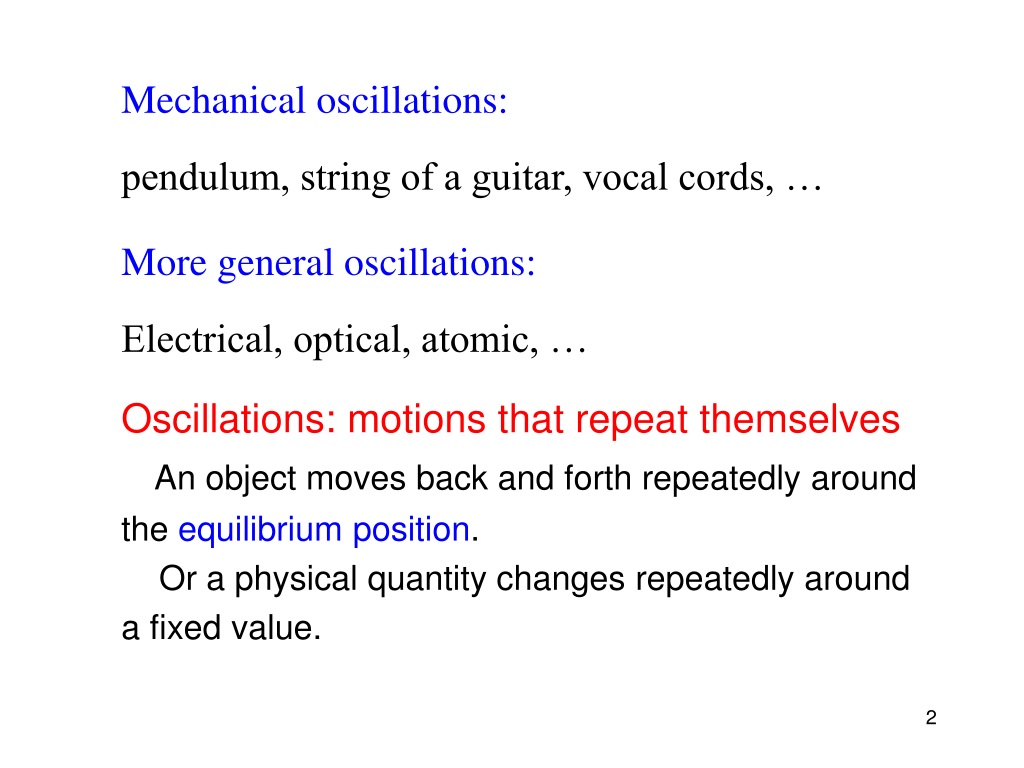
In its purest form, an oscillation is any motion that repeats itself around a stable point, called the equilibrium position. Think of a child on a swing: after each push, the seat moves away from the center, then the gravity‑driven force pulls it back, and the cycle continues.
Two basic ingredients make this happen:
- Restoring force: A push that tries to bring the system back to equilibrium.
- Inertia: The tendency of the moving part to keep going, overshooting the equilibrium.
When these forces balance just right, the system settles into a smooth back‑and‑forth rhythm.
Simple Harmonic Motion: The Ideal Oscillator
The textbook version of an oscillation is simple harmonic motion (SHM). It assumes the restoring force is directly proportional to how far the system is displaced, obeying Hooke’s law: F = -k x. The negative sign simply says the force points toward equilibrium.
Key characteristics of SHM:
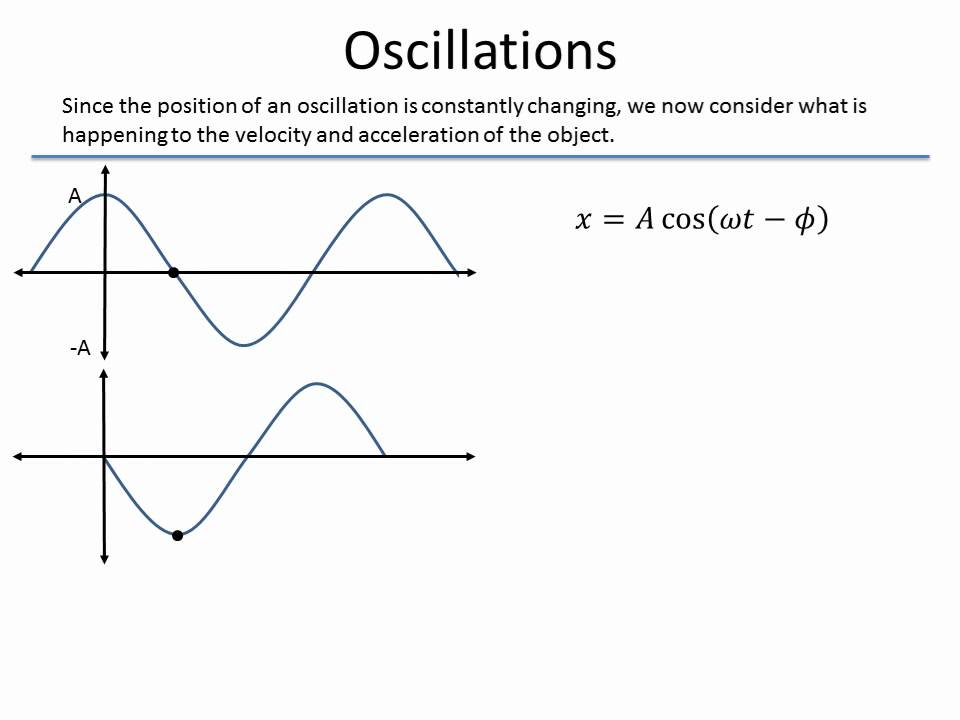
- Amplitude (A): The maximum distance from the equilibrium.
- Period (T): Time for one complete cycle.
- Frequency (f): Number of cycles per second;
f = 1/T. - Phase: Where you are in the cycle at a given moment.
Because the math is tidy, many real‑world oscillators—springs, mass‑on‑a‑string, even LC circuits—behave almost like SHM, at least for small motions.
Beyond the Ideal: Damping and Driving Forces
In practice, nothing oscillates forever. Air resistance, internal friction, or electrical resistance (in circuits) saps energy. This phenomenon is called damping. The result? The amplitude gradually shrinks, and the motion eventually stops.
But we can also keep an oscillation alive—or even amplify it—by adding a driving force. Push a child on a swing at just the right moments, and the swing’s arc grows larger. That timing is called resonance, and it’s why engineers design bridges and buildings to avoid natural frequencies that match traffic or wind patterns.
Everyday Examples of Oscillations
Oscillations aren't confined to the physics lab. Here are a few familiar sights and sounds:
- Heartbeats—tiny pressure waves traveling through the circulatory system.
- Sound waves—compressions and rarefactions moving through air.
- Clock pendulums—keeping time by regular swinging.
- Seismic waves—Earth’s crust trembling after an earthquake.
Even the flicker of a fluorescent lamp involves electrons oscillating between energy states.
How to Identify an Oscillatory System
If you’re wondering whether a given phenomenon qualifies as an oscillation, ask yourself these quick questions:
- Does the system move repeatedly around a stable point?
- Is there a restoring influence trying to pull it back?
- Can you define a clear period or frequency?
Answering “yes” to all three usually means you’ve got an oscillator on your hands.
Practical Tips for Exploring Oscillations
Want to see oscillations in action? Here are a few low‑tech experiments you can try at home or in the classroom:
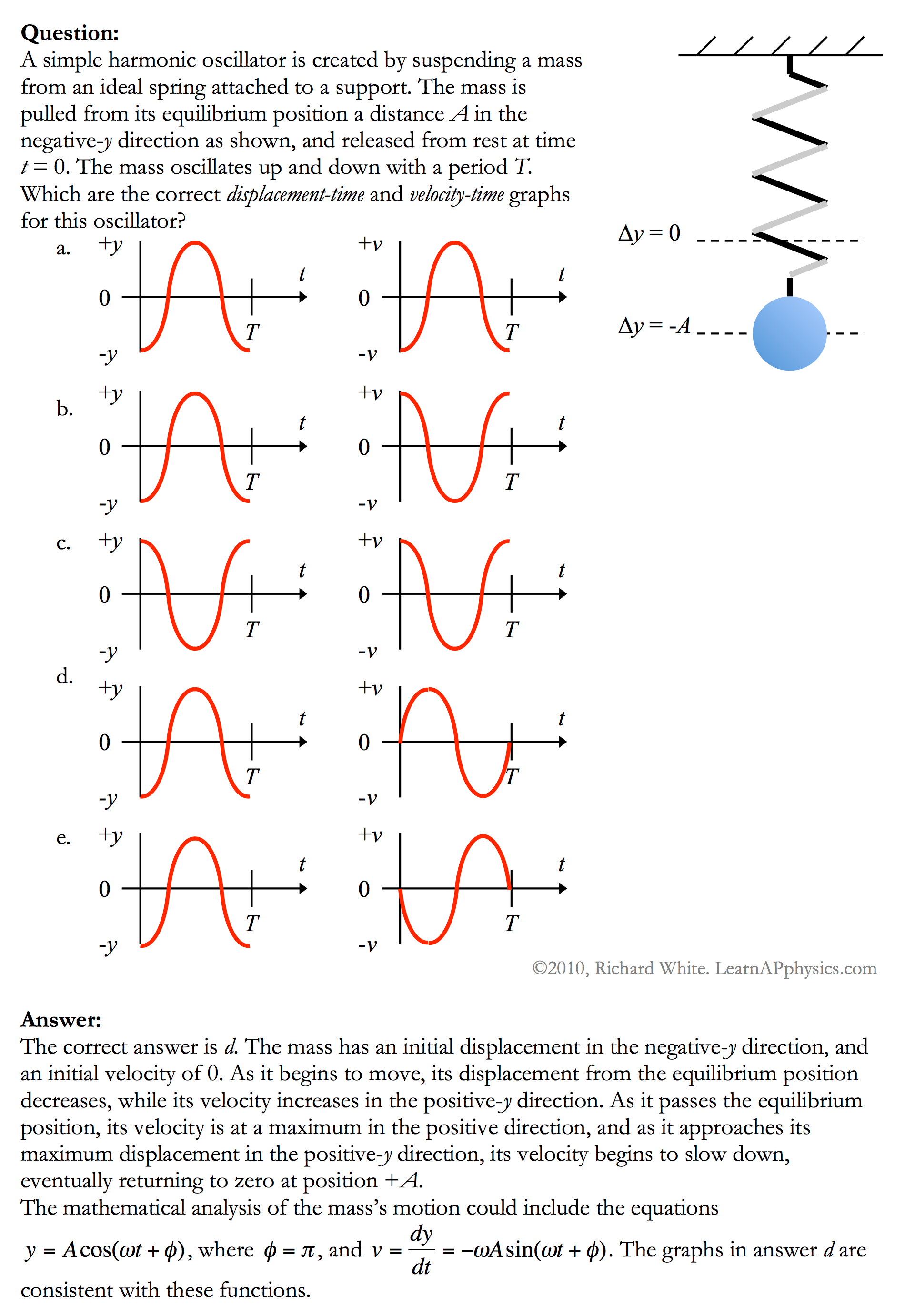
- Spring‑mass demo: Hang a weight from a spring, pull it down, and watch the bounce. Measure the time for ten cycles; divide by ten to get the period.
- Pendulum timing: Use a simple string and a small weight. Vary the length and note how the period changes—longer strings swing slower.
- Water wave ripple: Drop a pebble into a still pond and observe concentric circles traveling outward. The distance between peaks tells you the wavelength.
These hands‑on activities reinforce the concepts without requiring sophisticated equipment.
Why Understanding Oscillations Matters
From designing musical instruments to engineering safe skyscrapers, grasping how oscillations behave is crucial. In medicine, doctors interpret heart‑rate variability as a diagnostic tool. In technology, engineers tune radio circuits using resonant frequencies to filter signals.
In short, oscillations weave through the fabric of both natural phenomena and human‑made devices. A solid intuition about them equips you to appreciate everything from the soothing hum of a refrigerator to the complex choreography of quantum particles.