How Safe Is Your Money? Understanding FDIC Insurance and Government Backing
What the FDIC Actually Does
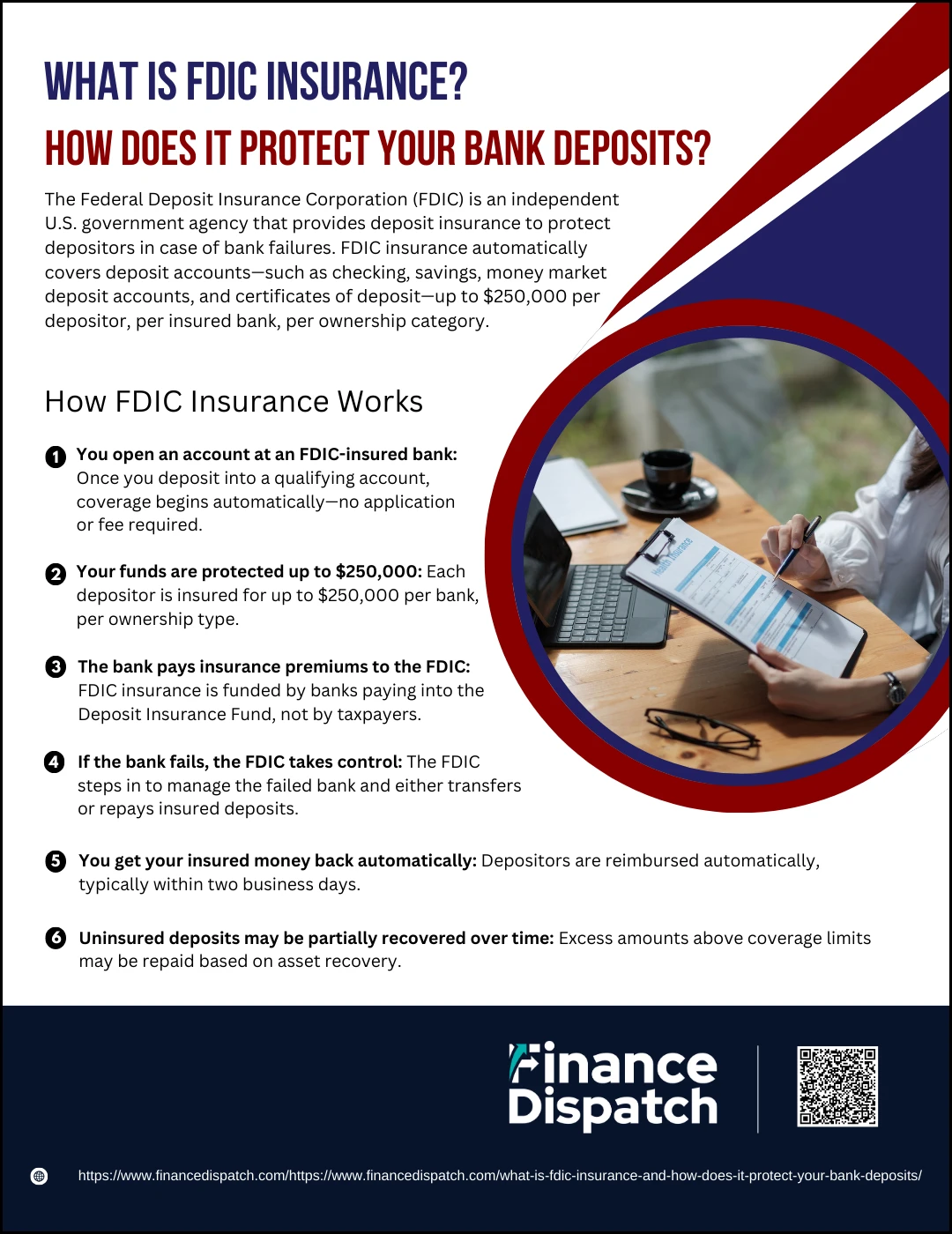
The Federal Deposit Insurance Corporation, or FDIC, was created in 1933 during the Great Depression. Its core mission is simple: protect depositors if a bank fails. In practice, the agency steps in, pays out insured amounts, and helps close the institution in an orderly way. That safety net has become a cornerstone of confidence in the U.S. banking system.
Is FDIC Insurance a Government Guarantee?
Yes, but with nuance. The FDIC is an independent federal agency, and its insurance fund is backed by the full faith and credit of the United States. In other words, when the FDIC says your deposit is insured up to $250,000, that promise is ultimately supported by the U.S. Treasury.
Still, the insurance isn’t a direct Treasury check. The FDIC maintains its own reserve, built from premiums that insured banks pay. If that reserve ever ran low, the agency could obtain additional resources from the Treasury, just as other federal programs do.
Key Points About the Backing
- Independent funding: Annual premiums from member banks fund the Deposit Insurance Fund.
- Federal support: The Treasury can provide a line of credit if needed, preserving the “full faith and credit” guarantee.
- Coverage limit: Up to $250,000 per depositor, per insured bank, for each account category.
How Coverage Works in Real Life
Imagine you have a checking account, a savings account, and a CD at the same bank, each holding $200,000. Because the FDIC treats each account type separately, you’d be covered for the total $600,000—well beyond the $250,000 per‑category cap.
Conversely, if you keep $300,000 in a single savings account, the first $250,000 is protected; the remaining $50,000 isn’t. That’s why many people spread their money across different banks or account types.
What Happens If a Bank Fails?
In the unlikely event of a bank collapse, the FDIC moves quickly. Within a few days, it either finds a buyer for the failed institution or creates a “bridge bank” to keep operations running. Depositors receive their insured funds directly, often via a new account at the acquiring bank.
Because the process is usually seamless, most customers never even notice. The agency’s website even offers a “BankFind” tool so you can check if your bank is FDIC‑insured before you open an account.
Common Misunderstandings
Many people assume that all financial products are covered. That’s not the case. Here’s a quick reality check:
- Investment accounts (stocks, bonds, mutual funds) are not insured, even if held at an FDIC‑insured bank.
- Retirement accounts like IRAs are covered, but only up to the $250,000 limit per owner.
- Precious metals stored in a bank’s safe deposit box receive no FDIC protection.
Why the Government Stands Behind the FDIC
The rationale goes back to the 1930s: bank runs can quickly spiral into economic crises. By guaranteeing deposits, the government reduces panic and encourages people to keep their money in the banking system. That stability, in turn, supports everyday lending, mortgages, and business financing.
Critics sometimes argue that the guarantee creates moral hazard—banks might take on riskier behavior knowing deposits are insured. To counter that, the FDIC also conducts regular examinations and can impose penalties or restrictions on troubled institutions.
How to Make Sure You’re Fully Covered
It’s not enough to assume your bank is insured; you should verify it periodically. Here are a few practical steps:
- Visit the FDIC’s BankFind portal and search your bank’s name.
- Check your account statements for the FDIC logo.
- If you hold more than $250,000 at one bank, consider opening accounts at a second institution.
- Review the “ownership categories” (individual, joint, retirement) to see how limits apply.
Bottom Line
The FDIC’s insurance is indeed backed by the U.S. government, but it operates through a dedicated fund financed by banks themselves. For most everyday savers, that arrangement means peace of mind: even if a bank collapses, the federal guarantee ensures your deposits up to $250,000 remain safe. Knowing the limits, the types of accounts covered, and the steps to verify your bank’s status can help you navigate the system confidently.