How the US and UK Corporate Governance Systems Differ
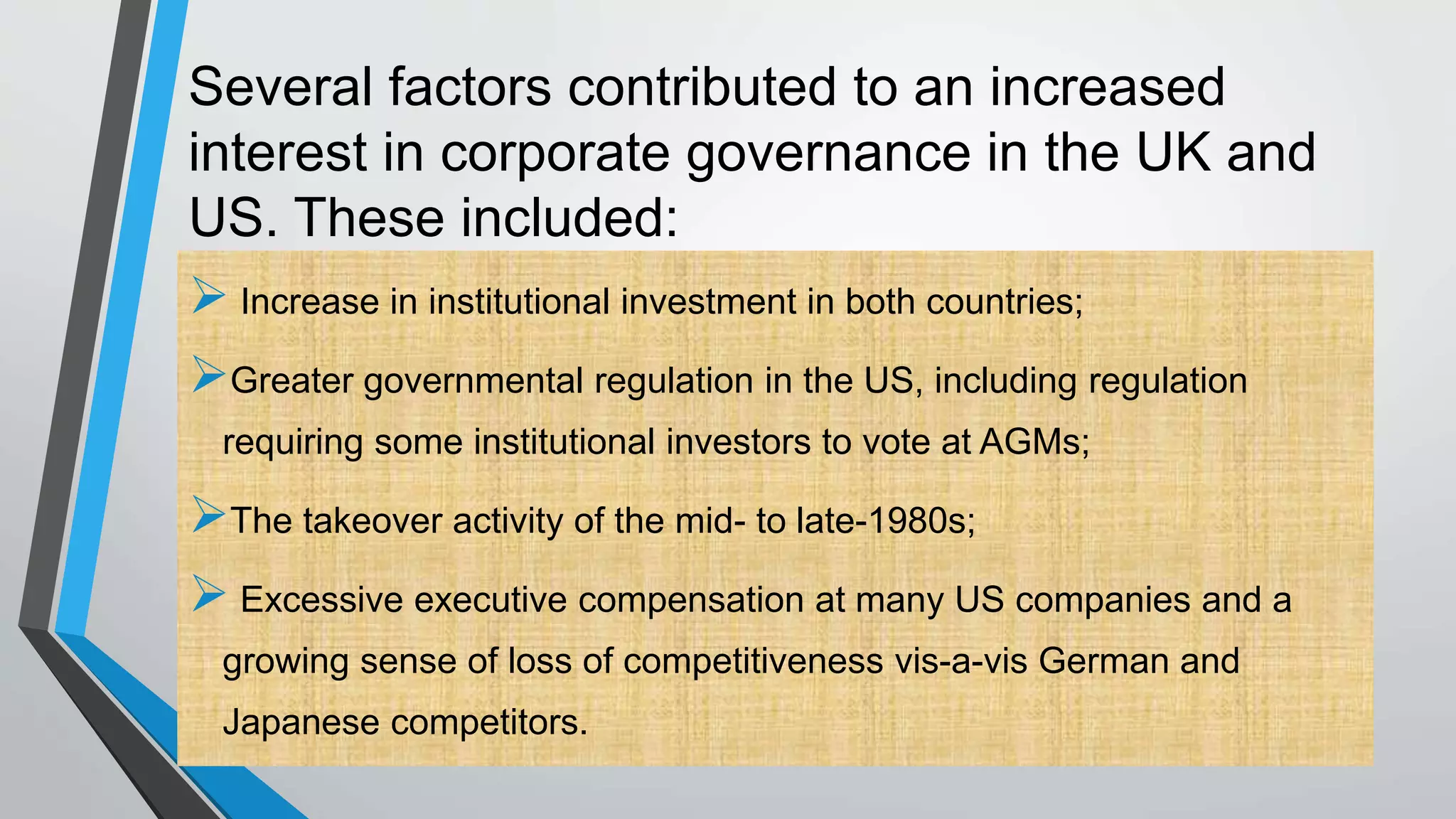
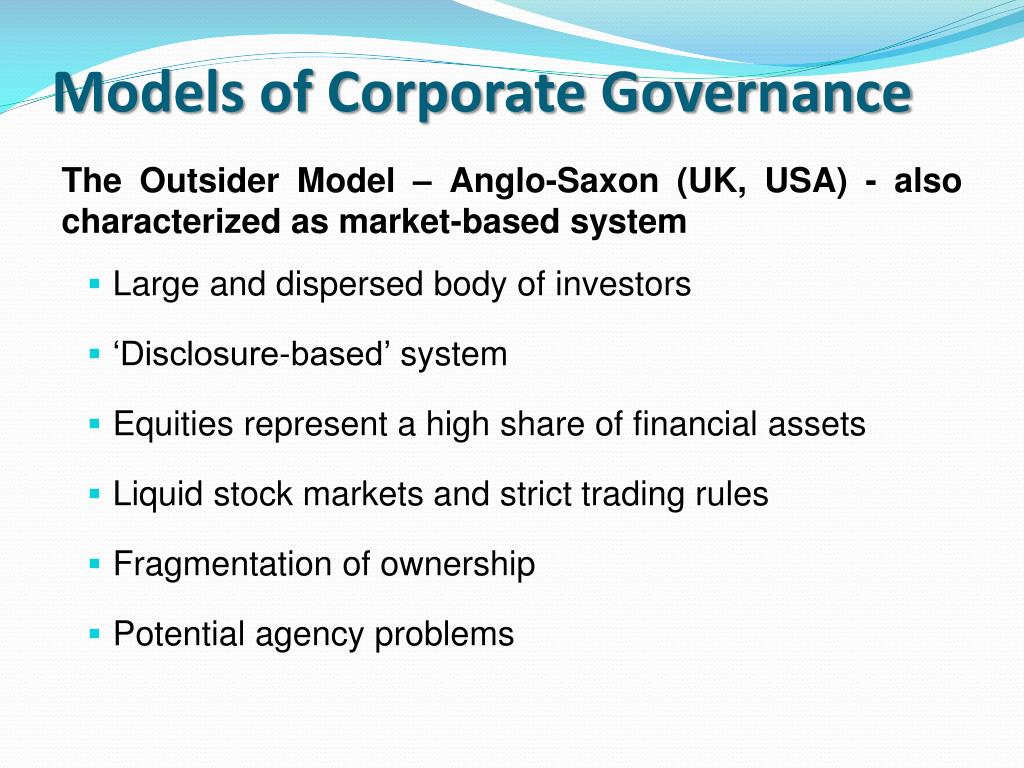
When investors or executives say “corporate governance,” they’re often thinking of boardroom mechanics, shareholder rights, and regulatory oversight. Yet the way these elements are arranged can look quite different across the Atlantic. The United States and the United Kingdom each sport a distinct governance model—shaped by history, law, and market culture. Understanding those differences helps stakeholders gauge risk, anticipate board behavior, and navigate cross‑border deals.
Historical Roots and Legal Foundations
In the United States, the framework is heavily influenced by state corporate law—Delaware being the most prominent—and federal securities regulations such as the Sarbanes‑Oxley Act. The focus has traditionally been on protecting shareholders and ensuring transparency for capital markets.
Britain, on the other hand, relies on the Companies Act 2006, the UK Corporate Governance Code, and a principle‑based approach that blends statutory rules with “comply or explain” expectations. The UK model places a bit more emphasis on stakeholder interests, including employees and the broader community.
Board Composition and Structure
US Model
- Predominantly a single‑tier board where directors sit together, combining executive and non‑executive members.
- Independent directors are a legal requirement for publicly listed firms, and their proportion is often a key metric for investors.
- Board committees—audit, compensation, and nominating—are usually chaired by independents.
UK Model
- Adopts a unitary board similar to the US, but the UK Code stresses a clear split between the chair and the CEO to avoid concentration of power.
- Non‑executive directors must be independent, yet the definition is broader, allowing for industry expertise that might not meet the stricter US criteria.
- Committees are common, but the UK Code also encourages a “lead independent director” to provide a counterbalance when a chair is not fully independent.
Shareholder Rights and Activism
Shareholder activism thrives in both markets, but the mechanisms differ.
United States
Shareholders can easily initiate proxy contests, file shareholder proposals, and push for board changes. The Securities and Exchange Commission (SEC) enforces strict proxy‑voting rules, and “say‑on‑pay” votes are binding for many companies.
United Kingdom
While UK shareholders also enjoy “say‑on‑pay” votes, the process is more advisory. The “comply or explain” principle means companies can deviate from the Code if they provide a rationale—something less common in the US where deviation often triggers shareholder backlash.
Executive Compensation
Both jurisdictions employ performance‑linked pay, yet the transparency and structure vary.
- US: Comp packages frequently include stock options, restricted stock units, and performance shares. Disclosure is granular, with detailed tables showing the “pay‑for‑performance” alignment.
- UK: Long‑term incentive plans are typical, but there is a stronger cultural push toward “reasonable” pay, reinforced by the UK Remuneration Code. Shareholder votes on pay are advisory, but poor results can spur public criticism.
Regulatory Oversight and Enforcement
The US regulatory environment is more prescriptive. The SEC, along with the Public Company Accounting Oversight Board (PCAOB), conducts routine inspections, and non‑compliance can lead to substantial fines or criminal charges.
In the UK, the Financial Conduct Authority (FCA) and the Prudential Regulation Authority (PRA) monitor disclosures, but enforcement often relies on market pressure and reputational risk. The “comply or explain” mechanism gives firms flexibility, yet it also imposes a duty to justify any departures.
Risk Management and ESG Considerations
Environmental, social, and governance (ESG) factors have become boardroom staples on both sides of the pond.
American boards tend to integrate ESG through dedicated committees or by tying metrics to executive bonuses, reflecting investor demand for quantifiable results.
British boards, guided by the UK Corporate Governance Code, are expected to embed ESG into strategy and disclose how they address climate‑related risks. The Task Force on Climate‑related Financial Disclosures (TCFD) reporting is effectively mandatory for many UK‑listed companies.
Key Takeaways for Cross‑Border Stakeholders
- Expect a more litigious, rule‑heavy environment in the US, with tighter shareholder enforcement.
- In the UK, anticipate a principles‑driven approach where explanations matter as much as compliance.
- Board independence is prized in both markets, but the US leans on strict statutory definitions while the UK offers broader discretion.
- Executive pay is transparent everywhere, yet the UK places a cultural premium on perceived fairness.
- ESG reporting is gaining parity, though the UK may push deeper strategic integration sooner.
Whether you’re a board member, investor, or consultant, recognizing these nuances can sharpen your analysis and help you navigate the subtle but consequential divergences between American and British corporate governance.