How to Earn Free Certified Psychology Courses Online
Ever imagined upgrading your résumé with a psychology credential without emptying your savings? The good news is that a handful of reputable platforms now offer fully accredited courses at zero cost. Whether you’re a budding therapist, a curious hobbyist, or a professional looking to add a mental‑health lens to your skill set, there’s a pathway that fits.
Why Free Certified Courses Matter
Certificates aren’t just decorative paper; they signal to employers and peers that you’ve met a defined standard of knowledge. A free, accredited badge can open doors to entry‑level roles, volunteer positions, or even graduate‑school prerequisites. Plus, the discipline of completing structured coursework reinforces learning far more than a casual YouTube binge.
Spotting Legitimate Providers
Not every “free” label guarantees quality. Here’s a quick checklist to keep you on the safe side:
- Accreditation: Look for partnerships with universities, professional bodies, or recognized MOOC platforms.
- Instructor Credentials: Courses led by PhDs, licensed psychologists, or seasoned clinicians carry more weight.
- Transparent Syllabus: A detailed outline showing topics, assessments, and credit hours is a hallmark of seriousness.
- Clear Certification Process: Whether you need to pass quizzes, submit a project, or simply finish the modules, the path to the certificate should be spelled out.
Top Platforms Offering Free Certified Psychology Courses
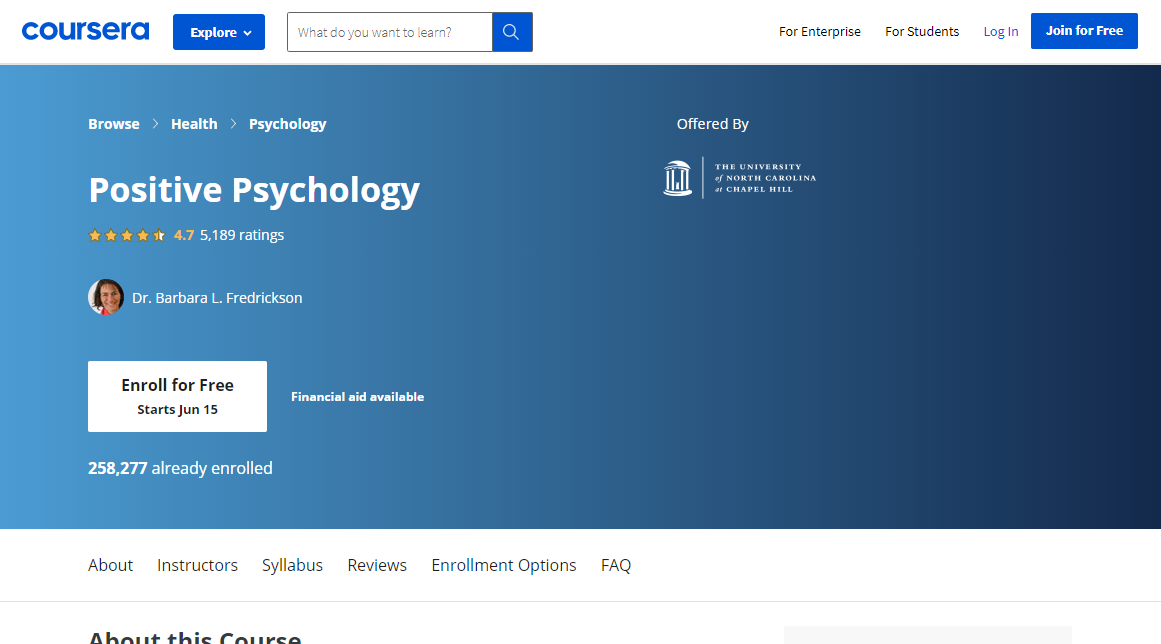
1. Coursera – “Foundations of Psychology” (University of Toronto)
Although most Coursera programs charge for the certificate, you can apply for financial aid directly on the course page. Once approved, you receive the same verified credential as paying students. The syllabus covers cognitive development, research methods, and clinical interventions—all in bite‑size weekly modules.
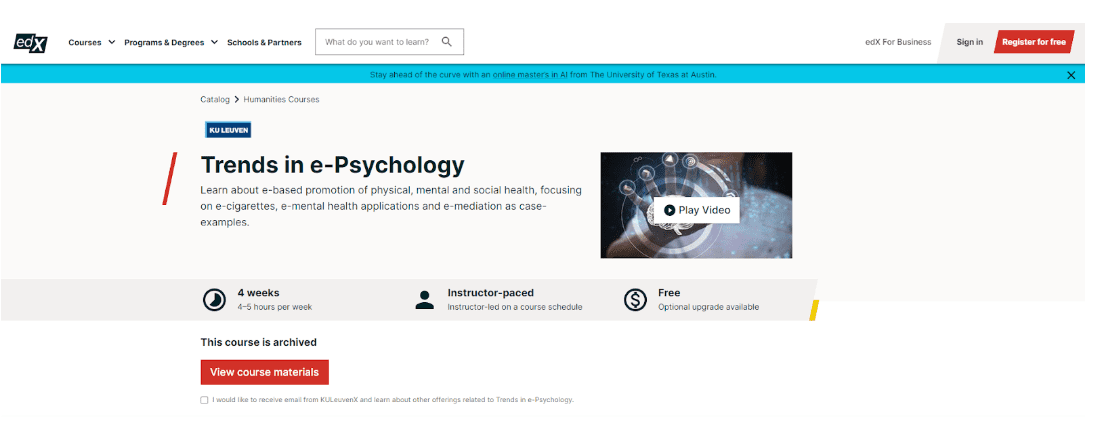
2. edX – “Introduction to Psychological Research” (HarvardX)
edX’s audit option lets you access all lectures and readings for free. To unlock the professional certificate, you simply pay a modest fee, but many learners qualify for a scholarship that waives this charge. The course emphasizes experimental design, ethics, and data interpretation—skills that translate across countless careers.
3. FutureLearn – “Understanding Mental Health” (University of Edinburgh)
FutureLearn periodically runs “Free Upgrade” promotions. During these windows, you can earn a statement of participation that counts toward a micro‑credential portfolio. The curriculum blends theory with case studies, making it particularly useful for community workers and educators.
4. Open University – “Psychology of Learning” (OpenLearn)
All OpenLearn courses are completely free, and you receive a downloadable badge upon completion. Though not a formal university credit, the badge is verifiable online and recognized by many employers in the UK and beyond.
How to Enroll and Secure Your Certificate
Step one: Choose the platform that aligns with your learning style. Visual learners may gravitate toward video‑heavy Coursera, while those who enjoy reading PDFs might prefer OpenLearn’s text‑rich modules.
Step two: Register with a professional‑looking email address. Some platforms flag generic accounts for fraud checks, which could delay certificate issuance.
Step three: If a financial‑aid form appears, fill it out honestly. Mention any relevant background—such as volunteer work or career transition—to strengthen your case.
Step four: Complete each module on time. Even if the deadline is flexible, staying on schedule helps cement the material and avoids the dreaded “I forgot to finish” moment.
Step five: Pass the assessments. Most free tracks require at least a 70% score on quizzes; a few ask for a short reflective essay. Draft your answers early, then polish them after a brief break.
Finally, download the certificate and add it to LinkedIn, your résumé, or a personal portfolio site. A quick “Add Credential” click can turn a modest badge into a conversation starter during interviews.
Boosting the Value of Your Free Certificate
Credentials shine brightest when paired with practical experience. Consider these low‑cost ways to deepen your expertise:
- Volunteer: Local crisis helplines or community health centers often welcome volunteers with a basic psychology background.
- Join Forums: Sites like ResearchGate or the American Psychological Association’s discussion boards let you ask questions and stay current on emerging research.
- Start a Blog: Summarizing what you’ve learned forces you to translate theory into layperson language—an essential skill for any practitioner.
Common Pitfalls and How to Avoid Them
First, beware of “certificate mills” that promise instant credentials after a quick survey. These usually lack any academic backing and can damage your credibility. Second, don’t let the “free” tag lull you into neglecting the coursework; a half‑finished badge looks worse than no badge at all. Finally, keep track of expiration dates—some micro‑credentials require renewal after two years to remain valid.
What to Expect After Graduation
With a certified psychology course under your belt, you’ll likely notice three immediate shifts. Your vocabulary expands—you’ll start using terms like “operant conditioning” or “cognitive bias” without hesitation. Your résumé gains a concrete line that recruiters can filter for, especially in roles like human resources, social work, or market research. And most importantly, you’ll possess a mental framework that helps you understand behavior, whether at work, home, or in casual conversation.
In short, free certified psychology courses are more than a budget‑friendly learning option; they’re a strategic investment in a versatile skill set. By selecting reputable platforms, completing the assessments diligently, and pairing the badge with real‑world practice, you set yourself up for meaningful growth without the tuition bill.