How to Navigate Forex Trading Sessions and Market Hours
Whether you’re a day‑trader chasing quick moves or a longer‑term investor looking for optimal entry points, understanding the clock that drives the Forex market is essential. Unlike stocks, the currency market never truly sleeps—it simply hands the reins over from one hub to the next. This guide walks you through the major trading sessions, highlights the busiest overlaps, and offers practical tips for matching your strategy to the time of day.
Why Session Timing Matters
Liquidity and volatility aren’t spread evenly throughout the 24‑hour cycle. When two major centers overlap, you’ll notice tighter spreads, deeper order books, and more pronounced price swings. Conversely, during the quiet “off‑hours,” spreads can widen and price action may stall.
Choosing the right window can:
- Reduce transaction costs by capitalizing on tighter spreads.
- Increase the probability of meaningful price moves.
- Align your trading routine with your personal schedule.
The Three Core Sessions
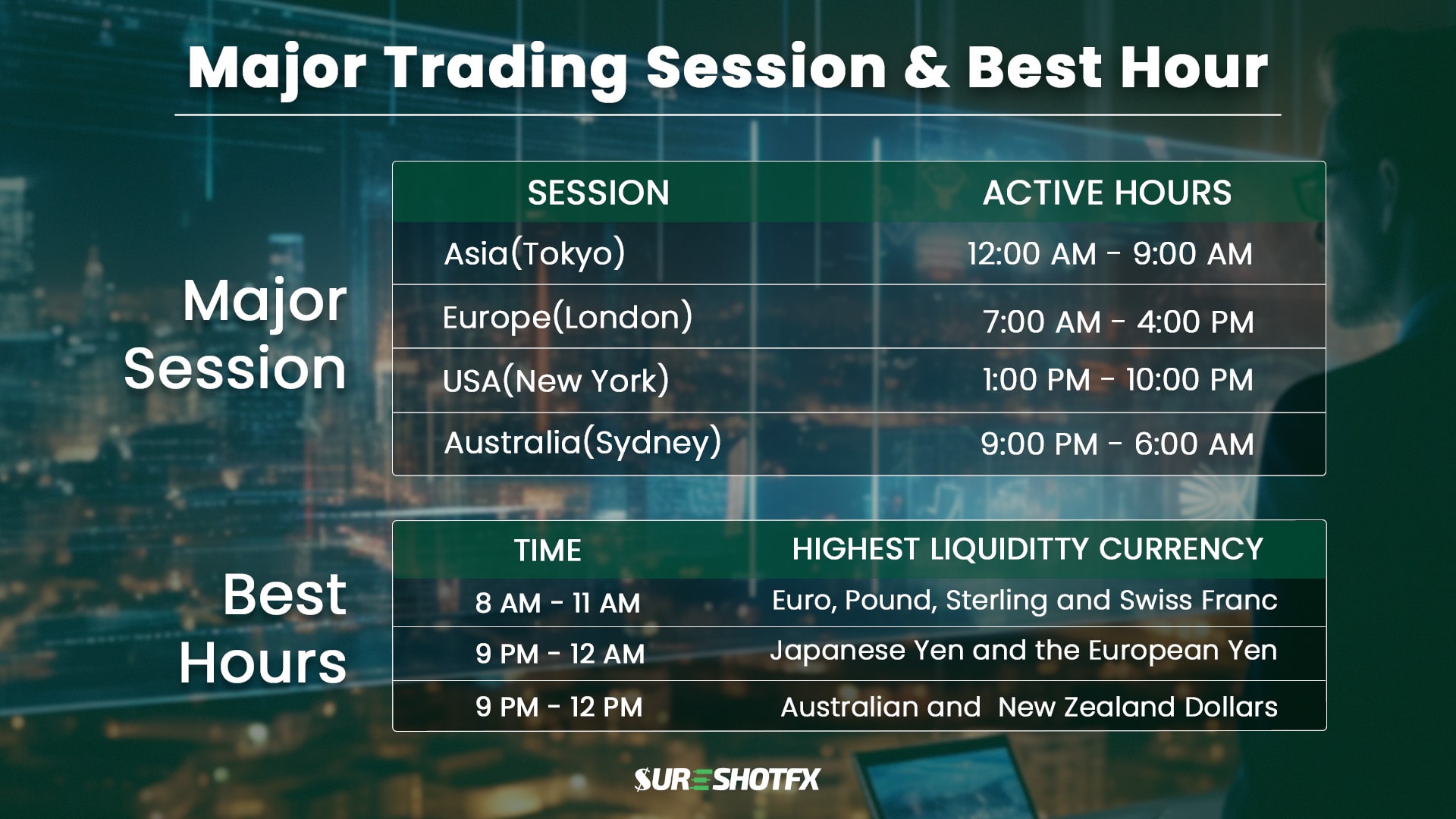
1. London Session (07:00 – 16:00 GMT)
The London market is the heavyweight of Forex. Roughly 30 % of daily turnover originates here, and the sheer volume creates the most consistent liquidity. Expect strong moves in GBP‑related pairs, but the session also influences EUR, CHF and JPY pairs.
2. New York Session (12:00 – 21:00 GMT)
When the New York floor opens, the price action picks up again after the London lull. The overlap with London (12:00 – 16:00 GMT) is the busiest period of the entire day, with narrow spreads on EUR/USD, GBP/USD and USD/JPY. After 16:00 GMT, the market starts to thin as the London participants log off.
3. Asia–Pacific Session (22:00 – 07:00 GMT)
Tokyo leads the way, followed closely by Sydney and Auckland. While overall volume is lower than in London or New York, this session is where you’ll find the most activity in AUD, NZD and JPY pairs. It’s also the time when Asian economic releases (e.g., BOJ statements, Chinese PMI) can create short‑lived spikes.
Key Overlaps and What They Mean
- London‑New York (12:00 – 16:00 GMT): The “golden window.” Liquidity peaks, spreads shrink, and trends often form. Ideal for breakout and momentum traders.
- Tokyo‑London (07:00 – 08:00 GMT): A brief but lively crossover. Watch for reversal patterns in EUR/JPY and GBP/JPY as European players begin their day.
- New York‑Tokyo (none): No direct overlap, but news from the U.S. can still ripple into Asian markets later in the session.
Practical Tips for Matching Your Strategy
Scalpers and high‑frequency traders thrive during the London‑New York overlap. Tight spreads and rapid price changes give them the edge they need to capture a few pips repeatedly.
Swing traders often prefer the quieter Asian session. With less noise, trends can develop more clearly, and overnight holds become less risky.
News‑driven traders should keep an eye on the economic calendars of the region that’s currently open. A Japanese CPI release at 00:30 GMT can move AUD/JPY dramatically, just as a U.S. jobs report at 13:30 GMT will rock USD pairs.
Tools to Keep Track of Session Changes
- World clock apps that display multiple time zones simultaneously.
- Broker platforms with built‑in session heat maps.
- Custom alerts for when a session opens or when liquidity spikes.
Common Pitfalls to Avoid
Many newcomers mistakenly think “more volatility = more profit.” In reality, heightened volatility also amplifies risk. Without proper stop‑loss placement, a sudden swing during the London‑New York overlap can wipe out a position in minutes.
Another trap is trading during the low‑liquidity hours (roughly 02:00 – 04:00 GMT) without adjusting position size. Spreads can double, and slippage becomes a real concern.
Putting It All Together
Start by mapping your personal peak‑performance hours against the session schedule. If you’re a night owl, the Asian session may feel natural; if you work a typical 9‑to‑5 job, the London‑New York overlap might be the only realistic window.
Once you’ve identified a comfortable slot, back‑test a few strategies during that period. Notice how spread widths, volume, and news flow affect your win‑rate. Then, refine your risk management to suit the specific characteristics of that session.
Remember, the Forex market is a relay race, not a sprint. Each session hands you a new set of conditions—treat them as opportunities rather than obstacles, and you’ll find the rhythm that makes the 24‑hour market work for you.