How to Understand Percent Yield in Simple Terms
Ever stared at a lab report or a production sheet and wondered what “percent yield” really means? You’re not alone. The concept sounds technical, but at its core it’s just a way of comparing what you actually got to what you expected to get. Let’s break it down without the jargon, explore why it matters, and see a few easy‑to‑follow examples.
What Is Percent Yield?
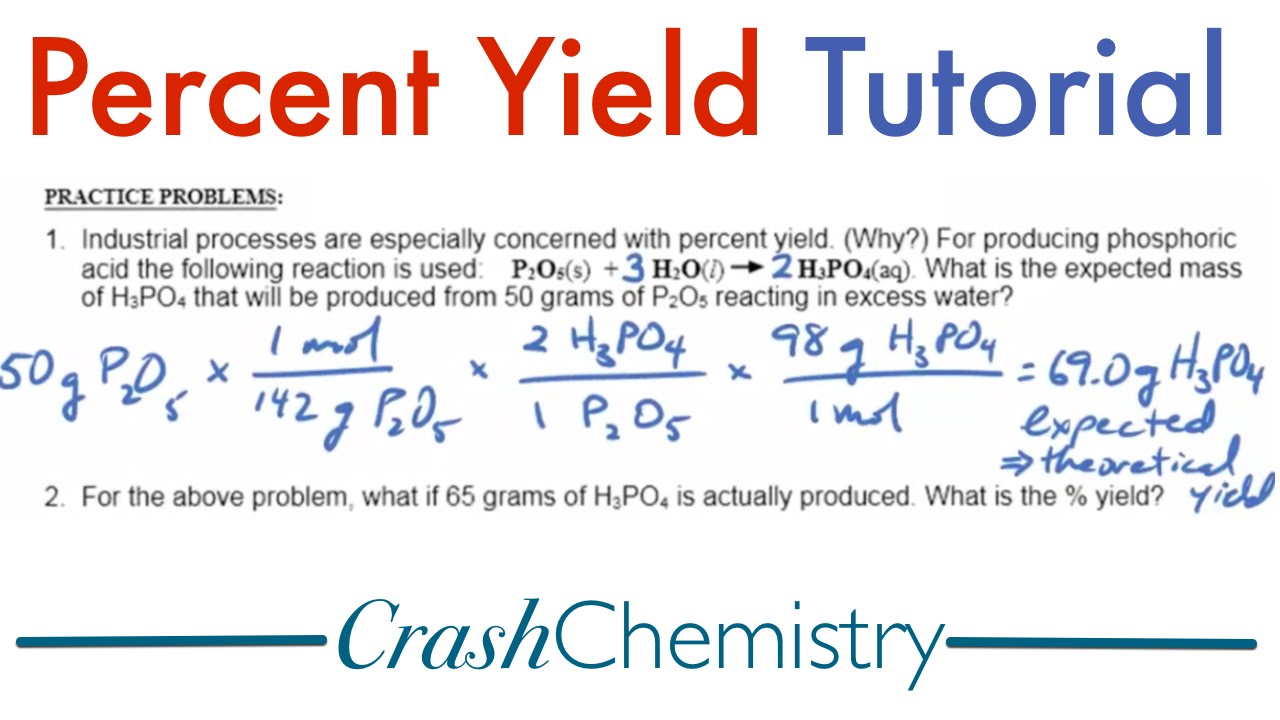
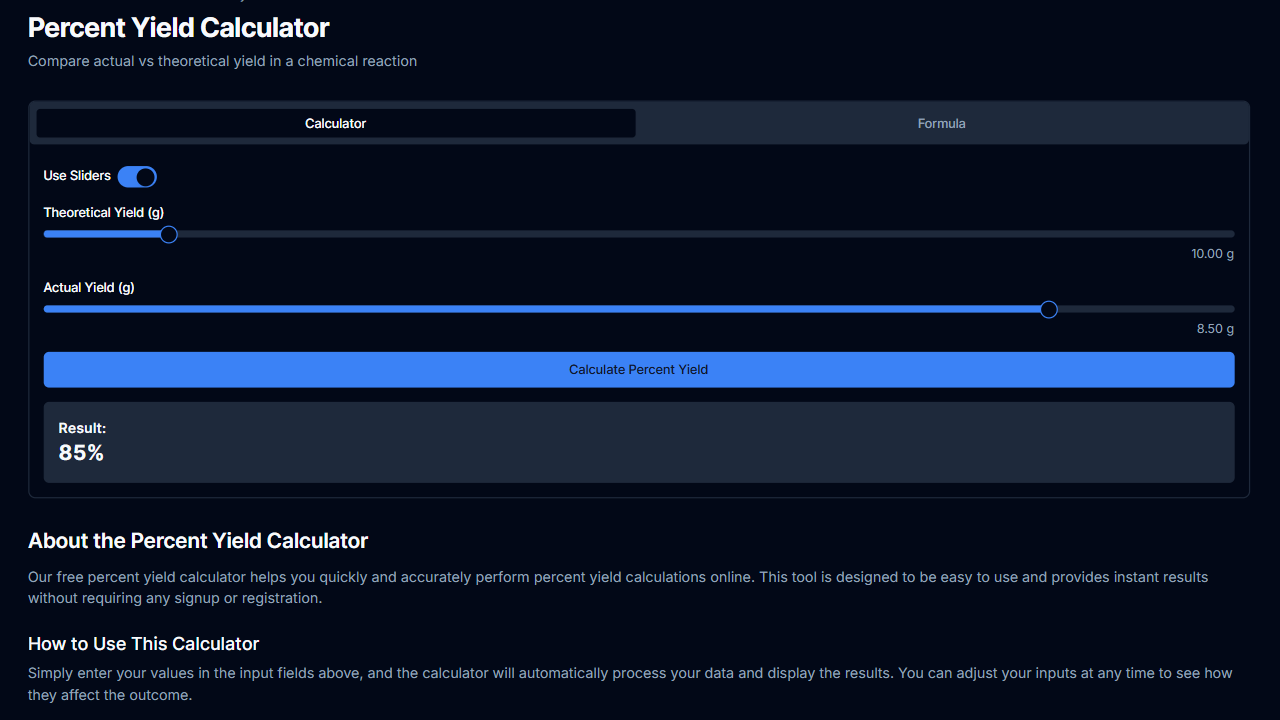
In chemistry, manufacturing, or any process that turns raw materials into a product, percent yield tells you how efficiently the reaction or operation performed. It’s calculated by taking the amount you actually obtained (the actual yield) and dividing it by the amount you theoretically could have obtained (the theoretical yield), then multiplying by 100.
Mathematically, it looks like this:
Percent Yield = (Actual Yield ÷ Theoretical Yield) × 100%
If the numbers line up perfectly, you’d see 100%—meaning everything you expected was produced, with no losses. In the real world, yields often fall short, and that’s where the insight begins.
Why Does It Matter?
- Cost control: Lower yields mean more raw material waste, which directly impacts the bottom line.
- Process optimization: Tracking yields over time helps identify steps that can be tweaked for better performance.
- Quality assurance: Consistent yields signal a stable, reliable process, while large fluctuations may flag hidden problems.
In short, percent yield is a quick health check for any conversion process.
Step‑by‑Step Calculation
1. Determine the Theoretical Yield
The theoretical yield comes from stoichiometry—the math that balances reactants and products. For a simple example, imagine you’re making water from hydrogen and oxygen:
2 H₂ + O₂ → 2 H₂O
If you start with 4 grams of hydrogen, the balanced equation tells you you should end up with about 36 grams of water (assuming unlimited oxygen). That 36 grams is your theoretical yield.
2. Measure the Actual Yield
After the reaction, you collect and weigh the product. Suppose you only managed to isolate 30 grams of water. That 30 grams is the actual yield.
3. Plug Into the Formula
Percent Yield = (30 g ÷ 36 g) × 100% ≈ 83.3%.
That 83.3% tells you about 17% of the potential product never made it into your final collection—maybe it stayed dissolved, evaporated, or was lost during transfer.
Common Sources of Yield Loss
- Side reactions that consume reactants.
- Incomplete reactions—some starting material never turns into product.
- Physical losses during filtration, transfer, or drying.
- Measurement errors, especially with volatile or hygroscopic substances.
Identifying which of these is at play can guide you toward a higher yield next time.
Real‑World Example: Baking Cookies
Cooking may feel far from chemistry, but the math works the same. Say a recipe predicts 24 cookies from 500 g of dough. After baking, you only count 20 usable cookies because a few spread thin and burned.
Percent Yield = (20 ÷ 24) × 100% ≈ 83%.
Now you know the process is about 17% inefficient—maybe the oven temperature needs tweaking, or the dough consistency could be improved.
Improving Your Percent Yield
Here are a few practical tips that apply across labs and factories alike:
- Optimize reaction conditions: Temperature, pressure, and pH can dramatically affect completeness.
- Minimize handling steps: Every transfer is a chance for loss.
- Use excess reactants wisely: A slight excess can push a reaction to completion, but too much creates waste.
- Monitor side reactions: Adding inhibitors or changing catalysts can suppress unwanted pathways.
Even small adjustments—like a tighter seal on a reflux condenser—can bump a yield from 78% to over 90%.
When a Yield Over 100% Appears
It sounds impossible, but you’ll sometimes see reported yields above 100%. This usually points to measurement errors: perhaps the product absorbed moisture, or impurities weren’t fully accounted for. In such cases, double‑check weighing procedures and consider drying the sample before the final measurement.
Quick Reference Cheat Sheet
- Theoretical Yield: Max possible amount, based on stoichiometry.
- Actual Yield: Real amount isolated.
- Formula: (Actual ÷ Theoretical) × 100%.
- Typical Good Yield: 80–95% in well‑optimized processes.
- Red Flags: Consistently < 50% or > 105%.
Keep this list handy next time you run a reaction or a production batch; it’s a fast way to gauge performance.
Wrapping Up the Concept
Percent yield is less a mysterious statistic and more a practical yardstick for efficiency. By calculating it, you instantly see how close you are to the ideal outcome and where to focus improvement efforts. Whether you’re synthesizing a pharmaceutical compound, running a metal plating line, or just perfecting a chocolate chip cookie recipe, the same simple math applies.