Inside Mexico’s Cartel Crisis: What’s Unfolding Today
Why the Situation feels different now
For years the Mexican drug war has been framed as a binary clash between the government and a handful of entrenched cartels. Recent months, however, reveal a far more tangled landscape: long‑standing alliances are splintering, new groups are surfacing, and violence is spilling into places that were once quiet backwaters.
What makes the current crisis especially unsettling is the speed at which these changes are happening. In a matter of weeks, cities such as Michoacán and Guerrero have seen power vacuums open, prompting both old rivals and fresh entrants to scramble for control of trafficking routes, extortion rackets, and even local politics.
Key players and shifting alliances
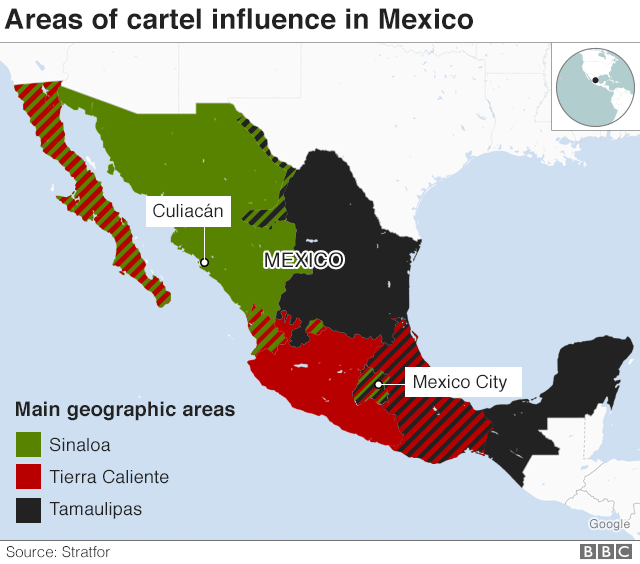
The two biggest names—Jalisco New Generation (CJNG) and the Sinaloa Cartel—remain central, but their relationship is no longer a simple partnership or rivalry. CJNG’s aggressive expansion into the Pacific coast has forced the Sinaloa Cartel to retreat in some territories while forging uneasy truces with smaller outfits to keep the pressure off.
Meanwhile, the once‑dominant Gulf Cartel is a shadow of its former self, reduced to a network of splinter cells that often work for whoever pays the most. In the south, the Knights Templar, long thought dead, have resurfaced under a new banner, aligning with local militias that claim to defend their communities.
- CJNG – rapid expansion, strong militarized wing.
- Sinaloa – strategic retreats, opportunistic alliances.
- Gulf fragments – mercenary‑style operations.
- Knights Templar revival – community‑focused propaganda.
Violence spike and its toll on civilians
Since the spring, homicide rates in the states of Jalisco, Michoacán, and Veracruz have risen by double digits, according to data released by the National Institute of Statistics. The surge isn’t limited to targeted killings; indiscriminate shootouts in public squares, roadblocks manned by armed men, and kidnappings for ransom have become alarmingly routine.
Beyond the headlines, ordinary people are paying a steep price. Families are forced to flee their homes, schools close for weeks after grenade attacks, and local economies sputter as traders avoid markets plagued by extortion demands.
Government response: crackdown or negotiation?
President Andrés Manuel López Obrador’s administration continues to emphasize a “social‑development” approach, pledging increased funding for education and job programs in the most affected regions. Critics argue that the rhetoric masks a reluctance to deploy the military in a decisive way, fearing that a full‑scale confrontation could trigger even more bloodshed.
In practice, the federal government has launched a series of joint operations with the Navy and Federal Police, seizing several key drug‑processing labs and arresting mid‑level lieutenants. Yet analysts point out that without dismantling the cartels’ financial networks, these raids merely shuffle the hierarchy rather than eradicate it.
Regional ripple effects
The crisis is not confined within Mexico’s borders. Trafficking routes that once funneled narcotics solely to the United States are now diversifying, sending shipments toward Central America and even Europe via maritime channels in the Gulf of Mexico.
Neighboring countries such as Guatemala and Honduras report a rise in “narco‑infiltration”—local gangs receiving weapons and cash in exchange for moving Mexican product northward. This cross‑border spillover threatens to destabilize already fragile security structures throughout the region.
What might come next?
Looking ahead, three scenarios dominate expert speculation. First, a possible “cartel war” could erupt if CJNG continues its aggressive push, prompting the Sinaloa Cartel to rally a coalition of smaller groups in a desperate counter‑offensive. Second, the Mexican state might double down on social investments, hoping to undercut the cartels’ recruitment pipelines by offering viable alternatives to youth in rural areas.
Lastly, an international dimension could emerge if the United States steps up joint intelligence sharing and financial‑tracking initiatives. Such cooperation could choke the cartels’ money‑laundering channels, but it also risks pushing criminal networks deeper underground, making them harder to monitor.
For now, the picture remains fluid, with each new arrest or territorial shift sending ripples through a fragile equilibrium. What is clear, however, is that the crisis is no longer a static showdown; it is a dynamic, multi‑layered conflict that will shape Mexico’s security landscape for years to come.