Inside Modern Russian Tanks: A Complete Overview
When you hear the phrase modern Russian tanks, images of massive armor gliding across rugged terrain probably spring to mind. Since the early 1990s, Russian designers have blended Soviet‑era robustness with cutting‑edge electronics, aiming for vehicles that can out‑maneuver, out‑shoot, and out‑last their rivals. Today’s fleet reflects a mix of evolutionary upgrades and bold new concepts, each shaped by battlefield lessons from places like Syria, Ukraine, and the Arctic.
In this article we’ll unpack the main platforms fielded by the Russian Ground Forces, explore the technologies that set them apart, and glance at where the next generation might head. Whether you’re a hobbyist, a defense analyst, or just curious about how steel beasts evolve, this guide offers a clear, up‑to‑date snapshot.
What Defines Modern Russian Tanks?
At its core, a modern Russian tank isn’t just a big gun on tracks; it’s an integrated combat system. Key characteristics include:
- Modular armor that can be swapped or reinforced depending on mission risk.
- Advanced fire‑control suites with thermal imagers, laser rangefinders, and automatic target tracking.
- Improved engine power‑to‑weight ratios, giving better mobility in swampy or snowy ground.
- Network‑centric communications that let the tank share data with drones, infantry, and command posts in real time.
These elements work together to address two enduring Russian doctrines: deep‑battle maneuver and the ability to operate in harsh, low‑infrastructure environments.
Key Platforms in Service Today
Russia’s armored corps currently relies on four primary families, each representing a different balance of legacy design and new technology.
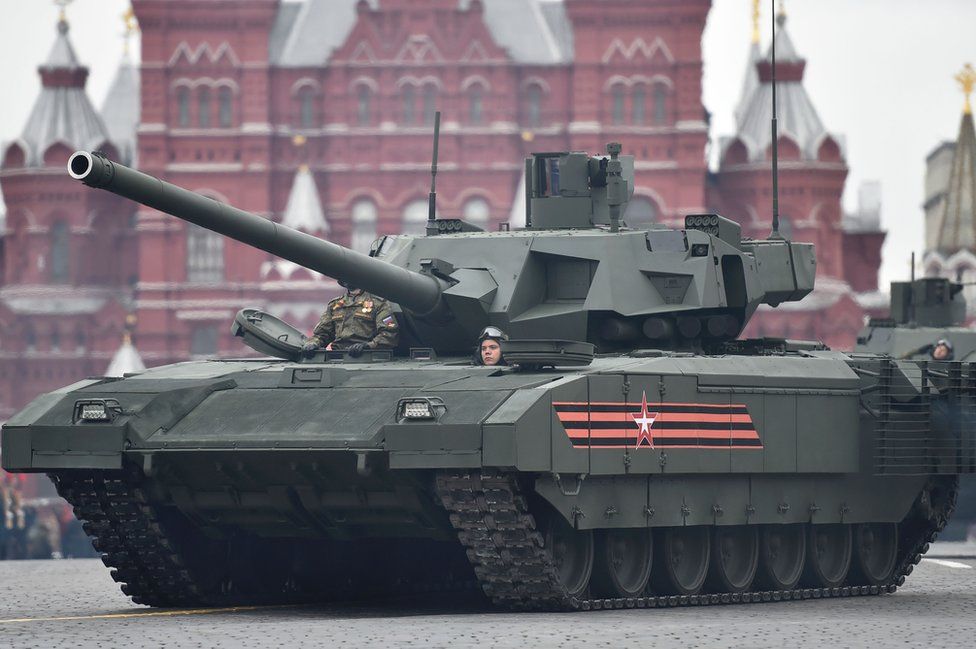
T‑14 Armata
Debuting in 2015, the T‑14 is often billed as the world’s first “unmanned turret” tank. The crew sits inside an armored capsule beneath a fully protected hull, while a remote turret houses a 125 mm smoothbore gun capable of firing guided missiles. Its Afghanit active protection system can intercept incoming RPGs and ATGMs, and an integrated radar suite provides 360‑degree situational awareness. Production has been slower than initially promised, but the platform remains a centerpiece of Russia’s high‑tech armor ambitions.
T‑90M “Proryv-3”
The T‑90M is a heavily upgraded version of the long‑standing T‑90 line. It retains the conventional turret but adds upgraded armor modules, a new 1,250 hp engine, and an advanced digital fire‑control system. The gun can fire the latest APFSDS rounds and the 9M119M “Reflex” anti‑tank guided missile. Export variants, such as the T‑90MS, are already serving in several allied armies.
T‑80BVM
Built on the older T‑80 chassis, the BVM (Boevaya Voyska Modernizirovannaya) modernisation focuses on reliability and crew comfort. It features a new 1,000 hp diesel engine—replacing the original gas turbine—improved composite armor, and a digital battlefield management system. While not as flashy as the Armata, it provides a solid balance of firepower and mobility for many Russian units.
T‑72B3M “Pushka”
The T‑72, once the workhorse of Soviet armor, continues to receive iterative upgrades. The B3M standard adds a modern fire‑control computer, a new 1,130 hp engine, and enhanced composite armor panels. It remains popular in secondary formations and is widely exported, often under the “T‑72B3” designation.
Technological Trends Shaping the Future
Even as these platforms roll out, Russian engineers are experimenting with several trends that could define the next decade of armored warfare.
- Active Protection Systems (APS): Beyond the Afghanit on the T‑14, lighter APS kits like the "Arena‑E" are being retrofitted to older tanks, giving them a chance to survive modern anti‑tank missiles.
- Hybrid Powertrains: Prototypes are testing diesel‑electric drives to improve fuel efficiency and reduce acoustic signatures—particularly useful in stealthy reconnaissance roles.
- Artificial Intelligence Integration: Early trials involve AI‑assisted target recognition, helping crews acquire and engage threats faster than human reaction times alone.
- Modular Weapon Stations: Future designs may swap the main gun for a missile launcher or a high‑energy railgun, depending on mission demands.
These innovations aim to keep Russian armor relevant against evolving threats such as loitering munitions, swarm drones, and advanced Western tank designs.
Export Landscape and Global Influence
Russia’s tank export strategy has long focused on affordability combined with a willingness to provide technology transfers. Countries in the Middle East, Asia, and Africa operate T‑90, T‑72, and even early‑stage T‑14 models under licence. This approach not only generates revenue but also creates a network of allies familiar with Russian logistics and training systems.
However, export success is tempered by competition from Western manufacturers and growing concerns about after‑sale support. Recent geopolitical shifts have nudged some buyers toward Chinese or indigenous solutions, prompting Russian firms to bundle more comprehensive support packages with their sales.
Operational Experience and Lessons Learned
Combat deployments in Syria and the ongoing conflict in Ukraine have offered a real‑world testing ground. Observers note that modern Russian tanks excel in low‑visibility environments, thanks to robust thermal sights and night‑vision capabilities. Conversely, they have sometimes struggled against well‑coordinated anti‑tank teams equipped with modern Western ATGMs, highlighting the importance of integrated APS and crew training.
These lessons feed directly back into upgrade cycles, prompting quicker fielding of reactive armor, improved communications encryption, and refined crew ergonomics.
Frequently Asked Questions
What makes the T‑14 Armata different from older Russian tanks?
The T‑14’s unmanned turret, crew capsule, and integrated Afghanit active protection system represent a leap in survivability and crew safety. Its digital architecture also allows for faster data sharing with other battlefield assets.
Are modern Russian tanks still being exported?
Yes. Variants of the T‑90, T‑80, and upgraded T‑72 are active in several foreign armies. Export versions often feature localized communications gear and may include optional APS kits.
How do Russian tanks compare to NATO counterparts?
Russian designs typically prioritize ruggedness, ease of maintenance, and firepower, often at the cost of heavier weight. NATO tanks, such as the Leopard 2 or M1A2, tend to focus on lighter weight, advanced composite armor, and higher crew comfort. Both approaches have merits, and the effectiveness often hinges on tactics, crew training, and support infrastructure.
![Modern Russian Tanks & AFVs: Technical Guide [128pp] - Amber Books](https://cdn-knbjp.nitrocdn.com/WYqoXSpgEVhGDDylypCekCFsOuChqiLq/assets/images/optimized/rev-f9da34f/www.amberbooks.co.uk/wp-content/uploads/2019/06/TechGuideModernRussianTanks_Bundle-9.jpg)