Is Serbia on Track to Join the EU? A Detailed Look
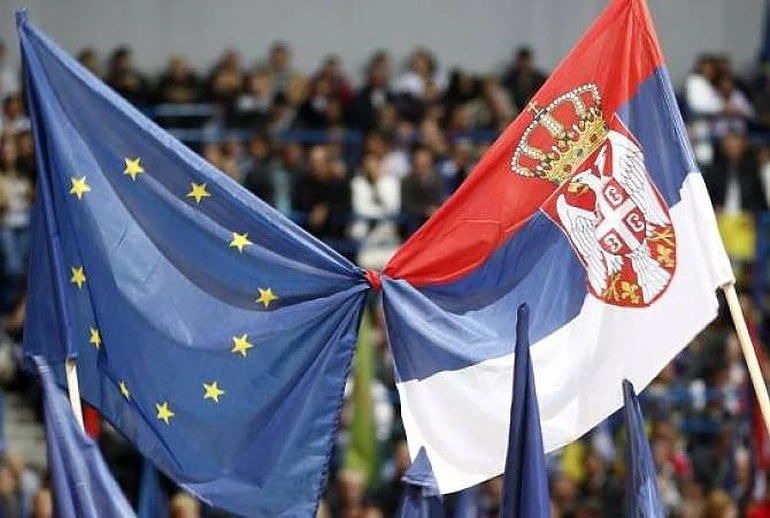
When you hear “European Union,” you might picture the familiar map of Western Europe, but the bloc’s horizon keeps shifting. Serbia, nestled in the Balkans, has been in the spotlight for years, caught between aspirations of EU membership and a legacy of regional complexities. So, where does Serbia really stand on that path?
Historical Context – Why the Question Matters
Serbia’s relationship with Europe is anything but new. After the breakup of Yugoslavia in the 1990s, the country faced isolation, sanctions, and a series of conflicts that left scars across the region. The early 2000s brought a new government eager to pivot westward, seeing EU integration as a route to stability, investment, and a stronger voice on the international stage.
That pivot isn’t merely symbolic. It reshaped domestic politics, prompting reforms in the judiciary, media freedom, and the economy. Yet, each step forward also exposed lingering tensions—most notably the status of Kosovo, a lingering diplomatic thorn that still haunts accession talks.
The Formal Process – Where Serbia Currently Is
EU enlargement follows a well‑defined roadmap, and Serbia officially entered it in 2012 when the European Council granted it “candidate status.” Since then, the European Commission has released annual progress reports, highlighting achievements and pointing out shortfalls.
- Negotiation chapters: Out of 35 chapters that need to be opened and closed, Serbia has opened roughly half. Closing them is a painstaking process, each requiring legislative changes and practical implementation.
- Reform benchmarks: The EU expects concrete reforms in rule of law, public administration, and the fight against corruption. Progress is evident, but the pace is uneven.
- Financial assistance: Serbia benefits from the Instrument for Pre‑Accession Assistance (IPA), which supports capacity‑building projects aimed at aligning Serbian standards with EU norms.
Key Milestones Reached
- Adoption of the 2015 Freedom of Information Act, increasing transparency.
- Introduction of a new criminal procedure code improving defendants’ rights.
- Steps toward aligning the customs framework with EU regulations, facilitating trade.
Challenges Still Looming
- Rule of law: Judicial independence remains a concern for Brussels.
- Media freedom: Reporters still face pressure, and ownership concentration is high.
- Kosovo dispute: The EU insists on a normalised relationship before opening the final accession chapters.
Public Sentiment – Do Serbians Want the EU?
Polling data over the past decade shows a gradual shift. In the early 2010s, only about 40 % of respondents expressed a clear desire to join the EU. Recent surveys indicate that figure climbs to nearly 55 %, especially among younger voters who see the EU as a gateway to education and employment abroad.
However, skeptics argue that economic gains are still limited. While EU markets are attractive, many still feel the domestic economy hasn’t yet reaped the promised benefits. This ambivalence feeds a political narrative that the EU is a distant, perhaps even unattainable, goal.
Economic Indicators – What the Numbers Reveal
From a macro perspective, Serbia’s GDP growth has been steady, averaging around 4 % annually before the pandemic. Post‑COVID recovery has been robust, aided by increased foreign direct investment, especially from EU member states like Germany and Austria.
- Trade: EU countries account for roughly 60 % of Serbia’s total trade volume, underscoring the deep economic interdependence.
- Investment climate: The World Bank’s “Ease of Doing Business” ranking has improved, yet corruption perception indexes still place Serbia in the lower half of European nations.
These figures suggest that, while the economic case for membership strengthens, structural reforms are still needed to fully integrate Serbia into the Single Market.
Geopolitical Angles – The Bigger Picture
Serbia’s EU journey cannot be detached from the region’s broader power dynamics. Russia maintains a cultural and political presence, offering energy deals that sometimes clash with EU energy‑policy goals. Meanwhile, China’s Belt and Road Initiative has funded several Serbian infrastructure projects, adding another layer to the strategic calculations.
Balancing these relationships while pursuing EU accession creates a diplomatic tightrope. The EU itself is cautious, keen to avoid setting precedents that could be exploited by external powers.
What Lies Ahead – Possible Scenarios
Looking forward, analysts outline three main trajectories:
- Gradual accession: Serbia continues to close negotiation chapters, resolves the Kosovo issue, and eventually becomes a full member within the next decade.
- Stalled progress: Persistent reforms lag, public support wanes, and the EU’s own enlargement fatigue slows the process, leaving Serbia in a prolonged candidate limbo.
- Alternative alignment: Serbia deepens ties with non‑EU partners, adopting a “multi‑vector” foreign policy that keeps EU membership as an option but not a priority.
Each path carries its own set of risks and opportunities, and the reality will likely involve a blend of these scenarios rather than a single, clean outcome.
Bottom Line – Is Serbia a Member Yet?
Short answer: No, Serbia is not an EU member. Long answer: The country is firmly on the accession track, but the journey remains complex, marked by legal reforms, geopolitical balancing, and the ever‑present Kosovo question. For now, Serbia sits in a sort of “waiting room,” actively negotiating, steadily aligning, yet still needing to clear several hurdles before the EU flag can officially fly over Belgrade.