Master APA In‑Text Citations: A Simplified Guide
When you’re drafting a research paper, the pressure to get every citation perfect can feel overwhelming. APA in‑text citations, though, follow a logical pattern that becomes second nature once you see the underlying rules. Below you’ll find a step‑by‑step walkthrough, practical examples, and a few shortcuts to keep your reference list tidy and your professor happy.
What Is an APA In‑Text Citation?
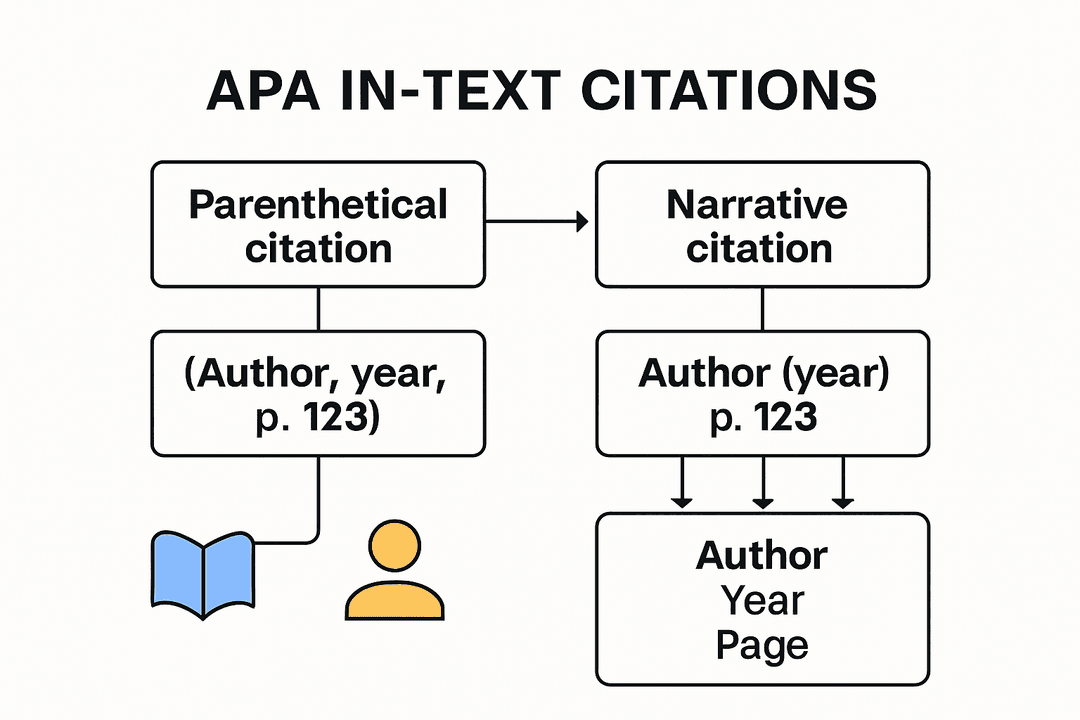
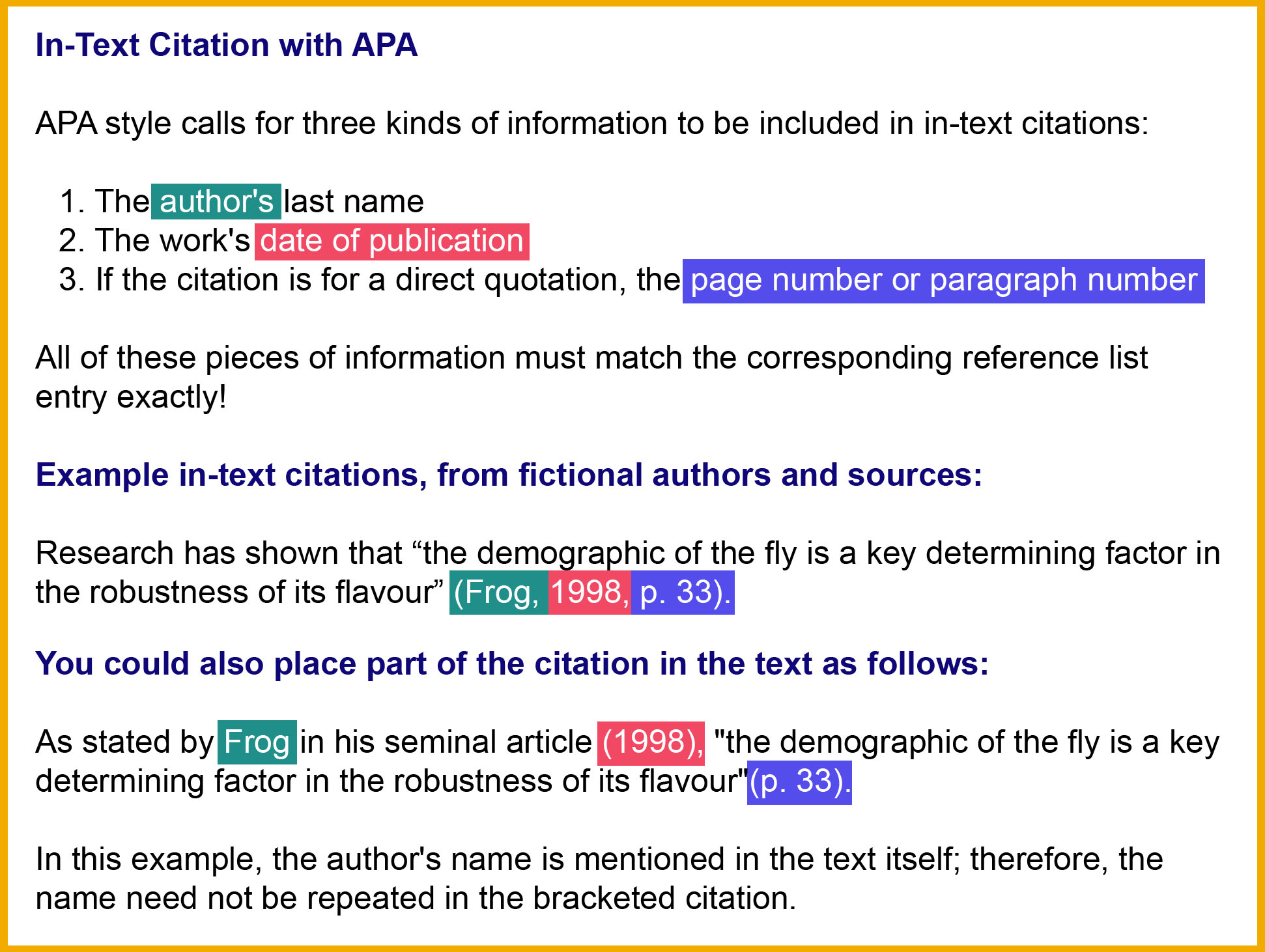
An APA in‑text citation is a brief parenthetical note that points the reader to the full reference at the end of your document. It typically includes the author’s last name and the year of publication, allowing anyone to locate the source in the reference list without interrupting the flow of the narrative.
The citation can appear in two ways: integrated into the sentence or placed at the end of a clause. Both styles convey the same information; the choice depends on how you want the sentence to read.
Basic Formats for Different Sources
APA distinguishes between a handful of source types, each with its own citation conventions. Here’s a quick reference you can keep on your desk.
Books
For a single‑author book, use the author’s surname and the publication year. If you quote directly, add a page number after a comma.
Example: (Smith, 2020) or (Smith, 2020, p. 45) for a direct quote.
Journal Articles
When citing an article, the format mirrors that of a book, but you can also include the DOI in the reference list later. If the article has two authors, list both each time.
Example: (Garcia & Lee, 2019) or (Garcia & Lee, 2019, p. 112).
Webpages with No Author
If a webpage lacks a clear author, start with the title of the page in quotation marks, followed by the year. Use a shortened title if it’s long.
Example: ("Climate Change Impacts," 2022) or ("Climate Change Impacts," 2022, para. 4) when no page numbers exist.
Multiple Works by the Same Author
When you cite several works by the same author published in different years, separate the years with commas. If the years are identical, add lowercase letters (a, b, c) after each year.
Example: (Taylor, 2018a, 2018b) for two distinct 2018 publications.
Common Pitfalls and How to Avoid Them
- Missing page numbers for direct quotes. APA requires a specific location—page, paragraph, or heading—whenever you quote verbatim.
- Confusing “et al.” usage. Use “et al.” only for works with three or more authors after the first citation; the first mention should list up to two authors.
- Over‑citing. Not every sentence needs a citation. Cite when you present someone else’s idea, data, or wording; your own analysis stays citation‑free.
- Incorrect punctuation. The period comes after the closing parenthesis, not before.
Tips for Managing Citations Efficiently
Even with a solid grasp of the rules, keeping track of dozens of sources can be tedious. These habits can save you time and prevent errors.
First, adopt a reference‑management tool such as Zotero or Mendeley. They export APA‑styled citations directly into Word, letting you focus on writing instead of formatting.
Second, create a quick‑lookup sheet for the most common source types you use. A one‑page cheat sheet with examples for books, articles, and webpages becomes a handy desk reference.
Finally, proofread with a checklist: author name, year, page/paragraph number, and correct placement of commas and ampersands. A systematic scan catches the small slips that often slip through.
Frequently Asked Questions
Do I need to include a citation for paraphrased ideas?
Yes. Even if you put the information in your own words, APA still requires a citation to credit the original source.
How do I cite a source with no date?
Use “n.d.” in place of the year: (Brown, n.d.). If the source later receives a date, update the citation accordingly.
When should I use a narrative citation versus a parenthetical one?
A narrative citation weaves the author’s name into the sentence, e.g., “Smith (2020) argues that…”. Use this style when the author’s identity is central to your point.
Can I combine multiple citations in a single set of parentheses?
Absolutely. List them alphabetically, separated by semicolons: (Brown, 2018; Smith, 2020; Zhao, 2021).