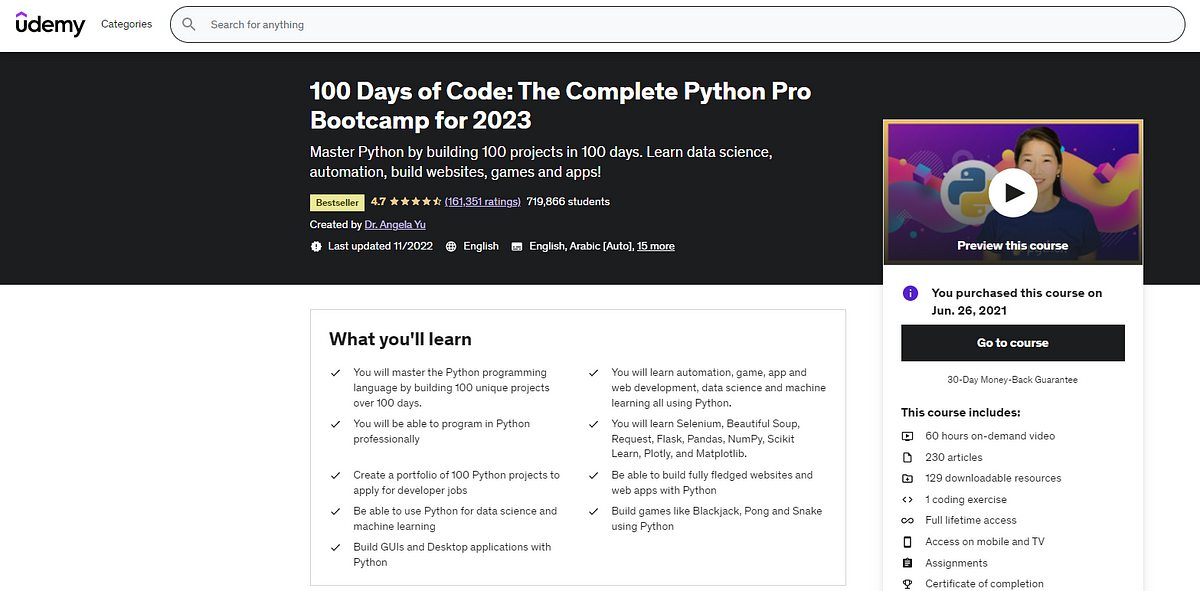
Master Python: Inside The 100 Days Of Code Free Course On Udemy
Learning to code used to feel like trying to order coffee in a foreign language without a phrasebook. You stare at the screen, hoping the syntax cooperates, but often you get nothing but errors. That gap between "I want to learn" and "I can actually build" is where most beginners quit. Enter the concept of the "100 Days of Code," a popular movement designed to build momentum through consistency. When you combine this method with the vast library on Udemy, specifically looking for free Python courses, you find a path that is far more sustainable than the typical crash course.
The idea isn't just about Python syntax. It’s about building a habit. By committing to a small amount of coding every day for 100 days, you bypass the initial shock of complexity. Udemy’s free tier offers several courses that promise this structure, though navigating them requires a bit of savvy. Let’s break down why this approach works, what you can realistically expect from free content, and how to actually stick with it.
Why The 100-Day Structure Actually Works
Most programming tutorials suffer from "tutorial hell." You follow along, everything works, and you feel like a genius. Then the tutorial ends, you open a blank file, and you have no idea what to type. The 100 Days of Code framework solves this by forcing output. Instead of passively watching videos, you are required to ship a project daily.
In Python terms, this might look like Day 1 being "Variables and Data Types" where you build a simple name printer. By Day 20, you’re manipulating lists and dictionaries to create a number guessing game. By Day 50, you might be scraping a website for news headlines. The progression is key. It prevents the overwhelm of trying to build an AI model on day four. It allows your brain to form neural pathways related to logic and problem-solving rather than just memorizing syntax.
Udemy’s Free Python Offerings: What You Get
Udemy is a marketplace, not a single institution. This means "Free Python Course 100 Days Of Code" isn't one specific product owned by Udemy, but rather a search term that might lead you to several different instructors who have offered free access to their curriculum. These courses vary wildly in quality.
Here is what you can generally expect from these free listings:
- SkillShare-style brevity: Free courses on Udemy are often shorter. They might cover the basics of variables, loops, and functions, but rarely go deep into advanced object-oriented programming or APIs.
- No certificates (usually): If a course is free, the completion certificate is often locked behind a paywall or simply not offered. You are learning for the skill, not the paper.
- Dated content: Python 3 is the standard now. Always check the last update date. A free course from 2018 might still be using Python 2 syntax or deprecated libraries, which will cause your code to break immediately.
One particular instructor, Dr. Angela Yu, became famous for a paid "100 Days of Code" bootcamp. Because her name is so associated with the phrase, many users search for her name expecting a free version. Currently, her comprehensive course is typically paid, but she does offer occasional free resources, workshops, or book deals that align with the methodology. Always read the reviews to see if the free version you find is a fragment of a larger paid course or a standalone beginner guide.
Bridging The Gap When The Free Content Ends
The biggest risk with free courses on platforms like Udemy is that they are often "lead magnets." They give you the first three chapters of a textbook, prove they are good teachers, and then ask you to upgrade to learn the hard stuff. If you hit a wall after 20 days, don’t panic. This is where general Python resources come in handy.
If your Udemy course covers the basics of control flow but stops short of web development or data science, you can pivot. Use the foundational skills you built during the 100 days to explore specific applications. For example, if you enjoyed the data visualization projects in the free course, move on to free documentation for libraries like Pandas or Seaborn. The platform provides the structure; the internet provides the depth.
How To Stick With The Challenge
Consistency is harder than intensity. It is easier to binge-watch ten hours of coding tutorials on a Saturday than it is to code for twenty minutes every single day. Here are a few practical tips to keep the streak alive:
Embrace the ugly code. Your first five days of Python will likely be messy. Indentation errors will drive you crazy. That is normal. Do not try to write perfect, production-ready code. Just make it run. Perfection is the enemy of progress.
Use the community. Udemy courses have Q&A sections. Even in free courses, instructors or teaching assistants sometimes reply. More importantly, connect with other learners on Reddit or Discord. Seeing someone else struggle with the exact same while loop for the tenth time is incredibly validating.
Track your streak visually. Buy a physical calendar or use a sticky note. Mark an X for every day you code. The visual chain of Xs creates a psychological pressure not to break the streak. By day ten, you don’t want to lose the progress. By day fifty, you stop needing the motivation to start; you just do it because it’s what you do.
Frequently Asked Questions
Is the "100 Days Of Code" course on Udemy actually free?
Some courses marketed with this title are free, but they are often fragmented or outdated versions of full premium bootcamps. Always check the course syllabus and the "Last Updated" date before enrolling. Free does not always mean current.
Do I need any prior experience to start?
No. Python is widely recommended for absolute beginners because its syntax reads somewhat like plain English. If you can use a computer and have basic internet skills, you can start Day 1.
Can I get a certificate from a free Udemy course?
Typically, no. Udemy monetizes by charging for certificates and lifetime access to updated content. Free courses usually grant access to video lessons but exclude the completion certificate.
What if I miss a day?
You haven’t failed. The goal is consistency over a month or two, not perfect attendance. If you miss a day, don’t quit. Just pick it up again the next day with a slightly smaller project to get your rhythm back.