MBBS Fees at BAU International University Georgia: A Complete Guide
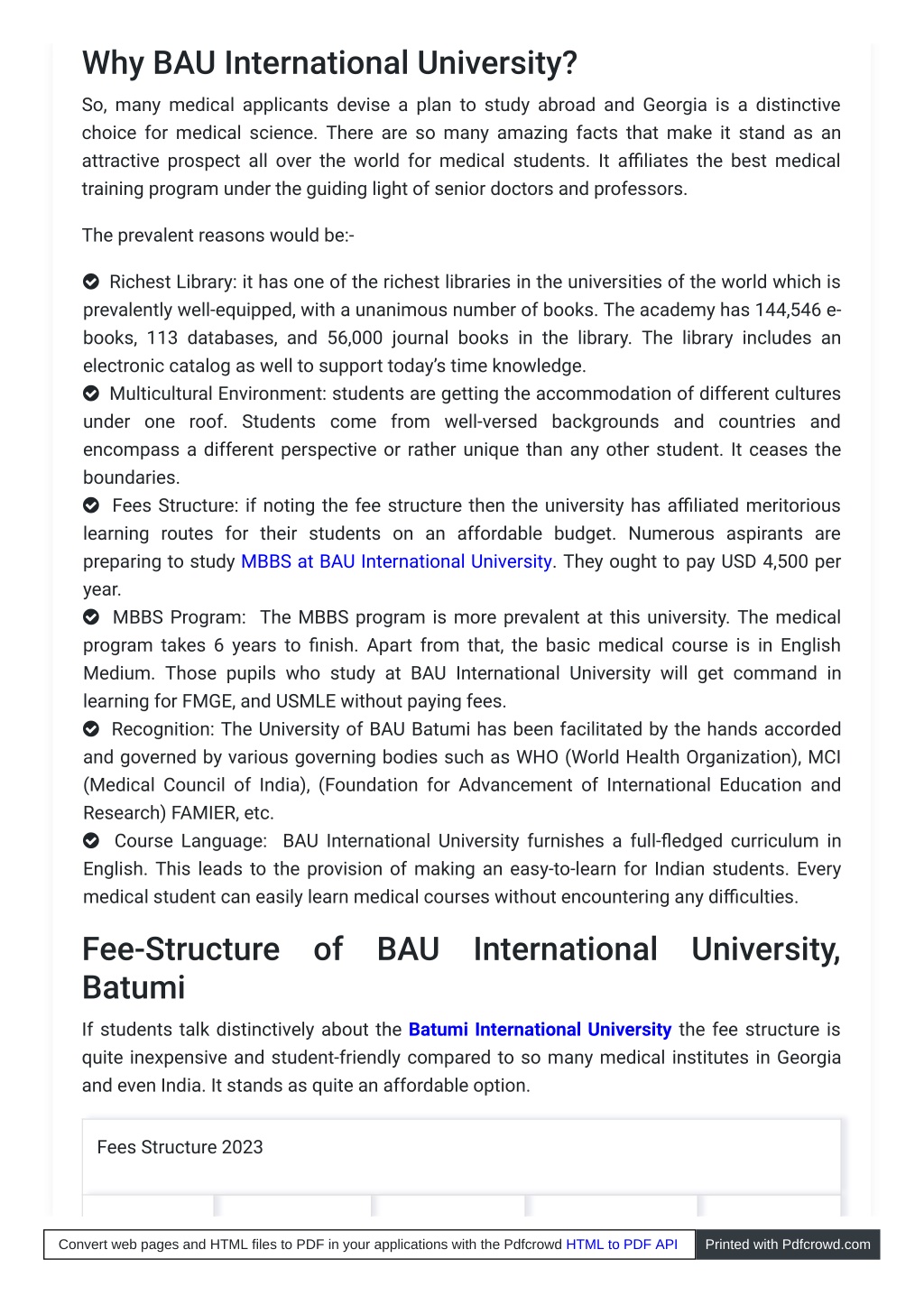
Choosing a medical university in Georgia has become a popular choice for international students, particularly those looking for an affordable alternative to Western Europe or North America. Among the newer entrants in this space is BAU International University. If you are considering this institution for your MBBS (or MD) studies, your mind is likely racing with one specific question: what will it actually cost?
The sticker price is only part of the story. When planning your education budget, you need to look beyond the tuition invoice. This guide breaks down the fee structure for BAU International University, covers the hidden costs of living in Georgia, and helps you determine if this specific program offers the value you need.
Understanding the Tuition Breakdown
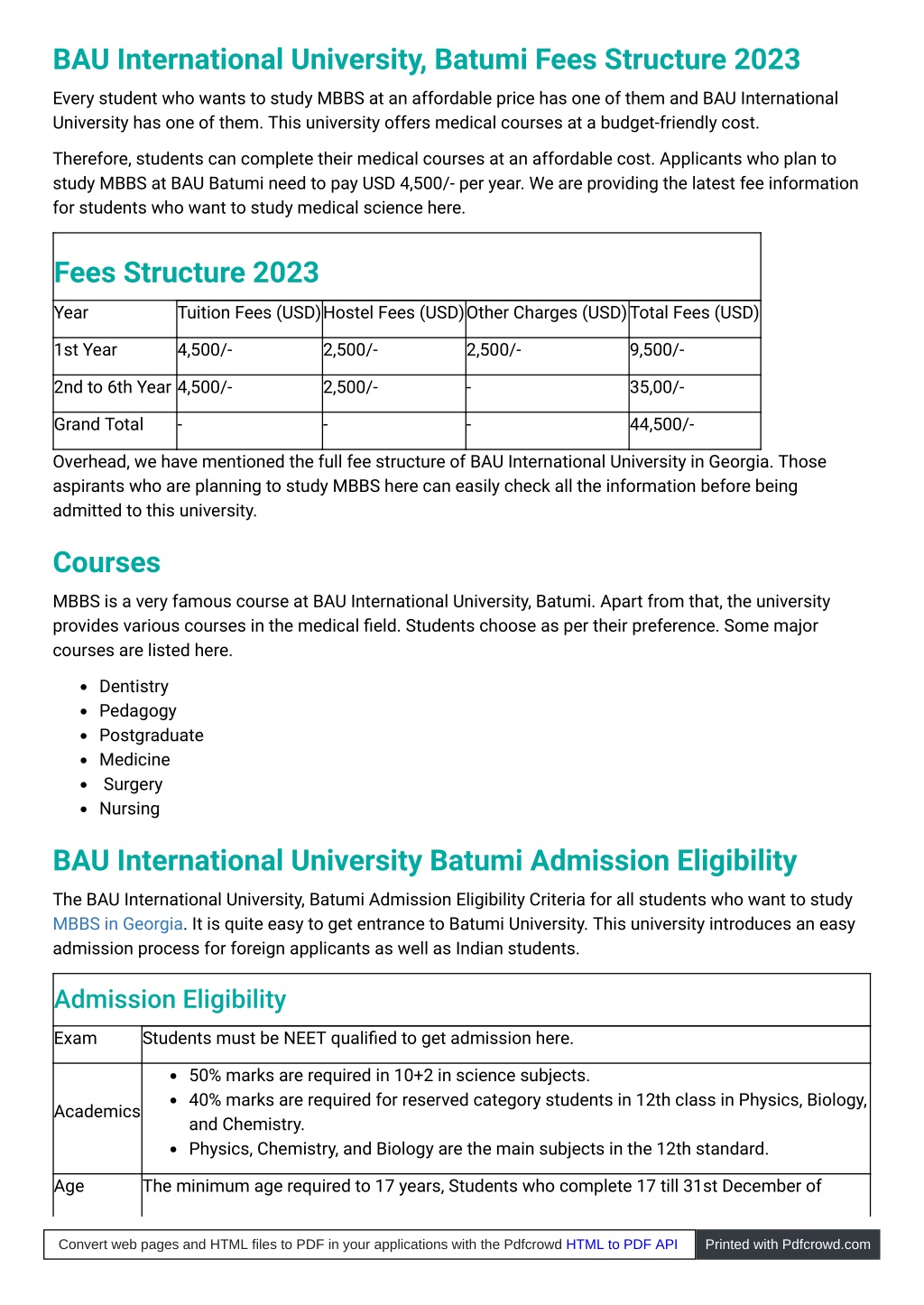
First, let’s get the numbers on the table. BAU International University positions itself as a cost-effective option. The annual tuition fee for the MBBS/MD program typically hovers around $3,500 to $4,000 USD per year. This is significantly lower than the average for private medical universities in Georgia, which often charge between $4,500 and $6,000.
However, tuition is not a single lump sum paid once. It is usually broken down into semesters or an annual installment plan. Here is what you should expect regarding the payment structure:
- Admission/Registration Fee: A one-time payment made upon acceptance, often ranging from $150 to $300. This covers administrative processing.
- Semester Fees: The tuition is split into two semesters. You will likely need to pay roughly half of the annual amount at the start of each semester.
- Hostel Charges: While not always included in tuition, BAU University offers on-campus accommodation. Rates vary by room type (single vs. shared) but generally range from $800 to $1,200 annually.
It is crucial to note that these figures are estimates. Universities frequently adjust their fee structures based on inflation, exchange rates, and academic year policies. Always verify the current rates directly with the admissions office or your authorized representative before making any payments.
The Hidden Costs of Studying in Georgia
Many students focus exclusively on tuition, only to be caught off guard by the living expenses. Georgia is an affordable country, but "affordable" is relative. Your actual monthly spend will depend heavily on your lifestyle, city of residence (Tbilisi vs. Kutaisi), and social habits.
Here is a realistic monthly budget breakdown for an international medical student staying in university accommodation or nearby:
- Food: $150 - $250. Eating at university canteens is cheaper than dining out. Local groceries are reasonably priced, but imported goods from Europe or the US can carry a premium.
- Transport: $30 - $50. Public transportation in major cities like Tbilisi is efficient and very cheap. Taxi apps are also affordable if you split costs with friends.
- Personal Expenses: $50 - $100. This covers internet, mobile data, laundry, and occasional entertainment.
- Health Insurance: $50 - $150 annually. Mandatory for visa purposes. This is a non-negotiable cost.
Adding these up, you should budget roughly $250 to $450 per month for living expenses, exclusive of tuition and hostel fees. Over a six-month semester, this adds another $1,500 to $2,700 to your total expenditure. Do not forget currency exchange fluctuations. Since you are likely paying in USD, EUR, or GEL, the conversion rate from your home currency will impact your total out-of-pocket cost significantly.
Value for Money: Is BAU Worth It?
Low fees are attractive, but they are not the only metric for a successful medical education. When evaluating BAU International University, you must weigh the cost against the quality of education and clinical exposure.
Newer universities often compensate for a lack of historical prestige with modern infrastructure and a more personalized approach to student mentorship. BAU University is reportedly investing in newer facilities and hiring faculty with international experience. However, as with any new medical school, the long-term outcome—specifically the placement success in clinical rotations and licensing exam pass rates—is still being established.
Ask yourself these critical questions before committing:
- Does the university have affiliation with recognized hospitals for clinical rotations?
- Is the curriculum aligned with the requirements of the Medical Council of India (NMC), PMG, or other regulatory bodies in your home country?
- What is the support system for international students regarding visa processing and adaptation?
A low fee structure is useless if the curriculum does not prepare you adequately for the licensing exams (like USMLE, FMGE, or PLAB) required to practice medicine back home. Always verify the recognition status of the university with your home country's medical council before enrollment.
Payment Logistics and Scholarships
Paying for education abroad can be logistically challenging. Most private universities in Georgia, including BAU International University, require payments to be made in their local bank accounts. Transferring money via SWIFT can incur high bank charges (often $25 to $50 per transaction) and take 3-5 business days.
Plan your transfers with a buffer. Do not wire the exact minimum amount if there are potential intermediary bank fees. It is better to have a slight surplus in your Georgian currency account than to face a shortfall on deadline day.
Regarding scholarships, BAU University may offer merit-based or need-based financial aid, but these are not always advertised prominently. You typically need to apply for these during the admission process. Be cautious of third-party agents promising guaranteed scholarships; always confirm such offers in writing with the university’s official finance department.
Frequently Asked Questions
Is there a separate payment for library or exam halls?
At most private universities in Georgia, these costs are bundled into the annual tuition fee or a single "student service fee" charged at the beginning of the year. You rarely pay per exam. Confirm this during your enrollment to avoid surprise charges during finals.
Can I work part-time while studying MBBS?
Student visas in Georgia generally prohibit formal employment. Working "under the table" is risky and can jeopardize your visa status. Your primary focus should be your studies, as the medical curriculum is rigorous.
Are the fees negotiable?
Tuition fees are usually fixed. However, during peak admission seasons, universities might offer discounts for early payments or group enrollments. It is worth asking the admissions counselor if any early-bird incentives are active.
What happens if I fail a semester?
If you fail or need to repeat a year, you will typically need to pay the full tuition fee for that repeated year. Some universities offer a slight discount for repeaters, but do not assume this. Check the student handbook for the specific remedial fee policy.
In conclusion, BAU International University offers a financially accessible route to a medical degree. The low tuition is a major selling point, but your final decision should be based on a holistic view of costs, educational quality, and career prospects. Do your due diligence, talk to current students if possible, and ensure the investment aligns with your long-term medical career goals.