Neptune – The Distant, Mysterious Blue Giant of Our Solar System
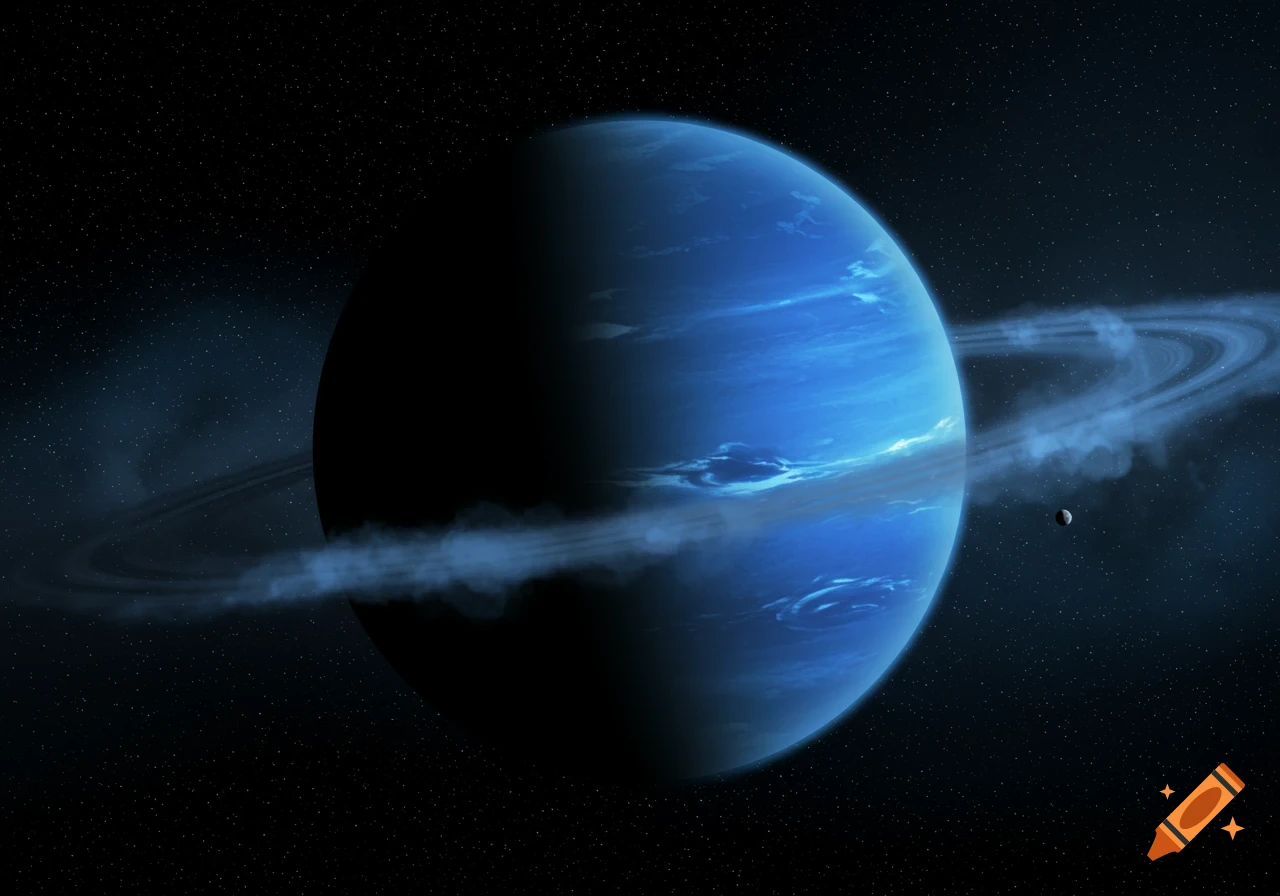
When you glance up at the night sky, the faint, sapphire‑tinted disc of Neptune may be the last planet you notice. Yet that remote world, tucked away at the edge of our solar system, holds a trove of surprises that keep astronomers up at night. From its startlingly fast winds to its deep, unknown interior, Neptune earns its reputation as both distant and mysterious—a true blue giant that still defies easy explanation.
Why Neptune Appears So Intensely Blue
The striking azure hue isn’t just a trick of the eye. Tiny particles of methane gas in Neptune’s upper atmosphere absorb red sunlight and reflect the shorter blue wavelengths back toward us. This “methane veil” is thick enough that even the planet’s faint reflected light carries a distinctly cobalt tint.
But methane isn’t the whole story. Recent observations suggest that high‑altitude hazes—likely composed of complex hydrocarbons formed by ultraviolet radiation—add a subtle, creamy layer that deepens the blue. The combination of gases and aerosols creates a visual effect that is both beautiful and scientifically intriguing.
What Makes Neptune So Distant
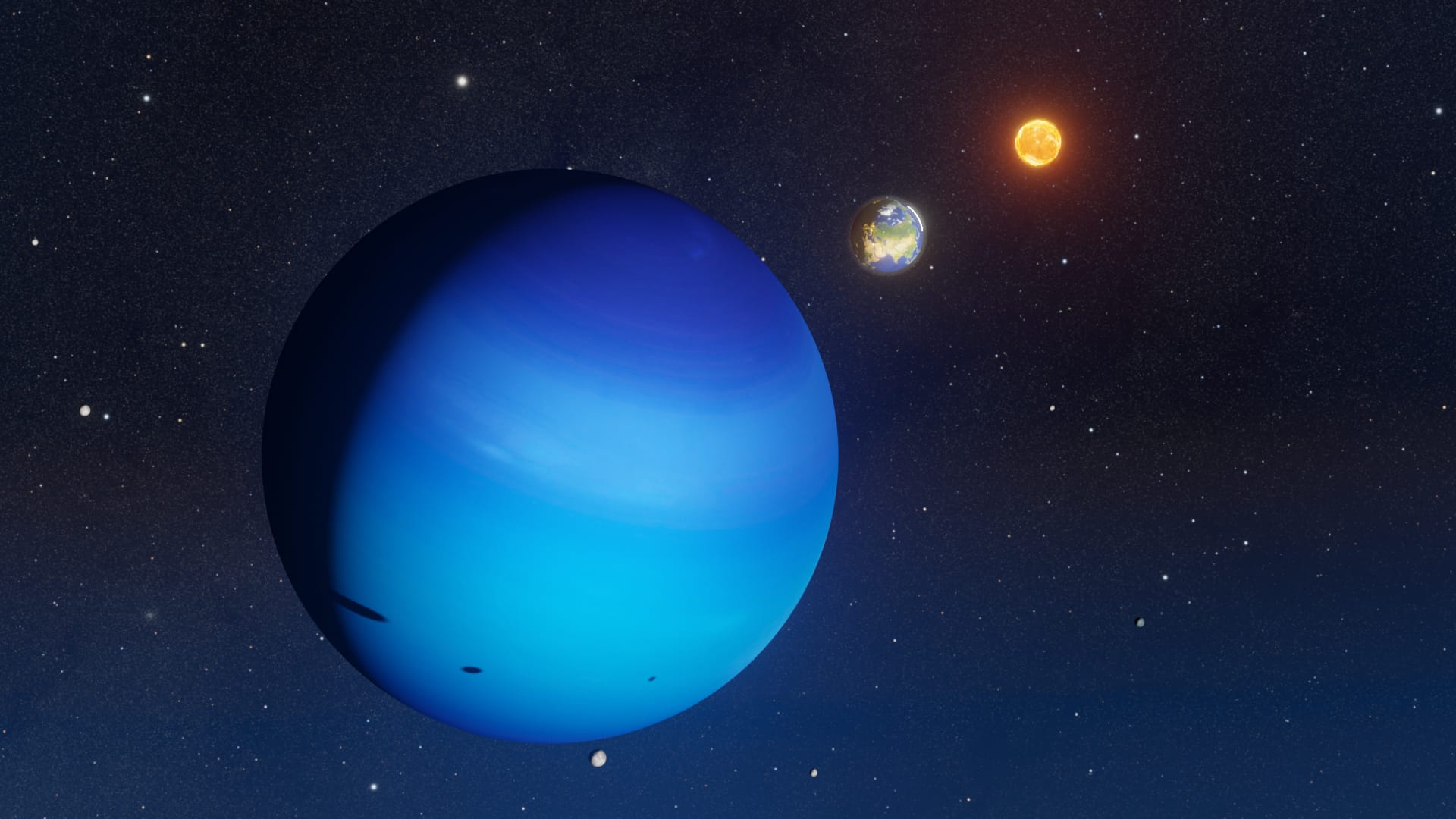
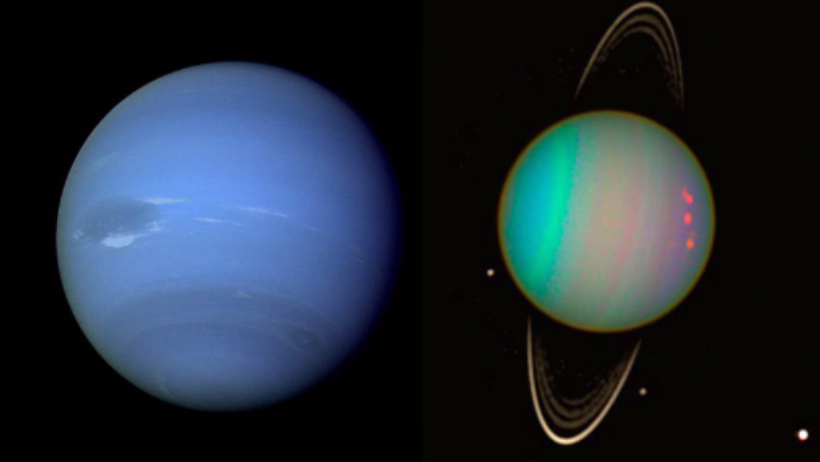
Neptune orbits the Sun at an average distance of about 30 astronomical units—roughly 4.5 billion kilometers. That places it just beyond its twin, Uranus, and makes it the outermost of the eight recognized planets. Its long orbital period, approximately 165 Earth years, means that a single Neptunian year stretches across several human lifetimes.
Because of this distance, sunlight reaching Neptune is a mere 1 % of what Earth receives. The weak solar input contributes to the planet’s frigid upper atmosphere, where temperatures hover near –200 °C. Yet paradoxically, the deeper layers are believed to be much warmer, hinting at internal heat sources that remain only partly understood.
Mysteries That Still Puzzle Scientists
- Supersonic Winds – Neptune boasts the fastest winds in the solar system, whipping around the planet at speeds that can exceed 2,000 km/h. How such fierce jets persist on a world receiving so little solar energy is a lingering question.
- Internal Heat – The planet radiates roughly twice as much energy as it absorbs from the Sun. The exact mechanism—whether it’s leftover heat from formation or ongoing gravitational contraction—has yet to be nailed down.
- Dark Spots – Unlike Jupiter’s iconic Great Red Spot, Neptune’s dark storms appear and vanish on timescales of months. Their fleeting nature makes tracking and modeling them a challenge for atmospheric scientists.
- Magnetic Field Oddities – Neptune’s magnetic field is both tilted and offset from its rotational axis, unlike Earth’s relatively tidy dipole. This irregularity hints at a dynamo operating in an unexpected layer deep within the planet.
Exploration: Past Missions and Future Plans
To date, only one spacecraft has visited Neptune up close: NASA’s Voyager 2, which flew by in 1989. The brief encounter provided the first detailed images of the planet’s blue atmosphere, its Great Dark Spot, and a family of icy moons. Voyager’s data still form the backbone of much of our current understanding.
Looking ahead, several mission concepts aim to return to the ice giant. Proposals range from an atmospheric probe that could plunge through the stormy clouds, to an orbiter equipped with advanced spectrometers for mapping the magnetic field. If any of these concepts secure funding, humanity could finally answer the lingering questions about Neptune’s internal heat and its bewildering weather patterns.
Neptune’s Moons: More Than Just Companions
Neptune’s largest moon, Triton, is a world of its own. It orbits the planet in a retrograde direction—a clear sign that it was likely captured rather than formed alongside Neptune. Triton’s surface is a patchwork of frozen nitrogen plains, active geysers, and a thin atmosphere that hints at ongoing geological activity.
Beyond Triton, the system hosts several smaller moons that orbit in tight, sometimes chaotic, configurations. Their interactions with Neptune’s magnetosphere offer a natural laboratory for studying plasma dynamics in an environment far removed from Earth’s protective magnetic shield.
Why Neptune Still Captivates Us
Beyond the hard science, Neptune carries a sense of wonder that resonates with both professionals and the public. Its deep blue color, extreme weather, and distant orbit remind us how much of our cosmic neighborhood remains uncharted. Each new observation, whether from ground‑based telescopes or future spacecraft, peels back another layer of mystery, but also reveals just how many questions are still unanswered.
Frequently Asked Questions
What is the main reason for Neptune’s blue color?
The blue hue primarily comes from methane gas in the upper atmosphere, which absorbs red light and reflects blue wavelengths. High‑altitude hazes of complex hydrocarbons amplify this effect.
How long does a year on Neptune last?
Neptune takes about 165 Earth years to complete one orbit around the Sun, making its seasons span decades.
Has any spacecraft landed on Neptune or its moons?
No. Only Voyager 2 performed a flyby in 1989. No landers have touched Neptune’s atmosphere or its moons, though several mission concepts are under study.
Why are Neptune’s winds so fast despite its distance from the Sun?
The exact cause is still debated. Scientists think internal heat, combined with the planet’s rapid rotation, helps drive the supersonic jet streams observed.