RAV4 vs RAV4 Hybrid: The Real Specs Showdown
If you are currently shopping for a compact crossover, you have likely hit the era where gasoline engines feel like an afterthought. Toyota has made this decision particularly tricky by making their RAV4 hybrid the default recommendation in many markets. For a long time, the hybrid version commanded a significant price premium, which made the standard gas model a tempting "good enough" alternative. Today, the gap has narrowed considerably. But does the hybrid badge still justify the extra cost?
Let’s cut through the marketing noise and look at the actual mechanical differences. When we say "RAV4 vs RAV4 Hybrid," we are usually comparing the standard 2.5-liter inline-four engine against Toyota’s self-charging hybrid system. On paper, they might look like cousins, but their on-road behavior is distinct.
Powertrain and Performance
The standard RAV4 relies on a naturally aspirated 2.5-liter four-cylinder engine. It produces about 203 horsepower and 184 lb-ft of torque. It is backed by an eight-speed automatic transmission. While reliable, it lacks the immediate punch that modern drivers expect. You have to ask it nicely for acceleration, and it responds with a slightly labored sound as the transmission hunts for the right gear.
The RAV4 Hybrid changes the equation entirely. It pairs that same 2.5-liter engine with two electric motors and a high-voltage battery pack. The system combines for a system output of 219 horsepower. But the headline number isn't the most impressive part. It is the torque delivery. Electric motors provide instant torque, meaning the hybrid accelerates with a smooth, surge-like quality that the gas-only model simply cannot match. It feels more agile in city traffic and far more confident when merging onto highways.
The PRV Factor
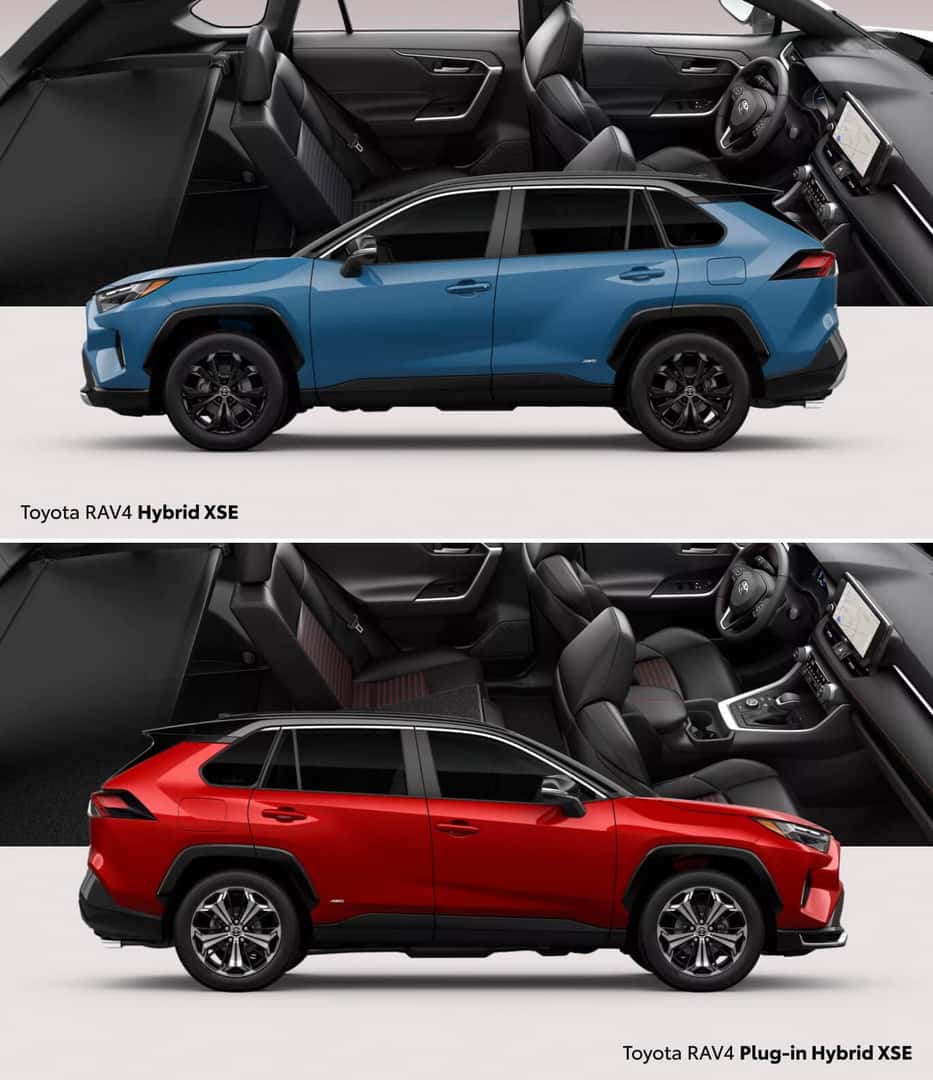
It is worth noting that if you push the budget further, the Plug-in Hybrid (Prime) exists. It offers over 300 horsepower and an electric-only range of about 42 miles. However, for the average buyer comparing the non-plug-in versions, the standard Hybrid is the sweet spot. It offers the best balance of upfront cost, performance, and fuel economy without requiring a charging setup at home.
Fuel Economy: The Gap Is Widening
This is where the argument becomes one-sided. The standard RAW4 gets an EPA-estimated 27 mpg combined (25 city / 35 highway). In real-world driving, heavy traffic often drags this number down into the high 20s or even mid-20s. If you commute in stop-and-go traffic, that number drops further.
The RAV4 Hybrid, by contrast, delivers an impressive 41 mpg combined (41 city / 38 highway). Because the electric motor handles low-speed propulsion, the gas engine stays off much more often in urban environments. This means city drivers actually get better mileage in the hybrid than those who spend all their time on open highways. The fuel savings can amount to hundreds of dollars per year, depending on your local gas prices.
Driving Dynamics and Interior Space
Purists often worry that hybrid components add unnecessary weight. The RAV4 Hybrid is indeed heavier, carrying roughly 200 to 300 more pounds than the base model. You might feel this extra mass slightly during spirited cornering, but the lower center of gravity provided by the flat battery pack underneath the floor actually helps stabilize the ride. Most daily drivers won't notice the difference, and many find the smoother, quieter operation of the hybrid more relaxing.
Regarding interior space, there is virtually no difference. The battery pack is tucked neatly under the rear seats. Cargo capacity remains nearly identical, though the floor in the hybrid may sit slightly higher due to the battery placement. Headroom and legroom are unaffected, meaning the hybrid does not compromise the car's primary utility as a family hauler.
Cost and Maintenance Considerations
Historically, the hybrid cost thousands more. Today, the price difference is often around $1,000 to $1,500 depending on the trim level and current incentives. This is a marginal increase for a vehicle that offers superior refinement and fuel savings. When you factor in the reduced maintenance needs, the argument strengthens. Hybrids still use regenerative braking, which extends the life of your brake pads significantly. You might go 50,000 miles or more before needing new brakes in the hybrid, compared to every 20,000 or 30,000 in the gas model.
There is a minor concern regarding insurance premiums. Some insurers charge slightly more for hybrids due to the higher replacement cost of battery packs and specialized electronics. However, this is often offset by the lower fuel spend. It is worth calling your provider, but it rarely makes the gas model the cheaper overall choice after accounting for fuel over a five-year period.
Which One Should You Actually Buy?
If you live in a rural area, spend 90% of your time on interstate highways, and never want your monthly payment to exceed the base price, the standard RAV4 is a perfectly competent vehicle. It is durable, spacious, and simple.
However, for the vast majority of buyers, the RAV4 Hybrid is the smarter purchase. You get better acceleration, a much smoother ride, significantly better fuel economy, and lower maintenance costs. The small price premium pays for itself in fuel savings within the first year or two of ownership. Unless budget is extremely tight, the hybrid version dominates the standard model in almost every metric that matters to modern drivers.
Frequently Asked Questions
- Can the RAV4 Hybrid be plugged in?
No, the standard RAV4 Hybrid is a self-charging hybrid. It only charges through regenerative braking and the gas engine. If you want plug-in capability, you must look at the RAV4 Prime.
- Does the RAV4 Hybrid have a better mpg than the gas model?
Yes, significantly. The Hybrid rates around 41 mpg combined, while the gas model rates around 27 mpg combined. The difference is most noticeable in city driving.
- Is the RAV4 Hybrid more expensive to insure?
It may be slightly more expensive due to the higher repair costs of hybrid systems, but the difference is usually minimal and often outweighed by fuel savings.
- Are parts for the RAV4 Hybrid more expensive?
Routine maintenance parts like oil filters and brakes are standard. Specialized hybrid components are expensive but rarely need replacement during the average ownership period. Toyota typically offers long warranties for hybrid batteries.