The Norse Roots Of Your Seven Germanic Days
We all know the names, but do we really know them? When you say it’s Tuesday, you’re technically invoking a warrior goddess from Norse mythology. When you mention Sunday, you’re talking about the sun. It’s wild to think that our modern weekly schedule is essentially a calendar of ancient gods and celestial bodies, translated through history, migration, and language shifts.
Most people assume the seven-day week is an arbitrary modern invention. It’s not. It’s a linguistic artifact. The modern English names for the days of the week are derived from Old English, which in turn borreys heavily from Old High German and ultimately traces its conceptual roots to the Romans and the Babylonians. But the twist? While the Romans named their days after planets, the Anglo-Saxons substituted their own pantheon of gods for most of those celestial bodies. It’s a fascinating case of cultural localization that has survived for over a thousand years.
The Celestial Switch: From Roman Planets to Germanic Gods
To understand the Germanic days, you first have to look at the Roman precedent. The Romans named their days after the seven classical planets visible to the naked eye: Saturn, Sun, Moon, Mars, Mercury, Jupiter, and Venus. This system was adopted by the Celts and later the Germanic tribes. However, the Germanic peoples didn’t just copy-paste the names. They practiced a linguistic strategy called "interpretatio germanica." This means they looked at a Roman god, found a similar figure in their own Norse or Germanic mythology, and swapped the names.
For example, the day *dies Mercurii* (Day of Mercury) became *Woden's Day* (Wednesday). Mercury was a psychopomp and a god of travel and trade. Woden (or Odin) held similar roles in Norse mythology. By speaking Wednesday, you are essentially saying "Wednesday" to a god who shares DNA with Mercury. This isn't just wordplay; it’s a reflection of how cultures assimilated new systems while keeping their own identity intact.
The Seven Days, Decoded
Let’s break down the modern English names, which are the direct descendants of Old English terms like *Sunndæg* and *Mōnandæg*. These Old English roots are closely related to Old High German, Dutch, and other continental Germanic languages.
- Sunday: From Old English *Sunndæg*. It means "Day of the Sun." The Romans called this *dies Solis*. This is one of the two days where the celestial body name survived directly, courtesy of the lack of a direct Germanic sun-god counterpart that fit the specific astrological context.
- Monday: From Old English *Mōnandæg*. It means "Day of the Moon." Similar to Sunday, the Romans used *dies Lunae*. The moon was significant in many early calendars, marking months and seasons.
- Tuesday: From Old English *Tiwesdæg*. This is the Day of Tiw (or Tyr). Tyr was a Norse god associated with law, heroic glory, and war. He fits the bill for *dies Martis* (Day of Mars), the Roman god of war.
- Wednesday: From Old English *Wōdnesdæg*. This is the Day of Woden (Odin). As mentioned, Odin replaced Mercury. Odin is the Allfather, a complex figure associated with wisdom, death, poetry, and war. He’s arguably the most famous of these figures in modern fantasy literature.
- Thursday: From Old English *Thunresdæg*. This is the Day of Thunor (Thor). Thor replaced Jupiter (*dies Iovis*). Jupiter and Thor were both sky gods associated with thunder and lightning. If you’re looking for the hammer, it’s Thor. If you’re looking for the eagle, it’s Jupiter. The power dynamic is the same.
- Friday: From Old English *Frīgedæg*. This is the Day of Frigg (or Freyja). Frigg replaced Venus (*dies Veneris*). Both were associated with love, beauty, and fertility. Frigg was Odin’s wife and the queen of Asgard, though Freyja, aVanir goddess, is also sometimes linked to Friday in older traditions. It’s a bit of a blur in the sources, but the intent is clear: a day dedicated to a powerful female deity of love.
- Saturday: From Old English *Sæternesdæg*. This is the only day where the Germanic tribes didn’t swap the god for one of their own. They kept Saturn (*dies Saturni*). There was no direct equivalent in the Norse pantheon that matched Saturn’s specific agrarian and time-related aspects. So, Saturday remains the Day of Saturn.
Is It Still Germanic Today?
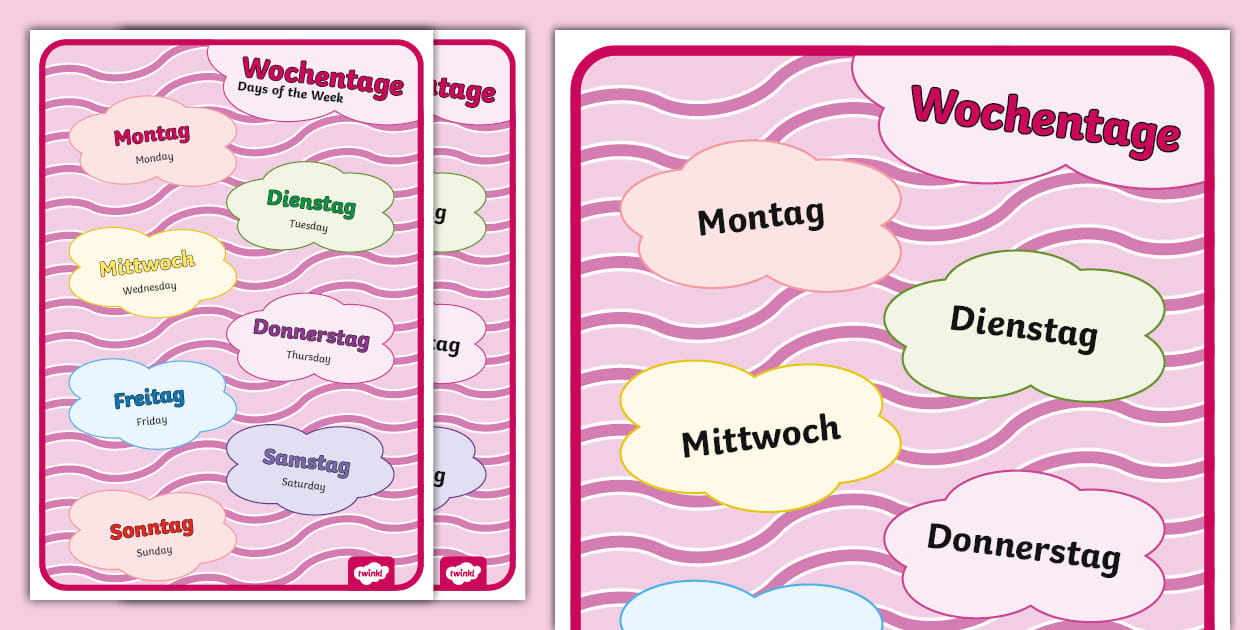
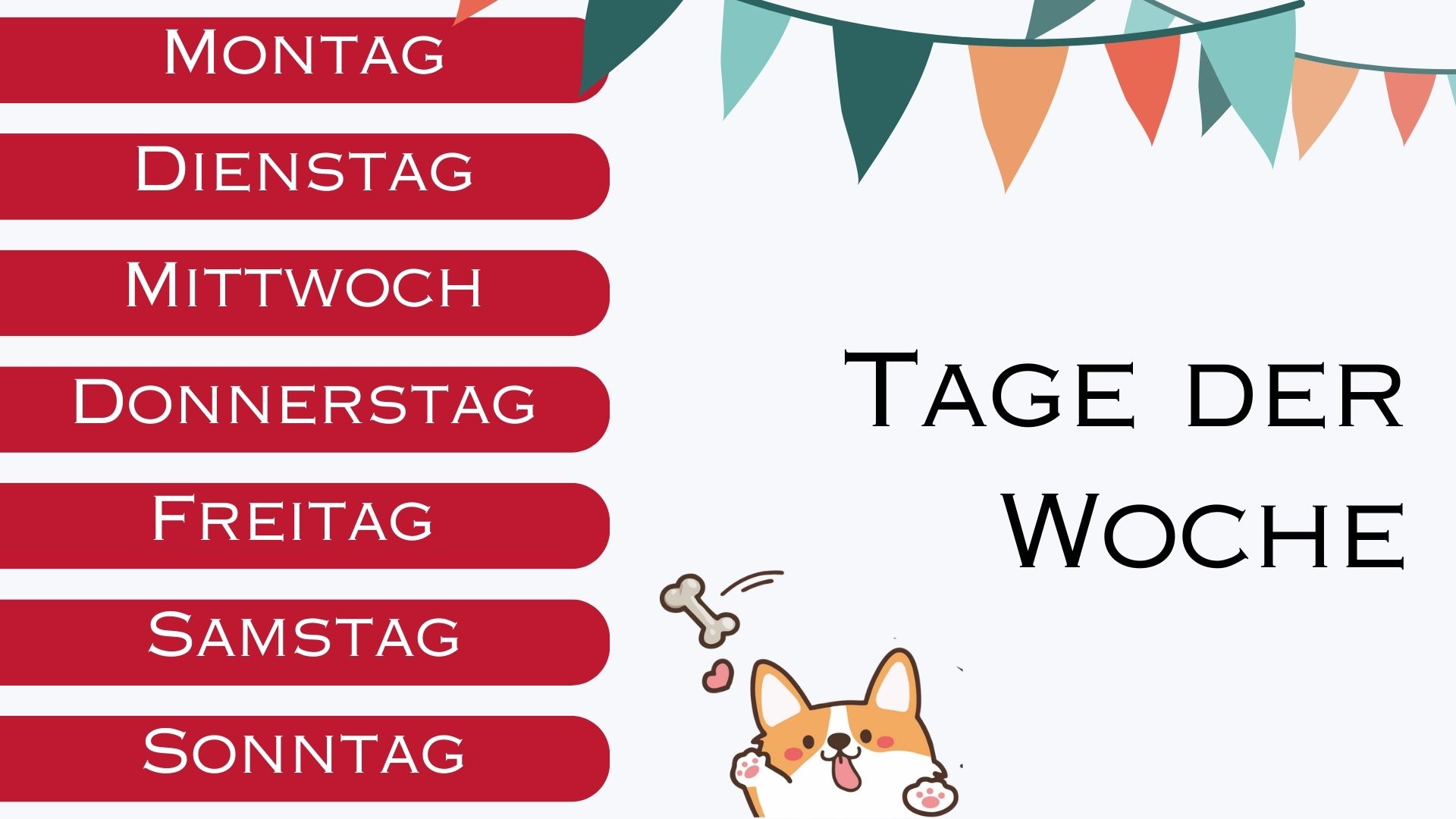
If you look at modern German, the names have evolved but retained the core roots more visibly than in English. For instance, German speakers say *Montag*, *Dienstag*, *Mittwoch*, *Donnerstag*, *Freitag*, *Samstag*, and *Sonntag*. Notice the endings? *-tag* is clearly "day." The stems are recognizable: *Donner* is Thor, *Frei* is Frigg, *Dien* is Tiw. In English, the suffixes got smoother or eroded over time (*-day*), but the roots remain stubbornly intact.
This linguistic continuity is remarkable. Despite the Norman Conquest introducing French words into English, and centuries of global cultural exchange, we still start our week by referencing the Sun and the Moon, and we sign off our work week by referencing a love goddess. It’s a subtle reminder that even in our most secular, modern schedules, the echoes of ancient belief systems are still walking around, checking emails, and commuting to work.
Frequently Asked Questions
Are the German days of the week still used in other Germanic languages?
Yes. Dutch, German, and Scandinavian languages all use variations of these names. For example, Dutch uses *maandag* (Monday) and *donderdag* (Thursday). Swedish uses *måndag* and *tisdag*. The core roots of Sun, Moon, Tiw, Woden, Thor, Frigg, and Saturn are present across the language family, though Saturday varies more (e.g., German *Samstag* vs. Dutch *zaterdag*, where *zater* is an old form of Saturn.
Why is Wednesday "middle day" in German but named after Odin in English?
In German, Wednesday is Mittwoch, which literally means "mid-week." This is a descriptive name rather than a theonym. However, the English name *Wednesday* preserves the Old English *Wōdnesdæg* (Odin’s Day). Other Germanic languages like Dutch (*woensdag*) and Norwegian (*onsdag*) also keep the Woden/Odin reference. The shift to a descriptive name in German is a unique linguistic development in that specific branch.
Did the Romans know about Woden or Thor?
Not by those specific names. The Romans used the concept of *interpretatio romana* earlier in history, where they would identify Celtic or Germanic gods as versions of their own (e.g., calling Thor "Jupiter" on inscriptions). The reverse name-swap happened later when the Germanic tribes adopted the seven-day planetary week structure from the Romans but wanted to keep their own cultural heroes in the daily calendar.