Unlocking Value: Your Guide To The Present Value Formula
The present value formula is a fundamental concept in finance that helps individuals and businesses determine the current worth of future cash flows. It's a crucial tool for making informed investment decisions, evaluating business opportunities, and managing financial risks. In this article, we'll delve into the world of present value, exploring its definition, formula, and applications, as well as providing examples to illustrate its practical uses.
What is Present Value?
Present value (PV) is the current value of a future cash flow or a series of cash flows, discounted to its present worth using a discount rate. The discount rate reflects the time value of money, which is the idea that a dollar received today is worth more than a dollar received in the future. This concept is based on the notion that money received today can be invested to earn interest, whereas money received in the future cannot be invested until it's received.
The present value formula takes into account the discount rate, the number of periods until the cash flow is received, and the amount of the cash flow. By calculating the present value, you can determine the maximum amount you would be willing to pay today for a future cash flow or a series of cash flows.
The Present Value Formula
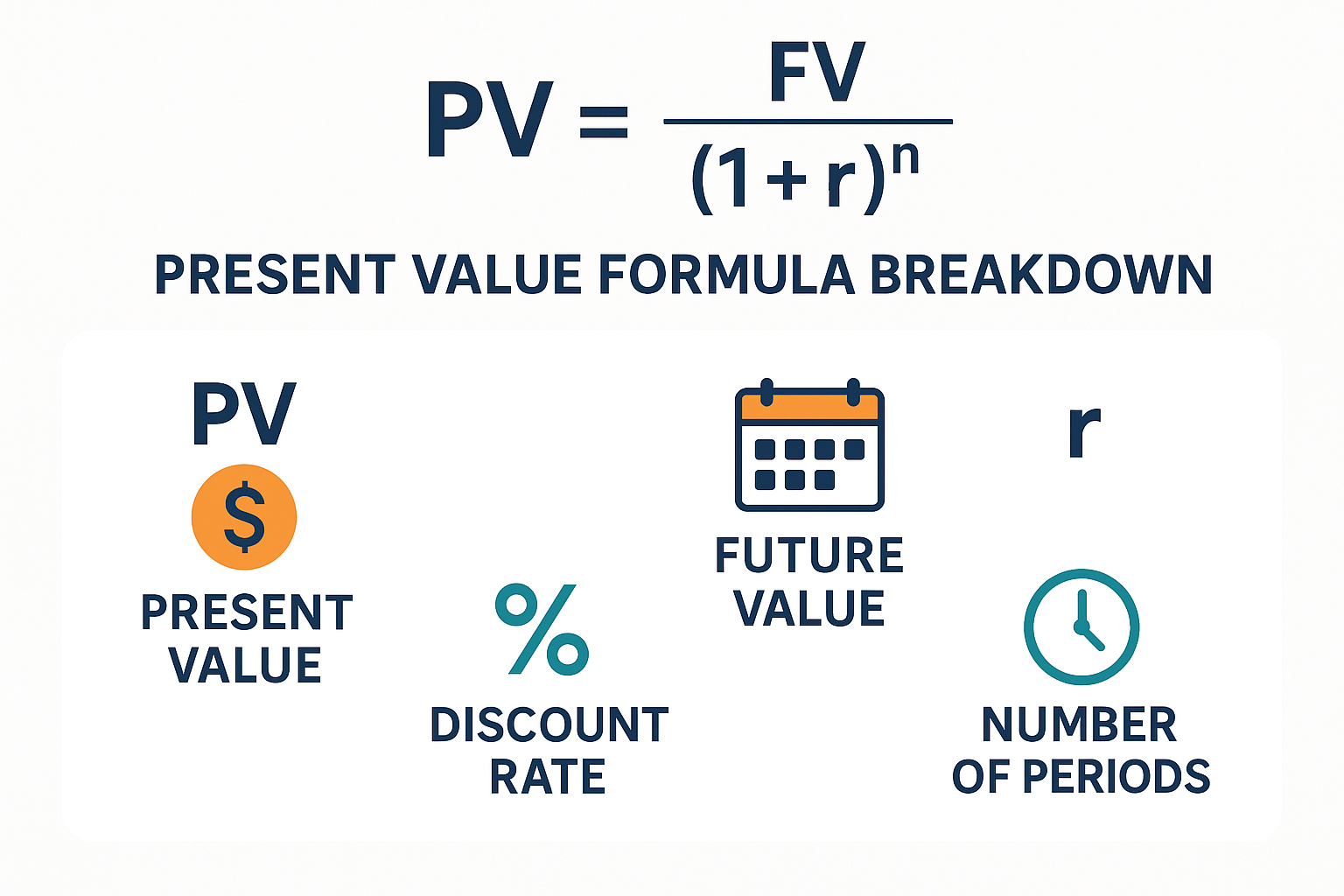
The present value formula is as follows:
- PV = CF / (1 + r)^n
Where:
- CF = future cash flow
- r = discount rate (interest rate or cost of capital)
- n = number of periods until the cash flow is received
This formula can be applied to a single cash flow or a series of cash flows, such as an annuity or a perpetuity. The formula can be modified to accommodate different types of cash flows and discount rates, but the basic concept remains the same.
Applications of the Present Value Formula
The present value formula has numerous applications in finance, including:
- Investment analysis: to evaluate the attractiveness of investment opportunities and determine the maximum price to pay for a security or asset
- Capital budgeting: to assess the viability of projects and determine the optimal allocation of resources
- Risk management: to estimate the present value of potential losses or gains and make informed decisions about risk mitigation strategies
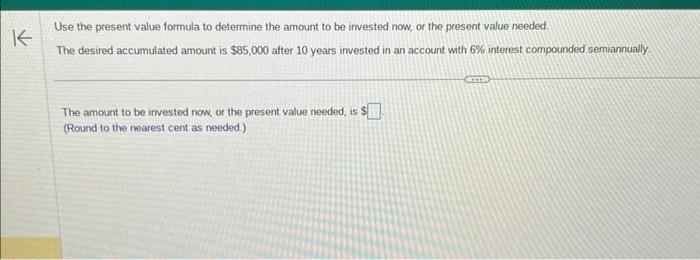
For example, suppose you're considering investing in a bond that pays $1,000 in 5 years. If the discount rate is 5%, the present value of the bond would be:
- PV = $1,000 / (1 + 0.05)^5 ≈ $783.53
This means that the bond is worth approximately $783.53 today, based on the expected future cash flow and the discount rate.
Real-World Examples
The present value formula is used in a variety of real-world contexts, including:
- Business valuation: to estimate the present value of a company's future cash flows and determine its intrinsic value
- Financial planning: to calculate the present value of retirement savings or other long-term goals
- Insurance: to estimate the present value of potential losses or claims and determine insurance premiums
For instance, suppose you're planning to retire in 20 years and expect to receive a pension of $50,000 per year for 20 years. If the discount rate is 4%, the present value of your pension would be approximately $431,919. This means that the pension is worth approximately $431,919 today, based on the expected future cash flows and the discount rate.
Conclusion
In conclusion, the present value formula is a powerful tool for evaluating the current worth of future cash flows. By understanding the concept of present value and applying the formula, you can make informed investment decisions, evaluate business opportunities, and manage financial risks. Whether you're a seasoned investor or a financial novice, the present value formula is an essential concept to grasp in order to unlock the value of your financial resources.