Which Countries Lead the 2025 Global Military Power Rankings?
Every year defence analysts publish a fresh look at who holds the most formidable armed forces. 2025 is no different, and while the list can feel like a scoreboard of budgets and hardware, the story behind each rank reveals geopolitical shifts, technological gambles and, frankly, a bit of national pride.
What Drives a Nation’s Position in the Ranking?
It isn’t just about the number of tanks or the size of a navy. The methodology blends several strands:
- Manpower – active personnel, reserves and the ability to mobilise quickly.
- Budget – how much a country spends on procurement, research and maintenance.
- Technology – presence of fifth‑generation fighters, cyber‑warfare units and autonomous systems.
- Logistics & Reach – overseas bases, carrier groups and strategic airlift capacity.
- Operational Experience – recent combat operations that test doctrine and equipment.
Each factor receives a weighted score. That means a smaller country with cutting‑edge drones can punch above its weight, while a larger nation with outdated stock may slip lower than expected.
Top Five Nations in 2025
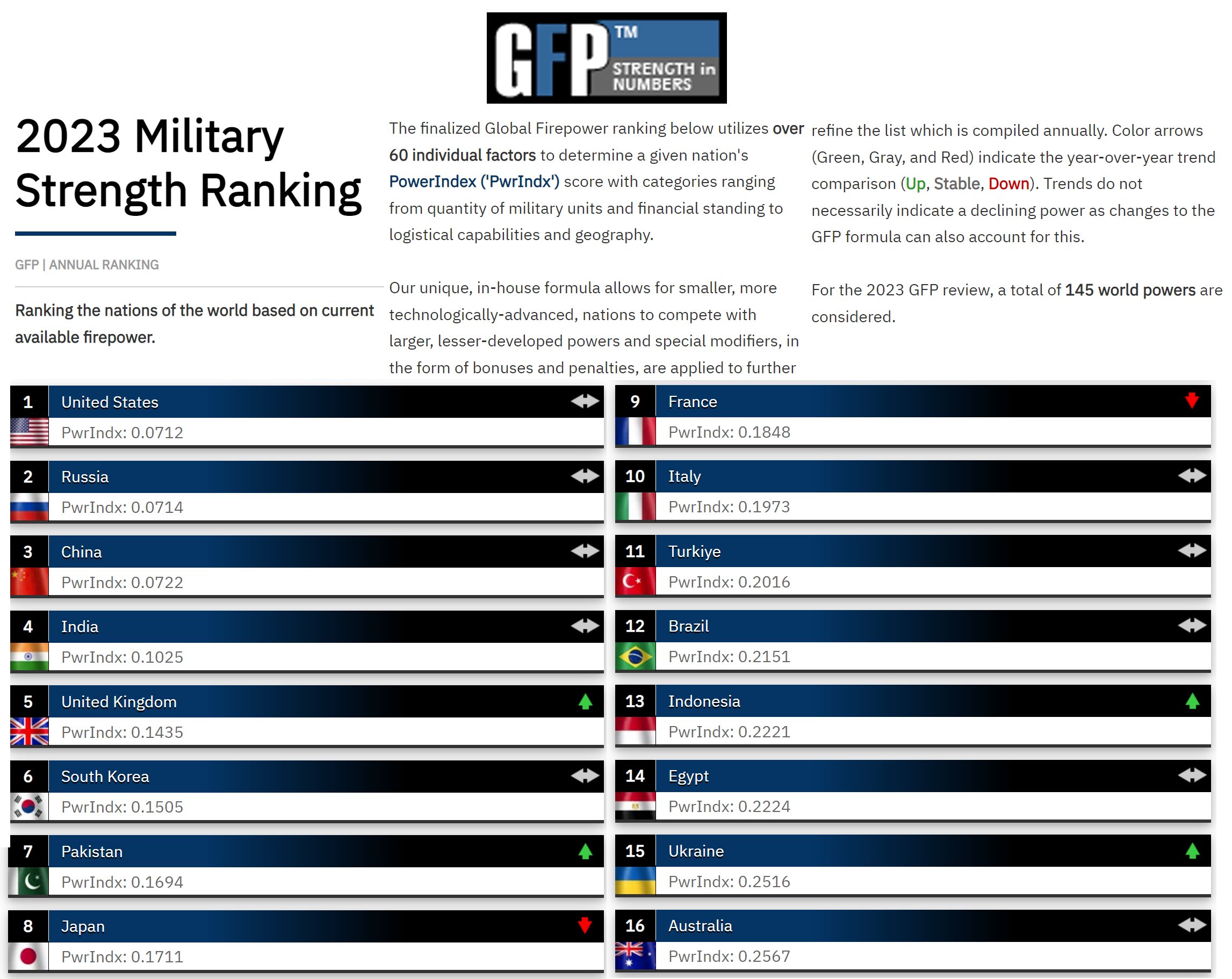
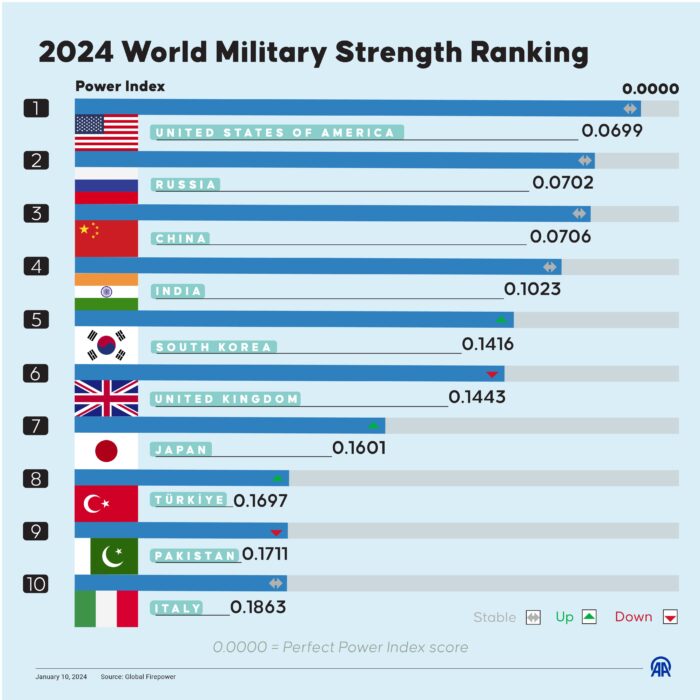
1. United States
The United States still clings to the summit, largely because of its unparalleled defence budget—over $800 billion—and a global network of bases. Its fleet‑size advantage, including eleven nuclear‑armed aircraft carriers, remains unmatched. Yet, critics note that the sheer size sometimes masks inefficiencies, especially in procurement cycles.
2. China
China’s climb has been meteoric. With a defence spend now hovering around $300 billion, it’s narrowed the gap in high‑tech platforms: stealth fighters, anti‑satellite weapons and a rapidly expanding navy that boasts the world’s largest ship‑building output. Some analysts caution that rapid expansion could outpace training, a nuance often lost in headline numbers.
3. Russia
Despite economic sanctions, Russia leverages legacy systems upgraded with modern electronics. Its strategic missile forces and sizable ground army keep it firmly in the top tier. The downside? An ageing industrial base and limited access to certain Western components.
4. India
India’s defence budget crossed the $75 billion mark for the first time, reflecting ambitions to modernise its air force and navy. Indigenous projects like the Tejas fighter and the Naval Advanced Missile System signal a shift toward self‑reliance, though procurement delays still linger.
5. United Kingdom
The UK punches above its weight thanks to a blend of high‑tech equipment—such as the Tempest stealth fighter programme—and a strong nuclear deterrent. Its smaller size belies a sophisticated command structure, yet post‑Brexit defence spending constraints keep it from breaking into the top three.
Surprises and Dark Horses
Every ranking has a few outliers that spark discussion. In 2025, two countries drew particular attention:
- Turkey – Accelerated its drone programme, delivering armed UAVs to several allies. The shift toward autonomous platforms boosted its score well beyond what raw numbers would suggest.
- South Korea – Invested heavily in cyber‑defence and next‑gen missile technology, nudging it into the top‑ten despite a relatively modest overall budget.
Both cases illustrate that “size” is no longer the sole yardstick; specialised capabilities can reshape the hierarchy.
Regional Implications
When the top spots are dominated by the U.S., China and Russia, the rest of the world watches closely. Nations in volatile regions often align their procurement choices with one of the big three, seeking interoperability and political backing. For instance, many Southeast Asian navies are opting for Chinese frigates while simultaneously maintaining American training programs—a delicate balancing act.
How the Ranking Affects Global Stability
Beyond bragging rights, these rankings influence diplomatic negotiations, alliance formations and even economic sanctions. A country climbing the ladder may feel emboldened to assert territorial claims, as seen in recent maritime disputes. Conversely, a decline can trigger internal debates about defence reform or strategic pivoting.
It’s also worth noting that the ranking is a snapshot, not a prophecy. Shifts in technology—think quantum communications or hypersonic weapons—could redraw the map faster than any annual report predicts.
Key Takeaways
- The United States remains on top, but the margin is shrinking.
- China’s rapid modernization makes it a credible challenger for the summit.
- Traditional powerhouses like Russia and India stay relevant through strategic upgrades.
- Specialised capabilities (drones, cyber‑warfare) let smaller nations climb the ranks.
- Geopolitical context matters as much as raw numbers.
So, while the 2025 ranking offers a clear picture of today’s military hierarchy, the underlying dynamics suggest a future where technology and strategic alliances may tip the balance more than sheer size ever did.