Breach of Fiduciary Duty: A Practical Guide to Rights and Remedies
Trust is the currency of almost every professional relationship, but when that trust involves managing someone else’s money or assets, the stakes get significantly higher. In legal terms, this high standard of care is known as a fiduciary duty. When that duty is violated, it isn’t just a broken promise; it is a serious legal misstep known as a breach of fiduciary duty.
Understanding what this means is crucial for anyone who relies on a financial advisor, a corporate director, or an executor of a will. It can be confusing because the term sounds heavily technical, yet the concept is rooted in basic fairness. This guide breaks down the mechanics of these duties, how they are breached, and what happens when the law steps in to correct the imbalance.
What Exactly Is a Fiduciary Relationship?
At its core, a fiduciary relationship exists when one party (the fiduciary) is legally obligated to act in the best interest of another party (the beneficiary or principal). This isn’t just about being nice or doing a good job. It is a strict legal mandate to prioritize the other person’s interests above your own.
You encounter fiduciaries more often than you might think. Common examples include:
- Corporate Directors and Officers: They must act in the best financial interest of the shareholders, not their own personal gain.
- Financial Advisors: Those with a fiduciary duty must recommend investments that benefit the client, avoiding products that offer them higher commissions if those products aren’t suitable.
- Executors and Trustees: People managing an estate or trust must handle assets carefully and solely for the benefit of the heirs or trust beneficiaries.
- Partners in a Business: Partners owe each other duties of loyalty and care regarding the business’s assets and opportunities.
The key differentiator here is discretion. If someone has control over your assets or significant influence over your financial decisions, the law often imposes this heavy burden of trust on them.
Identifying a Breach of Fiduciary Duty
So, how do you know when the line has been crossed? A breach occurs when the fiduciary fails to act in accordance with the legal standards imposed on their role. It isn’t always a dramatic embezzlement case; sometimes it is a subtle conflict of interest or a failure to disclose critical information.
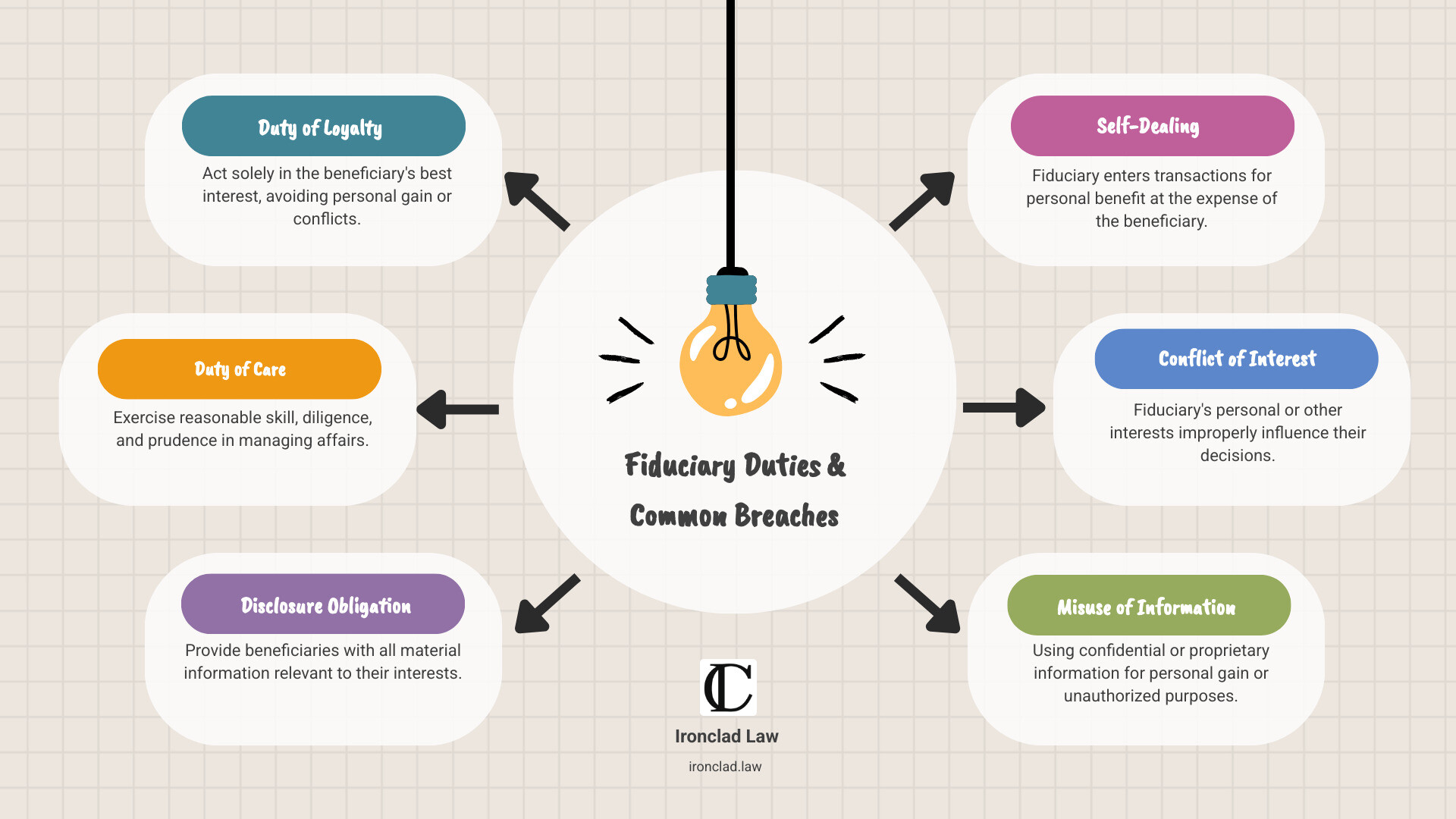
Generally, breaches fall into two main categories: breaches of the duty of loyalty and breaches of the duty of care.
Breach of the Duty of Loyalty
This is the most common form of breach. It happens when a fiduciary puts their own interests ahead of the beneficiary. This includes self-dealing, where a fiduciary buys assets from the trust at a low price or sells them at a high price for personal profit. It also covers receiving secret profits or kickbacks from third parties related to the management of the assets.
For instance, if a trustee uses trust funds to pay for their own vacation expenses, even with the intention of paying it back later, that is a clear breach of loyalty. The law views this with extreme suspicion because it mixes personal and fiduciary funds.
Breach of the Duty of Care
This duty requires the fiduciary to act with the level of prudence, diligence, and skill that a reasonably prudent person would use in similar circumstances. It is an objective standard. If a financial advisor fails to diversify a client’s portfolio, leading to massive losses that a basic rebalancing strategy would have prevented, they may have breached their duty of care.
Importantly, poor performance alone is rarely a breach. Markets go down. Risks are taken. The breach exists when the fiduciary was negligent, reckless, or failed to follow the specific instructions laid out in the trust document or investment policy statement.
The Duty of Disclosure
Full transparency is non-negotiable. Fiduciaries must disclose all material facts. If a director is voting on a contract with a company they own, they must disclose that conflict. Hiding this information, even if the deal is fair, is a breach because it deprived the beneficiaries of the chance to review or veto the transaction.
Remedies and Legal Consequences
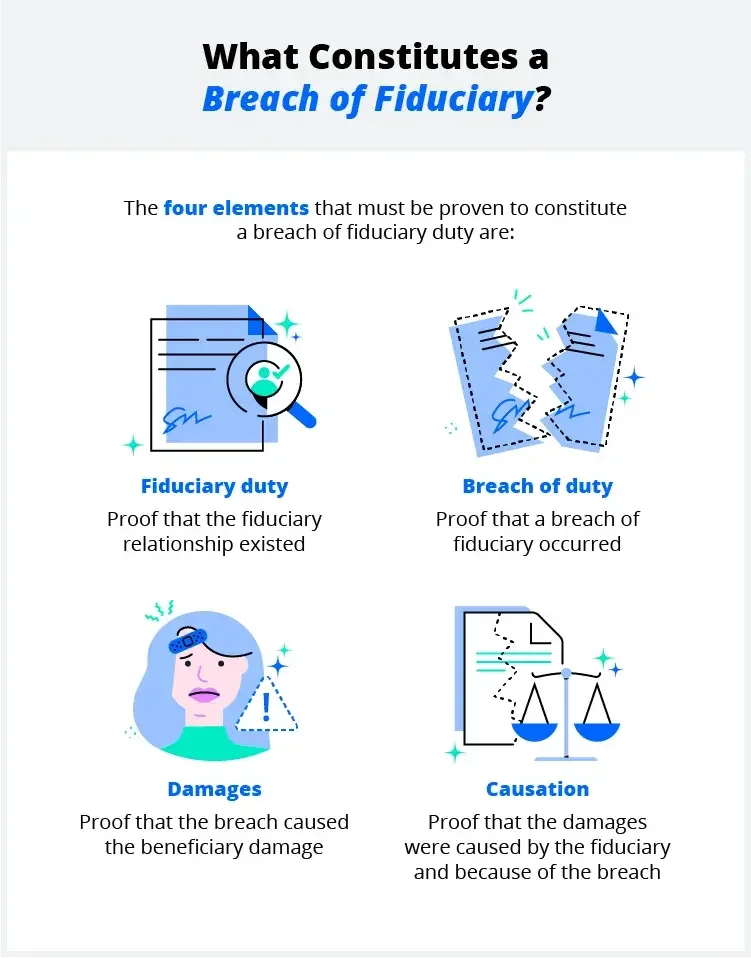
When a breach is proven, the law aims to make the beneficiary whole. It is less about punishing the fiduciary (though that can happen in fraud cases) and more about restoring the financial status quo.
Courts often order disgorgement of profits, meaning the fiduciary must turn over any gains they made from the breach. If a trustee sold a company stock they had no authority to sell and made $50,000, they must pay that $50,000 back to the trust, regardless of whether the trust actually lost money.
Other remedies include:
- Restitution: Replacing the assets or funds that were misused.
- Constructive Trust: The court may declare that the fiduciary holds the misappropriated assets in trust for the beneficiary.
- Surcharge: The fiduciary may be personally liable for losses caused by their breach.
- Resignation or Removal: In corporate or trust contexts, the court can remove the fiduciary from their position.
In cases involving intentional fraud or gross negligence, punitive damages might also be awarded to deter future misconduct.
Preventing Fiduciary Breaches
The best defense against a breach is clear communication and documentation. For beneficiaries, this means reviewing account statements regularly and asking hard questions about fees and conflicts of interest. For fiduciaries, maintaining meticulous records of all decisions and obtaining informed consent for any potential conflicts is essential.
Establishing a written agreement that outlines expectations, fees, and decision-making processes can provide clarity. While no contract can eliminate the fiduciary duty entirely, it can define the scope of authority and reduce ambiguity. When in doubt, seeking independent legal or financial counsel is always wise. Trust is essential, but verification is safety.
Frequently Asked Questions
Is a breach of fiduciary duty considered a crime?
Not necessarily. Most breaches are civil matters, meaning the victim sues for money damages. However, if the breach involves embezzlement, fraud, or theft, it can escalate to criminal charges, potentially leading to fines or imprisonment.
How long do I have to sue for a breach?
This depends on the statute of limitations in your jurisdiction, which varies by state and country. Typically, the clock starts ticking when the breach is discovered or should reasonably have been discovered. It is critical to consult a local attorney immediately, as missing these deadlines can permanently bar your claim.
Can a fiduciary sign away their duties?
In some limited contexts, parties can contractually limit certain responsibilities or indemnify a fiduciary for specific types of errors. However, you cannot contract away the core duty of loyalty or good faith. Courts often strike down clauses that allow for self-dealing or gross negligence.
What is the difference between a breach of contract and a breach of fiduciary duty?
A breach of contract is failing to do what you agreed to do in a written document. A breach of fiduciary duty is a broader legal obligation based on trust and power, regardless of what the contract says. Fiduciary duties often exist even if the contract is silent on the matter.