Explore Real Ancient Greek Sites Through Assassin’s Creed Odyssey
Uncover Ancient Greece's Historical Locations in AC Odyssey
When you step into the sun‑kissed world of Assassin’s Creed Odyssey, you’re not just wandering a fictional ancient world – you’re tracing the footprints of real cities, temples, and battlefields that shaped history. Ubisoft’s map stitches together a sprawling 5th‑century BCE landscape, letting players wander from the marble columns of the Parthenon to the windswept cliffs of Delphi, all while hunting down the Cult of Kosmos. For history buffs, the game offers a surprisingly thorough tour of Greece’s most iconic spots, each rendered with a mix of scholarly research and creative flair.
From the Parthenon to the Temple of Apollo: Real‑World Counterparts
The most recognizable silhouette on the screen is the Acropolis, its lofty marble perched above Athens like a crown. In reality, the Parthenon was completed in 438 BC and housed the massive statue of Athena Parthenos. Odyssey mirrors the layout faithfully – the Propylaea, the Erechtheion, even the sacred olive tree that once grew nearby. Yet, the game adds a few narrative twists, such as secret chambers that never existed, to give players a sense of discovery.
Travel north and you’ll encounter Delphi, the ancient seat of the Oracle. The in‑game version showcases the Temple of Apollo, the theater, and the famed “Omphalos” stone. While the real Delphi was a pilgrimage hub for city‑states seeking divine counsel, Odyssey frames it as a strategic stronghold, peppered with side quests that let you experience the political intrigue that once swirled around the sanctuary.
Further south, the ruins of Mycenae rise from the hills, echoing the legendary kingdom of Agamemnon. The game’s Mycenae mirrors the Lion Gate and the Cyclopean walls, though the narrative weaves in mythic elements like the “Tomb of the King” to keep the adventure lively.
Athens: The City of the Gods and the Game
Athens in Odyssey feels like a living museum. Streets pulse with market stalls, philosophers argue in the Agora, and the city walls can be scaled for a panoramic view of the Saronic Gulf. The developers consulted archaeological surveys, ensuring that the city’s layout matches the historical grid discovered by modern excavations. Players can even spot the ancient gymnasium where athletes once trained for the Olympic Games.
Delphi: The Oracle’s Shadow on the Horizon
Delphi’s steep ascent is faithfully reproduced, complete with the Sacred Way lined by votive offerings. The game’s ambient soundtrack subtly incorporates the sound of wind whistling through the Parnassus cliffs, mirroring the ancient belief that the gods whispered through the breeze. While the real Delphi’s temple was destroyed by an earthquake in 551 AD, Odyssey chooses to keep it intact, offering a glimpse of its former glory.
How the Developers Merged Myth and History
Ubisoft assembled a team of historians, classicists, and local Greek consultants to map the world as accurately as possible. They poured over the “Corpus of Inscriptiones Graecae” and consulted recent publications on Hellenic urbanism. Yet, they also embraced the mythic fabric that defines Greek culture – think sea serpents in the Aegean or the occasional appearance of the Minotaur. This blend lets players feel the weight of history while still indulging in the fantastical elements that define the franchise.
The result is a layered experience: you can chase a mythic beast in the same vicinity where an actual bronze statue once stood, and the game subtly hints at the difference through environmental storytelling – broken columns, weathered marble, and ancient graffiti that reads like a time‑worn diary.
Tips for Players Who Want a History‑Focused Playthrough
- Activate “Historical Mode.” Toggling the optional difficulty setting reduces combat distractions, letting you linger at ruins and read in‑game codex entries that explain each site’s real‑world significance.
- Follow the “Landmarks” quest chain. These missions guide you from one iconic location to another, with optional dialogues that reference actual archaeological findings.
- Use the “Explorer” perk. It expands the map’s detail radius, revealing hidden artefacts and offering context notes that cite ancient sources such as Herodotus and Pausanias.
- Visit the in‑game museum. Near the shipyard in Piraeus, a small museum displays artefacts you’ve collected, accompanied by short essays written by the game’s research team.
What the Game Gets Right (and Where It Takes Creative License)
In terms of architecture, the game nails the proportions of marble columns, the spacing of Doric versus Ionic orders, and even the subtle color shifts that occur as sunlight moves across the Aegean. The sound design, too, incorporates authentic instruments like the aulos and lyre, echoing the sonic landscape of ancient festivals.
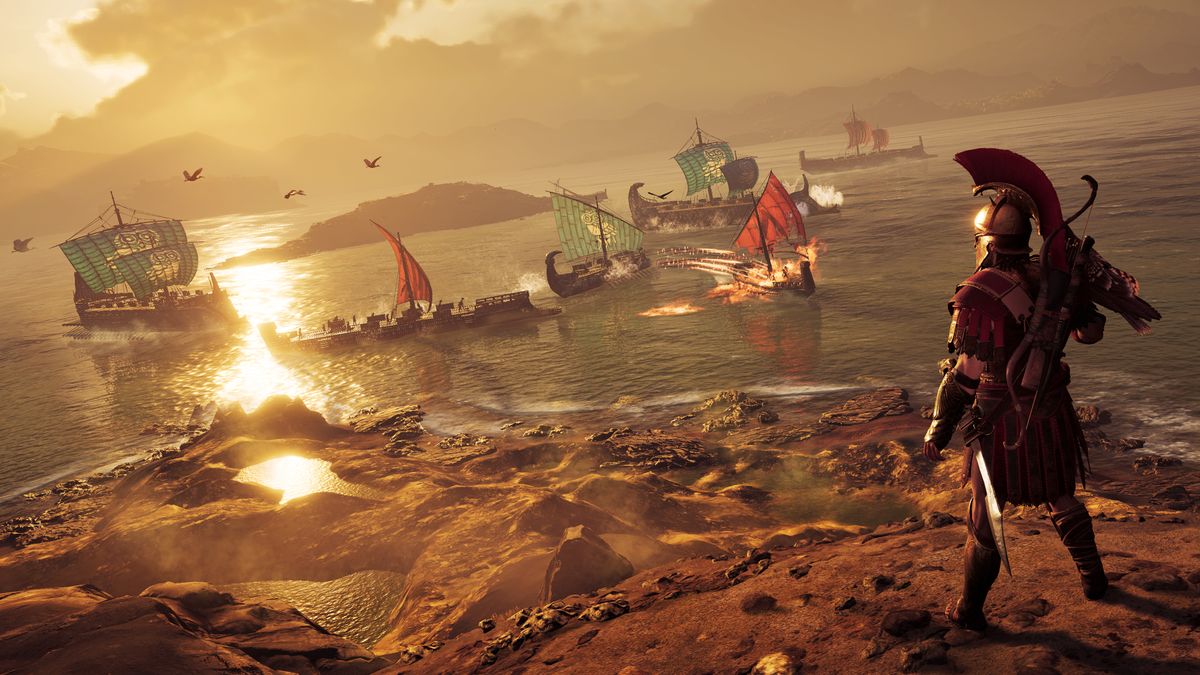
Creative liberties appear when narrative demands clash with strict realism. For instance, the “Cult of Kosmos” headquarters is placed in a remote mountain hideout that never existed historically, serving as a convenient plot hub. Likewise, the presence of fully functional naval combat in the narrow straits of the Cyclades stretches what would have been possible for 5th‑century triremes, but it adds a thrilling gameplay layer that many players appreciate.
Overall, the balance leans toward respectful representation. Ubisoft’s decision to avoid anachronistic technology while still weaving in legendary creatures ensures that the experience feels both authentic and entertaining.
Frequently Asked Questions
- Q: Are the locations in AC Odyssey exact replicas of their real‑world counterparts? A: The game strives for visual fidelity, but some structures are simplified for performance, and a few narrative locations are entirely fictional.
- Q: Can I learn about actual Greek history while playing? A: Yes – the in‑game codex, dialogue snippets, and “Historical Mode” provide reliable information drawn from scholarly sources.
- Q: Does the game include lesser‑known sites beyond the famous landmarks? A: Absolutely. Exploring off the beaten path reveals places like the ancient theater of Epidaurus and the necropolis of Amphipolis, each with its own backstory.
- Q: How accurate is the representation of daily life in the cities? A: While market stalls, clothing, and public spaces reflect current academic consensus, some details are exaggerated for dramatic effect.