How Do Ships Float? The Science of Buoyancy Explained
The Principle Behind Floating
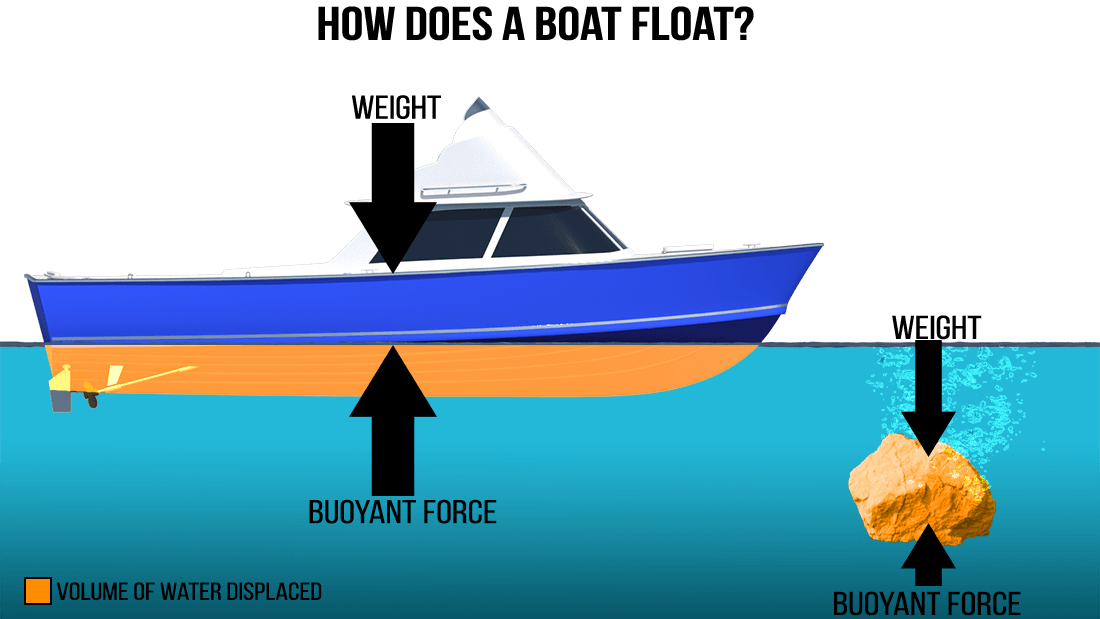
When you drop a stone into water it sinks, yet a massive container of steel glides atop the surface. The answer isn’t magic; it’s physics. Anything placed in a fluid experiences an upward push called buoyant force. If that force matches or exceeds the object’s weight, the object stays aloft.
In everyday language we say the object “displaces” water. The displaced volume creates a pressure difference that lifts the object. The larger the displaced water, the stronger the lift.
Archimedes’ Law in Simple Terms
Archimedes, a Greek mathematician, observed that a body submerged in a fluid is buoyed up by a force equal to the weight of the fluid it pushes aside. In formula form:
- Buoyant Force = density of fluid × volume displaced × gravity
Because seawater is denser than fresh water, ships actually float a tad higher in the ocean than in a lake.
Why Size Matters: Displacement and Volume
Steel may be heavy, but a ship’s hull is mostly hollow space. Think of a massive cardboard box filled with air. The air itself contributes negligible weight, while the box’s outer surface pushes away a huge amount of water.
Two key numbers decide the outcome:
- Weight of the ship – everything on board, the hull, cargo, crew.
- Weight of the displaced water – a function of the hull’s submerged volume.
If the displaced water weighs more, the ship rises until equilibrium is reached. That equilibrium point is why a fully loaded supertanker sits lower in the water than an empty cruise liner.
Materials, Design, and Real‑World Tricks
Naval architects exploit buoyancy in clever ways:
- Hull shape – a V‑shape cuts through waves, while a flat bottom spreads weight over a larger area, useful for river barges.
- Compartmentalization – internal watertight bulkheads keep a breached section from flooding the entire vessel.
- Ballast tanks – tanks that can be filled with seawater to lower the center of gravity, improving stability in heavy weather.
Even the placement of cargo matters. Loading heavy containers low and centrally helps keep the center of gravity beneath the buoyant center, preventing a dangerous list.
Common Misconceptions
People often think ships “stay afloat because they’re made of steel, which is strong enough.” Strength is essential for withstanding waves, but it doesn’t determine floatation. A solid steel block the size of a ship would simply sink.
Another myth is that a ship must be completely sealed to float. In reality, ships constantly take on water through small openings—bilge pumps simply remove it. As long as the overall displaced water weight stays higher than the ship’s weight, a few gallons won’t matter.
Beyond the Basics: What Happens When Things Go Wrong?
If a hull cracks and water floods a compartment, the vessel’s displaced volume shrinks. The buoyant force drops, and the ship may dip lower, pulling more water in—a vicious cycle. That’s why modern ships are equipped with automatic damage‑control systems that seal off sections within seconds.
Icebreakers illustrate another twist. Their reinforced bows cut through ice, but the hull’s shape still follows buoyancy rules. By riding up onto the ice and using weight to break it, they momentarily increase displacement, then slide forward.
Everyday Observations You Can Try
Grab a small rubber boat, a metal block and a bucket of water. Drop the block—sinks. Place the boat—floats. Now fill the boat with sand. It will sit lower, eventually sinking once the sand’s weight outruns the displaced water. The experiment mirrors what engineers calculate for every ship before it ever touches water.