How Much Do Product Managers Earn? A Detailed Look
If you’ve ever wondered whether a product‑management career pays the bills—and then some—you're not alone. The role sits at the intersection of tech, business, and design, which means compensation can vary wildly. Below we break down the key factors that shape a product manager’s paycheck, from geography to experience, and give you a realistic sense of what to expect.
Why Salary Numbers Differ So Much
Unlike a straight‑line engineering ladder, product management blends hard and soft skills. Companies therefore weigh things like market influence, product complexity, and leadership scope differently. The result? A single “average” figure rarely tells the whole story.
Geography Matters
- Silicon Valley & San Francisco Bay Area: Base salaries often start around $115,000 for junior roles and can top $200,000 for senior positions, before bonuses and equity.
- Seattle & Austin: Slightly lower base pay—roughly $105,000 to $180,000—but many firms sweeten offers with stock grants.
- Mid‑west & Southern U.S.: Expect $90,000 to $150,000 as a baseline, with room for growth as you move into director or VP territory.
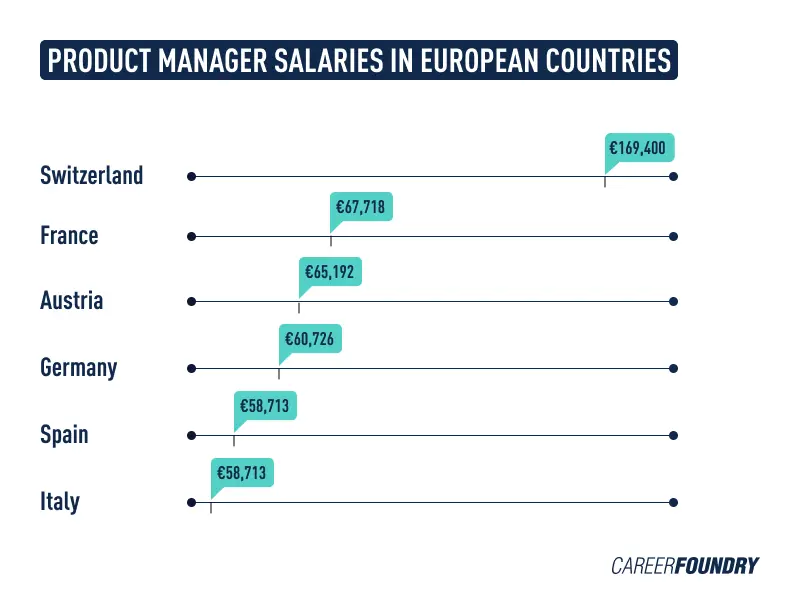
- International Hubs (London, Berlin, Singapore): Salaries tend to track local cost‑of‑living indices, ranging from €70,000 to €130,000 in Europe and SGD 90,000 to 150,000 in Asia.
Experience Levels and What They Mean for Pay
Experience isn’t just years on the resume; it’s the depth of product ownership you can demonstrate.
Entry‑Level (Associate PM)
Typical candidates have 0‑2 years of related work—maybe a startup stint or a strong analytical background. Expect:
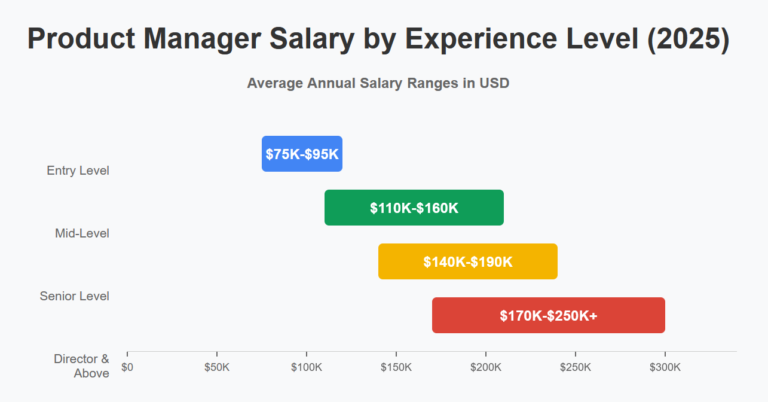
- Base: $80,000–$110,000 (U.S.)
- Bonus: 5‑10% of base
- Equity: Small grant, often vested over four years
Mid‑Level (Product Manager / Senior PM)
Here you’re steering entire product lines, coordinating cross‑functional teams, and influencing roadmap decisions.
- Base: $115,000–$165,000
- Bonus: 10‑20% of base, tied to product metrics
- Equity: Larger grants, sometimes with performance acceleration
Director & Above
At this tier you’re managing other PMs, shaping portfolio strategy, and reporting directly to C‑suite execs.
- Base: $170,000–$250,000
- Bonus: 20‑30% (occasionally higher in high‑growth firms)
- Equity: Significant stakes—often a meaningful share of company upside
Beyond Base Pay: The Full Compensation Picture
Product managers frequently receive a blend of cash and non‑cash rewards. Ignoring the latter can lead to a skewed perception of total earnings.
- Performance Bonuses: Aligned with KPIs like user growth, revenue, or time‑to‑market.
- Stock Options / RSUs: Especially common in tech‑centric firms; they can dwarf base salary over time.
- Signing Bonuses: Used to offset lower base offers or to attract talent from rival companies.
- Benefits Packages: Health, retirement matching, tuition reimbursement—these add tangible value.
How to Leverage Your Negotiation Power
Negotiating isn’t just about asking for more cash; it’s about aligning the offer with your career goals.
- Know Your Market: Use sites like Levels.fyi or Glassdoor to benchmark against similar roles in your city.
- Quantify Impact: Bring concrete examples—e.g., “Led feature X that boosted monthly active users by 12%”—to justify higher pay.
- Consider Total Rewards: If base salary hits a ceiling, ask for a larger equity grant or a flexible work allowance.
- Timing Is Key: Salary discussions often go smoother after a successful interview loop, when the hiring team is already convinced of your fit.
Industry Variations: Tech vs. Non‑Tech
While tech giants dominate headlines, product managers thrive in many sectors.
- FinTech & SaaS: Typically higher equity components, reflecting rapid growth expectations.
- Consumer Goods: Base salaries may be modest, but bonuses tied to market share can be sizable.
- Healthcare & Regulated Industries: Compensation balances technical expertise with compliance knowledge; salaries sit in the mid‑range.
Future Trends That Could Shift Salary Landscape
AI‑driven product insights and the rise of “product‑led growth” models are reshaping skill demands. Professionals who blend data science fluency with classic product instincts are already commanding premium packages.
Moreover, remote‑work normalization expands talent pools, which could level regional disparities—but it also fuels competition, pushing top talent to negotiate harder.
Quick Reference Cheat Sheet
- Entry‑Level: $80k–$110k base + modest equity
- Mid‑Level: $115k–$165k base + 10‑20% bonus + larger equity
- Director/VP: $170k–$250k base + 20‑30% bonus + significant equity
- Key Levers: Location, industry, product scope, negotiation skill