How to Master Badminton Singles Rules in Simple Steps
Whether you’re stepping onto the court for the first time or polishing your game after a few seasons, the singles format of badminton has its own rhythm and quirks. It’s not just about smashing the shuttle as hard as you can; understanding the specific rules can make the difference between a clean win and a frustrating loss. Below is a straightforward walk‑through of the essentials, peppered with tips that keep the guide practical rather than textbook.
What Makes Singles Different?
In doubles, the court is wider and the dynamics involve rapid net play and coordinated movement. Singles, by contrast, stretches the court lengthwise. The side lines shrink, meaning you have more ground to cover front‑to‑back. This shift influences serve placement, footwork, and even the mental strategy.
Setting Up the Court
The court dimensions for singles are standardized worldwide, but a quick visual check helps avoid accidental line violations:
- Length: 44 feet (13.4 m) from baseline to baseline.
- Width: 17 feet (5.18 m) – the inner side lines are used, not the outer ones.
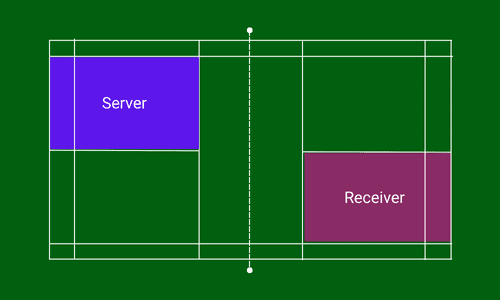
- Service Courts: The same short service lines as doubles, but you serve from the right side when your score is even and from the left when it’s odd.
Scoring Basics You Can Trust
Badminton uses a rally‑point system. Every rally scores a point, regardless of who served. Matches are best of three games, each game to 21 points. However, you must lead by at least two points; if the score reaches 20‑20, the game continues until a two‑point margin is achieved, capped at 30‑29.
The Serve: Small Details That Matter
The serve in singles is where many novices stumble. Here are the key points to keep straight:
- The shuttle must be struck below waist height, with the racquet head pointing downwards.
- You must serve from within the correct service court—right side for even scores, left for odd.
- The serve must travel diagonally across the net, landing in the opponent’s opposite service box.
- If the shuttle touches the net but still lands correctly, the serve is legal.
A quick tip: practice serving to a specific target on the opposite side. Consistency here builds confidence and reduces unforced errors.
During the Rally: What’s Allowed?
Once the serve is in play, the rally follows a fairly simple set of guidelines:
- Players may hit the shuttle once per side before it crosses the net.
- The shuttle may not be caught or carried; it must be struck cleanly.
- Contact must be made on or above the waist for a legal hit (the waist rule only applies to the serve).
- Deliberate distractions, like shouting or swinging the racquet near the opponent, are prohibited.
Most faults arise from out‑of‑bounds shots or net touches. Keep an eye on the boundary lines—especially the side lines, which are easy to overlook when chasing a deep drop.
Common Faults and How to Avoid Them
Understanding what constitutes a fault can save you from costly point losses. Below are the most frequent slip‑ups, along with quick fixes:
- Foot Fault on Serve: Your foot must remain behind the service line until after the shuttle is struck. Practice a stationary stance to build muscle memory.
- Shuttle Hits the Ceiling or Walls: Choose a clear trajectory; high clears are tempting but risk ceiling contact in indoor venues.
- Crossing the Net: Your racquet may not cross the net, even if the shuttle does. Keep the swing on your side and use wrist flicks for tight angles.
- Double Hits: Accidentally striking the shuttle twice in one motion is a fault. Slow down on defensive returns to ensure clean contact.
Strategic Nuances for Singles Play
Rules may be clear, but applying them strategically adds depth to the game. Here are a few tactical pointers that respect the rulebook while giving you an edge:
Control the Center
Occupying the middle of the court lets you reach both forehand and backhand shots with less movement. When you can force your opponent to the corners, you dictate the rally’s pace.
Vary the Pace
A mix of slow drops, fast drives, and occasional clears prevents your rival from settling into a rhythm. The rules don’t limit the speed of your shots—only that the shuttle must travel over the net.
Serve With Purpose
Instead of a generic high serve, aim for the short line on the opponent’s side. A well‑placed short serve forces a weak return, setting you up for a decisive attack.
When the Unexpected Happens
Even in a well‑run match, disputes arise. Knowing the correct protocol can keep things civil:
- If you suspect a line call was wrong, politely ask the umpire or opponent for clarification.
- In informal play without an official, players generally agree to replay the point if there’s doubt.
- Never argue aggressively; it’s a breach of etiquette and can lead to penalties.
Quick Reference Checklist
Before you step onto the court, run through this mental list:
- Court dimensions set correctly?
- Serve position matches the current score?
- Feet behind the service line at impact?
- Shuttle lands inside opponent’s service box?
- Racquet stays on your side of the net?
- Footwork stays within bounds during rally?
Having these points top of mind frees you to focus on shot selection and movement rather than rule‑checking mid‑play.
Final Thoughts
Badminton singles might appear straightforward at a glance, but the blend of precise rules and tactical freedom makes it a rewarding challenge. By internalizing the serve mechanics, respecting the boundary lines, and weaving in strategic play, you’ll find yourself not just following the rulebook, but using it as a springboard to better performance. Grab a racquet, head to the nearest court, and let the simple guide become your foundation for countless satisfying rallies.


![Badminton Singles Rules || Comprehensive Guide [2023]](https://blog.playo.co/wp-content/uploads/2021/04/Is-Badminton-an-Indoor-or-Outdoor-Game.png)
