LLC vs. C Corp: How to Choose the Right Business Structure
Starting a company feels a bit like standing at a crossroads. On one sign you see “LLC,” on the other “C Corp.” Both promise protection and credibility, yet they steer you down very different roads. Let’s walk through the key differences, so you can pick the path that fits your vision, budget, and risk appetite.
What Exactly Is an LLC?
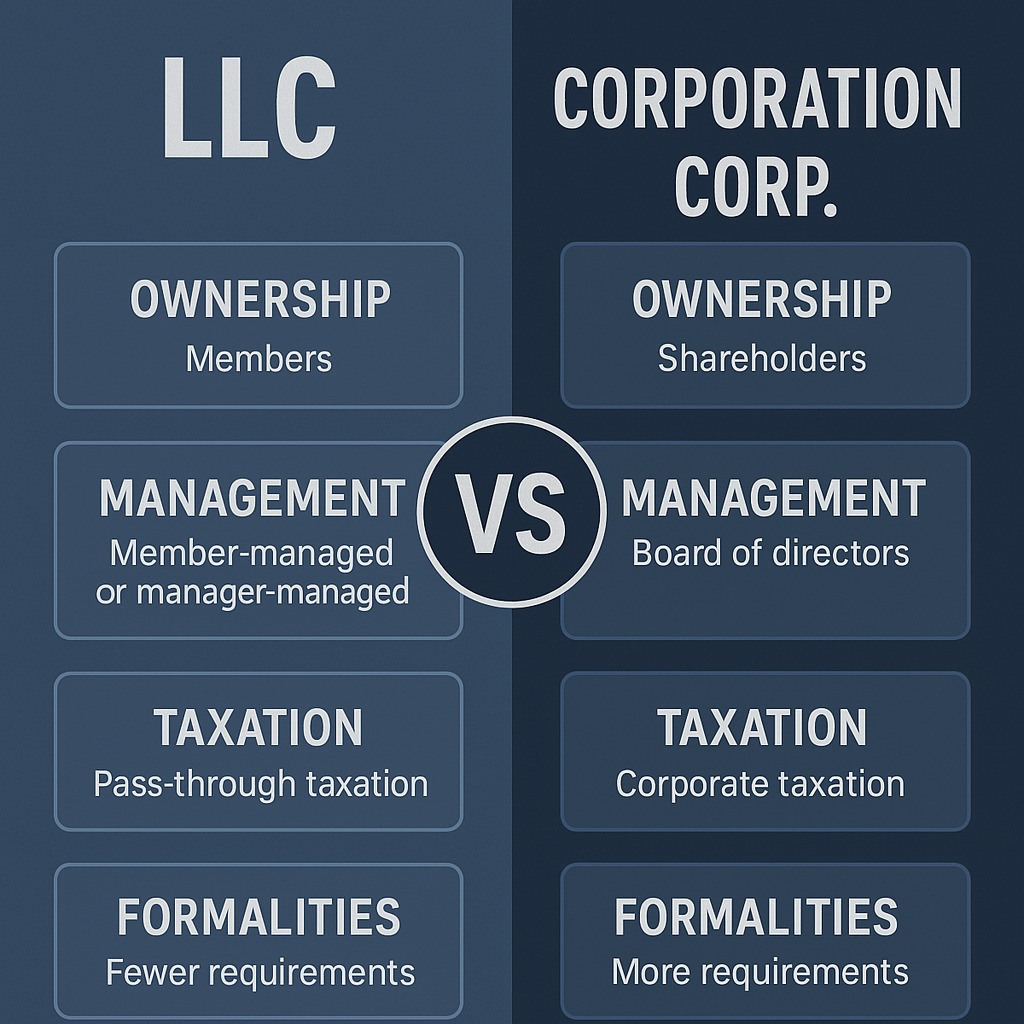
An Limited Liability Company (LLC) blends the simplicity of a partnership with the liability shield of a corporation. In practice, this means:
- Owners—called members—aren’t personally on the hook for business debts.
- Taxes flow through to the members’ personal returns, sidestepping corporate tax rates.
- Management can be as informal as you like; a single‑member LLC can be run solo.
Because paperwork is minimal—usually just a filing fee and an operating agreement—many solopreneurs and small teams gravitate toward an LLC.
And a C Corp Means…?
A C Corporation is a distinct legal entity that stands entirely apart from its shareholders. Its hallmark features include:
- Double taxation: the corporation pays tax on profits, then shareholders pay tax again on dividends.
- Ability to issue multiple classes of stock, which appeals to venture capitalists.
- Strict governance: a board of directors, annual meetings, and extensive record‑keeping.
While the administrative load feels heavyweight, the upside is clear—access to large capital pools and a structure that investors recognize worldwide.
Tax Talk: Where Do You Want to Pay?
LLCs let you avoid the corporate tax bracket altogether. Instead, you report earnings on Schedule C (or Schedule K‑1 for multi‑member LLCs). This “pass‑through” model can be a boon if your tax bracket is lower than the corporate rate.
C Corps, by contrast, face a flat federal tax rate—currently 21%—plus state taxes where applicable. If you plan to retain earnings for growth rather than distribute dividends, that might actually be cheaper than paying personal income tax on every profit.
When Might Double Taxation Matter?
- If you anticipate regular dividend payouts, the extra tax layer eats into cash flow.
- If you’re in a high personal tax bracket, the 21% corporate rate could be more favorable.
- When you sell the company, capital gains treatment differs; C Corps often result in higher effective taxes on the sale.
Liability Protection: Is One Safer?
Both structures protect personal assets, but the shield can be pierced if you slip on formalities.
- LLC: Keep your personal and business finances separate. A messy ledger could expose you to “piercing the veil.”
- C Corp: The corporate veil is typically sturdier, provided you hold regular board meetings and document decisions.
In short, respect the paperwork, and you’ll stay safe in either camp.
Management and Control: Who Calls the Shots?
LLCs shine for founders who want hands‑on control. Members can manage day‑to‑day operations directly, without a board. If you prefer a clear hierarchy or plan to bring in external directors, the C Corp’s formal structure aligns better with that vision.
Also, consider succession. In a C Corp, transferring shares is straightforward—just sell or gift stock. An LLC often requires an amendment to the operating agreement, which can be cumbersome.
Raising Capital: Dreaming Big?
If you picture venture capital, angel investors, or an eventual IPO, the C Corp is practically a requirement. Investors love the predictability of stock classes, voting rights, and the ability to issue preferred shares.
LLCs can take on members and issue membership interests, but those are less attractive to institutional investors. You might still raise money through loans or private equity, yet the process can be slower.
Cost and Compliance: Budget‑Friendly or Not?
Running an LLC is generally cheaper:
- Filing fees: often a few hundred dollars at formation, plus a modest annual report fee.
- Compliance: basic record‑keeping, no mandatory board meetings.
A C Corp demands more cash and attention:
- Incorporation fees: higher in many states, plus fees for issuing shares.
- Ongoing costs: annual reports, minutes, proxy statements, potentially a paid accountant to handle complex tax filings.
If cash flow is tight, the leaner LLC might feel like breathing room.
Choosing the Right Structure: A Quick Checklist
- Business size and growth plans: Solo or small team → LLC. Big ambitions, external investors → C Corp.
- Tax preferences: Want pass‑through taxation? → LLC. Comfortable with double tax for potential growth benefits? → C Corp.
- Management style: Hands‑on, informal → LLC. Formal governance, board oversight → C Corp.
- Funding needs: Bootstrapped or bank loans → LLC. Venture capital, public markets → C Corp.
- Compliance tolerance: Low administrative burden → LLC. Ready for paperwork and formalities → C Corp.
Bottom Line: No One‑Size‑Fits‑All
There’s no magical answer that fits every entrepreneur. Some startups launch as LLCs, then convert to C Corps once they secure funding. Others start as C Corps from day one, especially in tech hubs where investor expectations are clear.
Take a moment to map out where you see your company in five years. If you picture a modest, profitable boutique, the LLC’s flexibility will likely serve you well. If you envision rapid scaling, multiple funding rounds, and perhaps an exit, the C Corp’s structure could save you a painful conversion later.
Whatever you decide, treat the choice as a strategic decision—not just a legal formality. The right structure can lubricate growth, protect your personal assets, and keep tax surprises at bay. Choose wisely, stay diligent, and let your business focus on the part you love most—building something great.