Morse Code: Unlocking The Secrets Of A Timeless Language
It starts with a tap. A click. A rhythm that feels less like communication and more like a heartbeat transmitted through ether and wire. When people talk about Morse code, they often picture wartime movies, spy thrillers, or old-timey radio operators tapping away at heavy keys. But beneath the romanticized surface lies a system of profound efficiency and historical weight. It is a timeless language that didn’t just change how we talk; it changed how we connecting across vast, empty distances.
Today, we send text messages with a single tap on a glass screen. We stream 4K video from satellites orbiting the moon. Yet, if you strip away the digital sweetness and the layers of encryption, the core impulse remains the same: breaking information into discrete, transmittable units. Morse code was the original packet switching. It was the first time humanity managed to split language into its most atomic parts—beeps and pauses—and reassemble it on the other side.
The Physiology of Silence
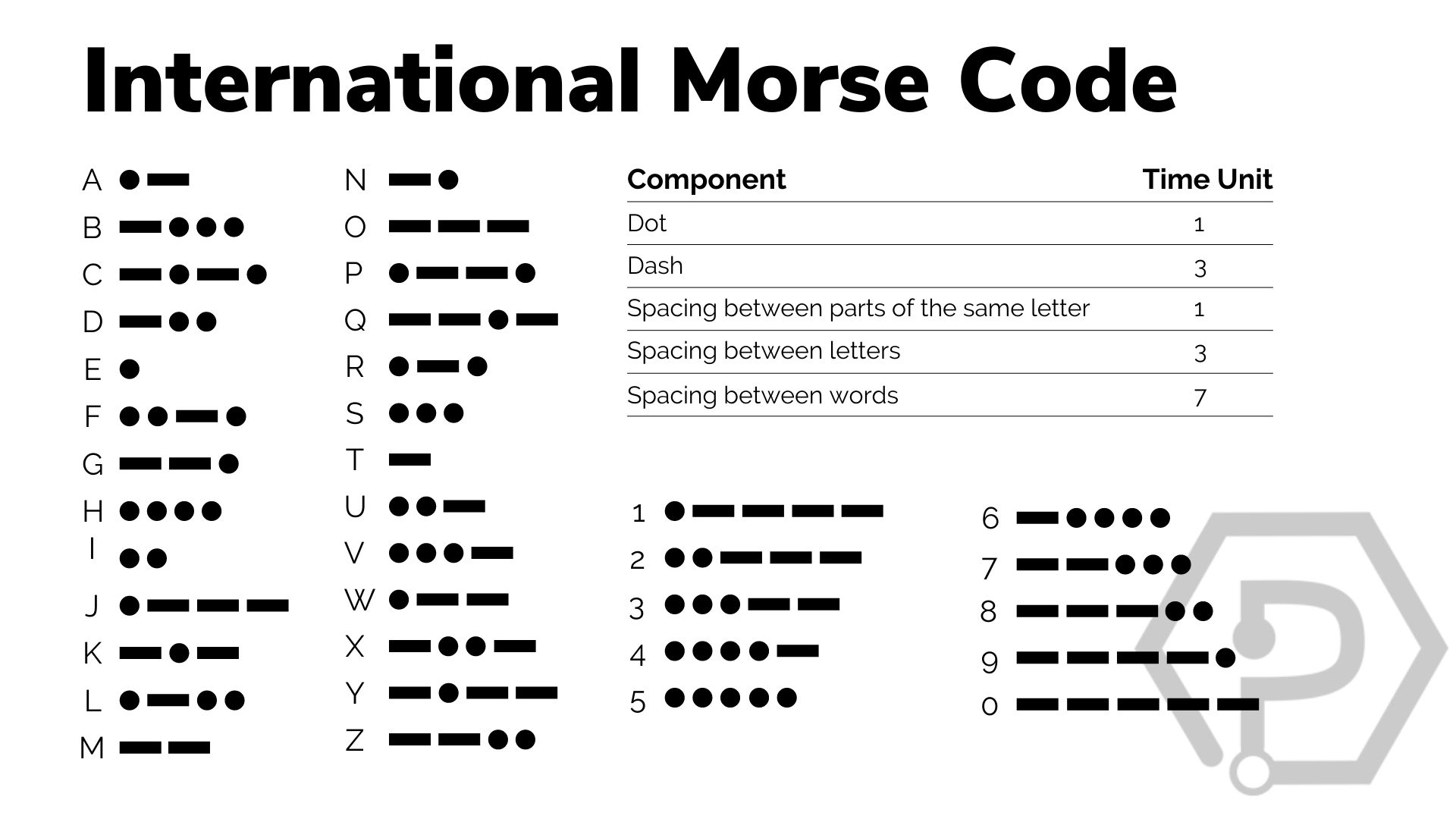
What makes Morse code so fascinating isn’t just the dots and dashes. It’s the silence between them. In spoken language, we rely on tone, facial expression, and immediate context. Morse strips all that away. You are left with duration. A short signal is a dot. A long signal is a dash. The space between letters is critical, as is the space between words.
This reliance on timing turns communication into a physical act. The receiver has to feel the rhythm. If you’ve ever tried to learn Morse code, you know that it doesn’t make sense to think of it as individual letters at first. You can’t spell “hello” by thinking “dot-dot-dot-dot.” You have to hear it as a single melodic unit. It’s fascinating how the human brain adapts to this. We move from recognizing symbols to recognizing patterns, much like how we stop seeing individual notes and start hearing music.
War, Wind, and Wire
Origins matter when we talk about why Morse code stuck. Samuel Morse and Alfred Vail developed the system in the 1830s, not as an abstract linguistic experiment, but as a practical solution for the telegraph. The United States was expanding westward, and voice communication over long distances was impossible. The telegraph solved this by converting sound into electrical impulses.
The genius of the code lies in its frequency weighting. The most common letters in the English language—E and T—have the shortest codes. E is a single dot. T is a single dash. This allowed operators to send entire pages of text remarkably quickly if they were skilled. But it also meant that learning the code was a steep climb. There was no middle ground. You either knew the rhythm, or you heard nothing but noise.
In the trenches of World War I and on the muddy banks of World War II, Morse code became the lifeline of armies. Radiomen operated in deafening conditions, often while under fire. The code worked because it was robust. It could travel over imperfect wires, through static-laden airwaves, and even when equipment was damaged. A broken voice transmission is unintelligible. A broken Morse transmission? You just wait for the next clear burst. That reliability saved lives.
The Decline of the Tap
So, why don’t we use it anymore? Why has the rhythmic tapping faded from our daily lexicon? Technology, obviously. Voice radio became clearer and easier to use than learning a new alphabet. Computer networks took over data transmission. The telegraph poles came down, replaced by fiber optic cables that move light at the speed of light.
However, the disappearance of Morse code from mainstream use is somewhat of a tragedy. It required patience. It required focus. In a world where notifications ping every thirty seconds, the discipline of listening for a specific interval of silence is a lost art. When the International Telegraphic Union stopped requiring Morse proficiency for amateur radio licenses in 1999, many old-timers said it killed the soul of the hobby. They weren’t entirely wrong. It removed a barrier to entry, but it also removed a rite of passage.
Still Alive in the Machines
Here’s the secret that surprises most people: Morse code is still everywhere. You just don’t hear it. It’s embedded in systems we trust implicitly. Aircraft black boxes use it for distress signals. Amateur radio operators still use it for long-distance communication because a simple VLF (Very Low Frequency) signal can travel thousands of miles with very little power, bouncing off the ionosphere. It’s the ultimate low-power protocol.
Even your car might use it indirectly. Some modern diagnostic systems for vehicles still rely on binary-like signaling methods that are spiritual descendants of Morse. The logic of “on” and “off” is the foundation of all digital computing. Every email you send, every photo you upload, is ultimately a string of 1s and 0s. That’s just binary Morse code at a billion times the speed.
Learning to Listen Again
There’s something meditative about trying to decode Morse today. With apps and online quizzes, you can learn the basics in an afternoon. But the real skill is in the listening. It’s in the ability to sit quietly and distinguish a dash from a dot in a sea of static. It forces you to slow down.
In unlocking the secrets of this timeless language, we aren’t just studying a historical artifact. We’re reconnecting with the fundamental way information moves. We’re reminding ourselves that communication doesn’t need to be complex to be effective. Sometimes, all it takes is a simple tap, a pause, and the attention to hear what’s being said in the silence between.
Frequently Asked Questions
Is Morse code hard to learn?
It depends on how you approach it. If you try to memorize it as a visual chart, it can be difficult. However, if you use audio drills and focus on the sound patterns rather than the letters, most people can pick up the basics in a few hours. The challenge lies in speed and recall under pressure.
Why don’t ships and airplanes use Morse code for emergencies anymore?
They have transitioned to digital systems like GMDSS (Global Maritime Distress and Safety System) and ACARS (Aircraft Communications Addressing and Reporting System). These digital systems provide precise location data and automated alerts, which are more reliable and faster than manually sending a Mayday in Morse.
Can you use Morse code to communicate with ham radio today?
Yes, absolutely. While it is no longer a requirement for a license in the US and many other countries, it remains a popular mode for amateur radio operators, especially for long-distance (DX) communication where simple signals travel best.
What is the origin of Morse code?
Morse code was developed in the 1830s by Samuel Morse and Alfred Vail. It was created specifically to enable efficient transmission of messages via the electrical telegraph, revolutionizing long-distance communication.