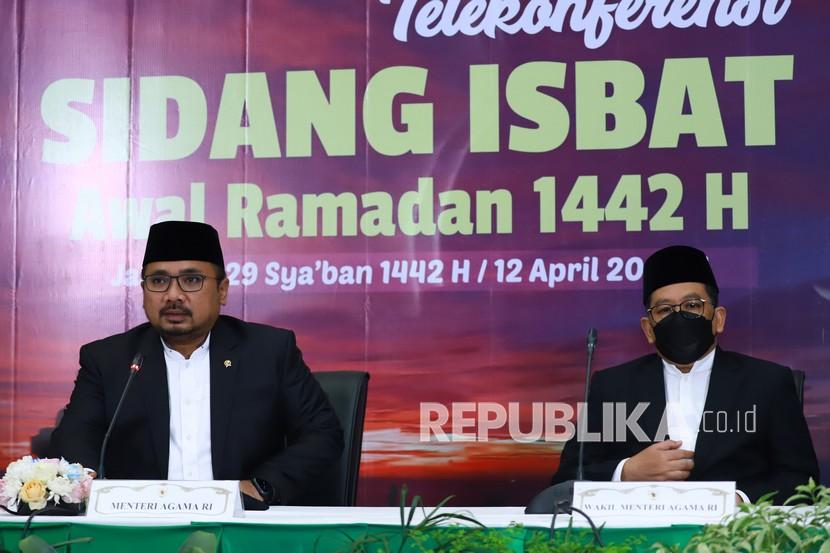
Sidang Isbat 2021: The Tug-of-War Over the Islamic New Moon
Anyone who has ever waited by their phone during the last days of a lunar month knows the anxiety. The date shifts. The call to prayer changes timing. The holiday schedule flips. In 2021, this tension played out across the Muslim world with a clarity that highlighted the deep divergence between astronomical calculation and traditional moon sighting. The Sidang Isbat 2021 wasn’t just another administrative event; it was a rehearsal for the eternal debate on how we determine the start of the Islamic calendar, particularly for the moon of Ramadan and those of Shawwal.
The core of the friction lies in the method. On one side, you have nations that rely strictly on rukyatul hilal, or the physical sighting of the lunar crescent with the naked eye. On the other, countries use astronomical calculations to predict the moon’s birth before it can even be seen. In 2021, this split resulted in a phenomenon that many observers found frustrating: neighbors announcing the beginning of the holy month days apart.
The Complexity of Moon Sighting
To understand why the 2021 dates varied so wildly, we have to look at the geometry of the sky. The Islamic calendar is lunar, meaning months begin with the sighting of the new moon. However, the moon doesn’t shine immediately after its conjunction with the sun. There is a critical factor called "elongation," which is the angle between the moon and the sun. If the moon is too close to the sun, it is lost in the glare.
Then there is the issue of altitude. Is the moon high enough above the horizon at sunset to be seen? In 2021, the astronomical conditions for both Ramadan and Shawwal were tricky. The moon was incredibly thin—often described as lighter than a fingernail—and it set shortly after the sun. For traditionalists, if you cannot point to it with your finger in the twilight, the moon has not been sighted, regardless of what your app says. For calculators, if the geometry proves it is theoretically visible under perfect conditions, the month begins.
Regional Divides in 2021
The year 2021 saw a stark map of these differing approaches. Let’s take Ramadan as the prime example. In Saudi Arabia, and by extension many countries that follow the Saudi announcement, the month began on May 13. Why? Because local committees reported sightings, or accepted them based on their specific criteria. Consequently, Indonesia, Malaysia, and several other Southeast Asian nations also declared Ramadan starting on May 13. This was largely due to shared scientific organizations that standardized the "waxing moon" calculation, which aligns closely with Saudi observations if one accepts their sightings.
But look just a few thousand kilometers away. Lebanon, Israel, and some Muslim communities in the Middle East declared Ramadan on May 14. Why the delay? Because the astronomical visibility in their longitude was even more challenging. They adhered to the principle that unless the moon is sighted locally or by a trusted neighbor with clear skies, they must complete the 30 days of the previous month, Sha’ban.
This split repeated itself for Shawwal, the month of Eid al-Fitr. In many places, Eid fell on May 13, while in others, it was May 14. For the average person, this meant confusion over travel plans, family gatherings, and breaking the fast. It wasn’t malicious; it was logistical chaos born from theological and scientific rigidity.
The Role of Technology and Tradition
You might wonder why technology hasn’t solved this. After all, we can launch probes to Mars. Why can’t we agree on a moon? The answer isn’t tech; it’s authentication. Technology can tell us where the moon is. It cannot tell us whether a community’s religious authority should move based on that data. The Sidang Isbat in Indonesia, for instance, is a high-stakes affair. It involves the Ministry of Religious Affairs, the National Observatory, and prominent scholars. They weigh scientific data against the fatwa (religious edicts) that prioritize human observation.
In 2021, social media amplified the confusion. Videos of claimed moon sightings went viral, only to be debunked by astronomers who pointed out that the streak of light was actually Venus or a satellite. Yet, once a local committee accepts a sighting, the calendar moves. The integrity of the process relies on trust in local witnesses, which is a beautiful, chaotic, and deeply human element of the faith.
Why This Matters Beyond the Calendar
The debate over the 2021 Sidang Isbat reveals something deeper about the Muslim world. It is a community of over 1.8 billion people with diverse cultures, yet connected by a single ritual calendar. The inability to synchronize starts a global conversation about unity. Many scholars argue for a unified global sighting or a unified calculation method. Others argue that local conditions—weather, mountain ranges, horizon clarity—mean that each community must decide for itself.
For the believer, the lesson is often one of patience. Whether you fast on the 13th or the 14th, the intent remains. The diversity of the ummah (community) is reflected in the sky above. Some see the moon early; others wait longer. Both are looking at the same celestial body, just under different circumstances.
FAQ
What is the Sidang Isbat?
The Sidang Isbat is a meeting held by religious authorities, particularly in Indonesia and Malaysia, to determine the beginning and end of lunar months in the Islamic calendar. They review astronomical data and witness testimonies to announce official dates for Ramadan, Eid, and other significant events.
Why did dates for Ramadan 2021 differ between countries?
Dates differed because some countries relied on local moon sightings while others used astronomical calculations. Additionally, countries following Saudi Arabia’s announcement often started earlier than those requiring local verification, creating a split based on geographical visibility and religious methodology.
Is the Islamic calendar purely based on calculation?
Not exclusively. Many traditionalist communities insist on physical sightings (rukyatul hilal). However, countries like Egypt, Turkey, and some in Southeast Asia increasingly rely on astronomical calculations to ensure accuracy and standardization, even if the moon is not visibly seen by the naked eye that specific evening.
Did 2021 see any major changes in moon sighting methods?
2021 did not introduce a new global method, but it highlighted the growing reliance on scientific tools. The Indonesian and Malaysian scientific networks continued to refine their predictive models, showing higher accuracy in anticipating Saudi sightings, which helped align many Southeast Asian nations with the Gulf states.

:quality(30):format(webp):focal(0.5x0.5:0.5x0.5)/kalteng/foto/bank/originals/sidang-isbat-2021.jpg)