What’s Next for Wireless Tech: Trends Shaping the Future
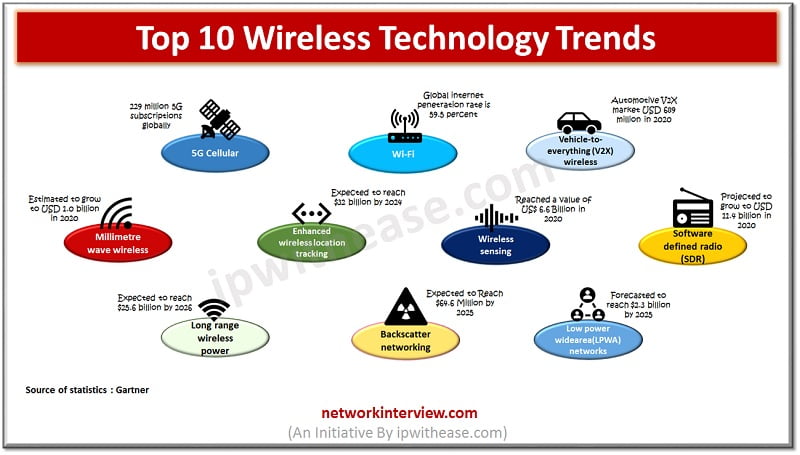
From smartphones to smart factories, wireless connectivity has become the invisible backbone of modern life. As we look ahead, a new wave of wireless technology trends promises to rewrite how we interact with devices, data, and even the world around us. Whether you’re a tech enthusiast, a business leader, or just curious about the next big thing, understanding these shifts can help you anticipate opportunities—and avoid getting left behind.
5G Matures and Sets the Stage for 6G
Since its rollout, 5G has moved from hype to everyday reality, delivering multi‑gigabit speeds and ultra‑low latency for everything from streaming high‑definition video to remote surgery. Yet the real excitement lies in what comes after. Researchers worldwide are already experimenting with terahertz‑band transmissions that could underpin 6G, promising data rates a hundred times faster than 5G. While commercial 6G won’t appear until the 2030s, early pilots are shaping standards around AI‑optimized beamforming and energy‑efficient hardware, ensuring the next generation will be smarter as well as faster.
Wi‑Fi 7 Brings Speed and Efficiency Home
Inside homes and offices, Wi‑Fi 7 (802.11be) is the next logical upgrade. By leveraging wider 320 MHz channels, multi‑link operation, and 4096‑QAM modulation, it can push raw throughput past 30 Gbps—enough to power multiple 8K streams simultaneously. But speed isn’t the only benefit; Wi‑Fi 7 also improves latency and reduces interference through smarter scheduling. For users, this means smoother cloud gaming, faster file transfers, and more reliable connections for the ever‑growing number of IoT devices crowding the spectrum.
Edge Computing Meets Low‑Latency Wireless
Speedy wireless links alone won’t solve the latency challenges of autonomous vehicles or real‑time industrial robotics. The answer lies in moving computation closer to the data source—enter edge computing. By deploying micro‑data centers at cell towers or even on‑site at factories, devices can offload heavy processing without a round‑trip to distant clouds. Combined with 5G’s ultra‑reliable low‑latency communication (URLLC), this architecture enables split‑second decisions for drones, AR overlays, and predictive maintenance systems.
Satellite Constellations Expand Global Coverage
Low‑Earth‑orbit (LEO) satellite constellations are no longer a niche experiment. Companies like SpaceX, OneWeb, and Amazon are launching thousands of satellites to provide broadband access in remote regions where terrestrial networks falter. These constellations reduce latency to under 30 ms—comparable to terrestrial 4G—making them viable for voice calls, telemedicine, and even gaming. As the networks mature, they’ll act as a safety net, ensuring connectivity during natural disasters or in underserved rural communities.
AI‑Driven Spectrum Management
With more devices vying for limited spectrum, static allocation is becoming untenable. Artificial intelligence is stepping in to dynamically assign frequencies, predict congestion, and mitigate interference in real time. Machine‑learning models analyze traffic patterns across cells, adjusting power levels and beam directions on the fly. This not only maximizes spectrum efficiency but also reduces energy consumption—a win‑win for operators and the environment.
New Frontiers: AR/VR, Autonomous Vehicles, and Smart Cities
Emerging applications are the true litmus test for upcoming wireless innovations. Augmented and virtual reality demand sub‑10 ms latency to avoid motion sickness, while autonomous vehicles need reliable V2X (vehicle‑to‑everything) links for safety‑critical messaging. Smart cities, meanwhile, rely on massive sensor deployments to monitor traffic flow, air quality, and public safety. All of these use cases converge on a common set of requirements: high bandwidth, ultra‑low latency, and seamless handoff between networks. Here’s a quick snapshot of how the trends above support them:
- 5G/6G: Provides the backbone for V2X and real‑time AR overlays.
- Wi‑Fi 7: Powers dense indoor environments like stadiums and factories.
- Edge Computing: Cuts processing delay for autonomous decision‑making.
- LEO Satellites: Guarantees connectivity for moving vehicles in remote areas.
- AI Spectrum Management: Keeps the airwaves clear as device counts explode.
FAQs
What is the biggest advantage of 6G over 5G? While 5G already delivers gigabit speeds, 6G aims for terabit‑per‑second rates and integrates AI directly into the radio layer, allowing networks to self‑optimize for speed, reliability, and power efficiency.
Will Wi‑Fi 7 replace cellular networks for mobile users? Not likely. Wi‑Fi 7 excels in fixed locations like homes and offices, whereas cellular networks cover broader, outdoor areas. The two will complement each other, especially in hybrid setups that shift traffic between Wi‑Fi and cellular based on demand.
How soon can we expect satellite internet to be as fast as fiber? Current LEO constellations already reach 500 Mbps in many tests, and speeds are climbing as more satellites launch and ground stations improve. Widespread fiber‑level performance may be a few years away, but the gap is narrowing quickly.